U.S. President Donald Trump has threatened an unprecedented escalation against Iran, targeting power plants, oil wells, and the strategic Kharq Island. He also mentioned the possibility of striking water desalination plants if an agreement to end the military operations ongoing for five weeks is not reached.
At the same time, Trump announced ongoing discussions with what he described as a new and more rational regime within Iran, reflecting a shift in the U.S. strategy towards Tehran.
Details of the Event
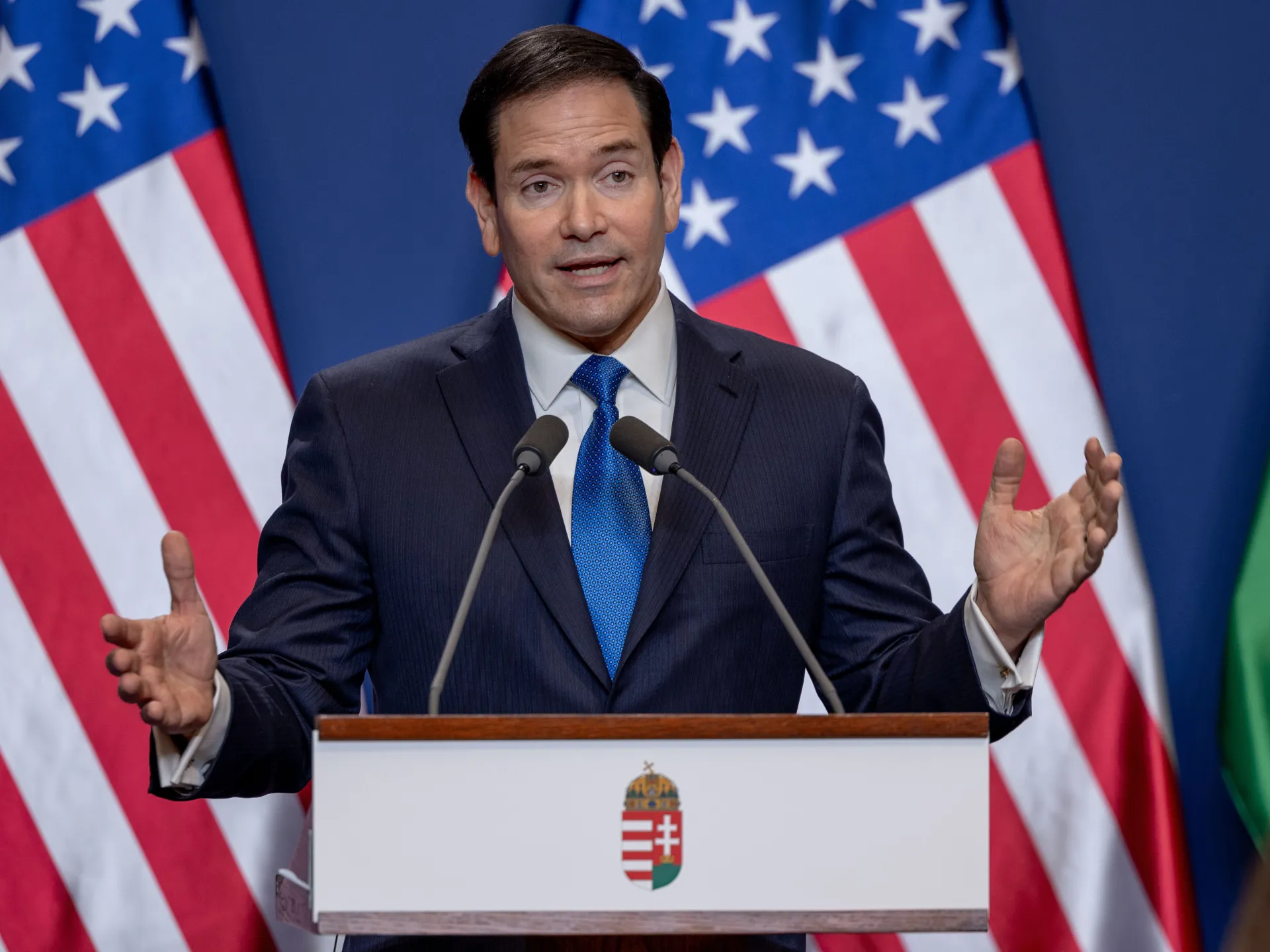
In an exclusive interview with Al Jazeera, U.S. Secretary of State Marco Rubio confirmed that the Strait of Hormuz would remain open at all costs, either through Iran's acceptance of international law or by ensuring an international alliance led by Washington. He noted that there are both direct and indirect communication channels with Tehran, emphasizing Washington's welcome of any Iranian leadership that holds a different vision for the future.
In his assessment of U.S. demands, political science professor Mark Katz stated that these demands, which include abandoning the nuclear arsenal, ballistic missiles, and uranium stockpiles, represent a complete surrender from the Iranian side. He explained that the pivotal moment for any real change in the regime does not occur merely by crowds taking to the streets but requires a split within the security apparatus, which has not yet materialized despite reports of unrest within the Revolutionary Guard.
Background & Context
Former Deputy Assistant Secretary of Defense Heino Klink confirmed that building a new Iran without the Revolutionary Guard would be extremely difficult due to its infiltration in all aspects of Iranian society—political, economic, and security. He pointed out that the coming weeks might provide an opportunity for moderate Iranian forces to emerge and change the course of the ruling elites.
However, Katz warned of a darker scenario, predicting that the end of this war could lead to an Iranian civil war or the collapse of central authority, similar to what happened in Iraq, Libya, and Syria, resulting in waves of displacement that would burden Gulf states.
Impact & Consequences
On the ground, Al Jazeera correspondent in Tehran, Suhail Al-Assa, reported that military operations are slowly escalating, targeting vital infrastructure on both sides, referencing the strike carried out by Iran on the port of Haifa. The political scene has also begun to shift after months of stagnation, with Tehran starting to outline its negotiating terms while its military apparatus warns that any U.S. ground incursion would complicate the situation in the strait and the entire region.
Concerns are growing that these developments could lead to a greater escalation in the conflict, threatening the stability of the entire region.
Regional Significance
These developments hold significant importance for the Arab region, as any escalation in the Iranian-American conflict could directly affect Gulf states, which are already suffering from political and security tensions. The potential for mass displacement from Iran could pose an additional challenge for these countries.
In conclusion, Iran's future remains complex, as military threats intertwine with negotiation opportunities, making it difficult to predict the outcomes in the coming days.