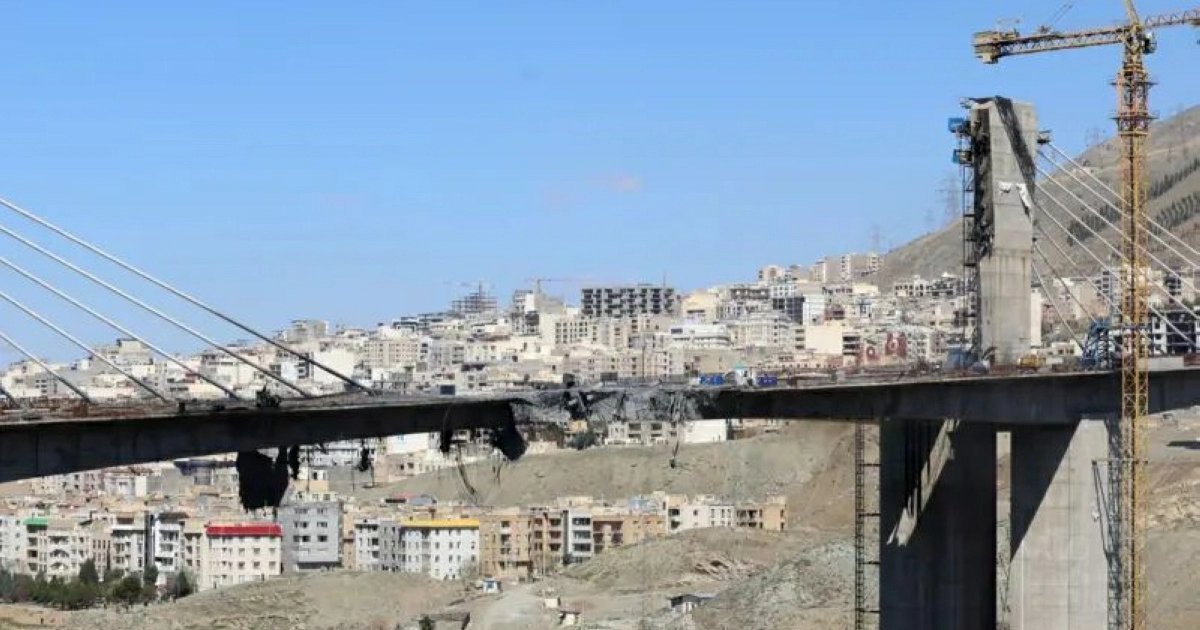
U.S. President Donald Trump announced on Thursday the potential for further strikes on vital infrastructure in Iran, following the U.S. targeting of a major bridge in the country. These statements come at a time when tensions between the U.S. and Iran are escalating, with Iran responding with attacks on facilities in Kuwait and confirming that it will continue such actions.
Trump, who used his social media platform "Truth Social" to express his threats, stated: "Our military, the strongest in the world, hasn't even started to destroy what remains in Iran." He indicated that upcoming strikes would target bridges and power stations, adding that the Iranian leadership knows what needs to be done, and it should be done quickly.
Details of the Incident
These remarks come just one day after Trump's address to the nation regarding Operation "Epic Fury", which began on February 28. Footage shared on social media showed smoke and dust rising after the U.S. strikes on the new B1 bridge between Tehran and Karaj, which was scheduled to open this year. In response, the Iranian Revolutionary Guard announced that it would target all U.S. and Israeli assets in the region.
In a related context, the Kuwaiti Ministry of Electricity and Water confirmed that an Iranian attack targeted a water desalination and power station in Kuwait, causing material damage. This attack highlights a potential vulnerability for Gulf countries that heavily rely on water desalination.
Background & Context
Approximately five weeks into the war initiated by the U.S. and Israel, Trump faces pressure to find a quick solution. Negotiations conducted through intermediaries with the new leaders in Iran have shown little progress, while feelings of pessimism have increased within the U.S., with polls indicating that most Americans oppose the war.
At the same time, the economic repercussions are escalating globally, as Iran controls strategic maritime corridors in the Strait of Hormuz, giving it leverage over vital oil and gas supplies for the global economy.
Impact & Consequences
Concerns are growing that attacks on vital facilities such as transportation, energy, and water could exacerbate the conflict, which has already resulted in thousands of deaths and threatens to inflict lasting damage on the global economy. Economic pressures are sharply increasing, as the closure of the Strait of Hormuz affects oil and gas shipments, threatening a humanitarian crisis in developing countries.
Under these circumstances, over 100 American international legal experts have expressed their concerns regarding the actions of U.S. forces, indicating that they may constitute violations of international law and potential war crimes.
Regional Significance
Arab countries are significantly affected by the escalating tensions between the U.S. and Iran, as many of these nations depend on regional stability to ensure their economic and political security. The Iranian attacks on facilities in Kuwait suggest that the conflict may extend to include other Gulf nations, complicating the security situation in the region.
In conclusion, the situation in the region appears to be heading towards further escalation, necessitating that Arab countries take proactive steps to ensure their security and stability amid these changing circumstances.