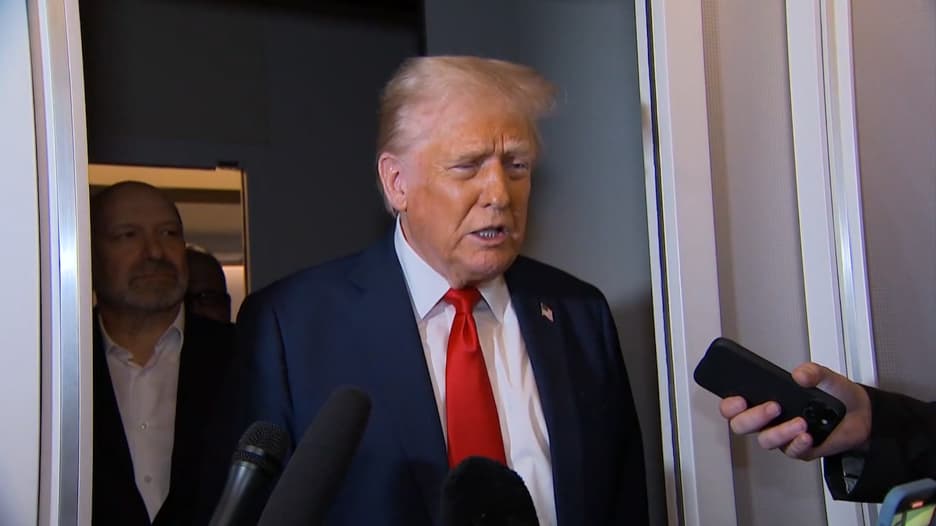
In a new escalation of tensions between the United States and Iran, the White House announced that President Donald Trump is "ready to open the gates of hell" on Iran if it does not acknowledge its military defeat and accept a peace agreement to end the war. These statements come at a time when relations between the two countries are increasingly strained, with both sides exchanging accusations and ongoing crises in the region.
In contrast, Iranian Foreign Minister Mohammad Javad Zarif confirmed that his country does not intend to negotiate with Washington, indicating that Iran will not back down from its positions in the face of American pressure. These statements reflect a growing polarization between the two sides, as each party seems to be holding firm to its positions with no signs of potential dialogue.
Details of the Event
Trump's remarks came during a press conference at the White House, where he emphasized that the United States would not tolerate Iranian activities that it considers a threat to national security. He pointed out that Iran must acknowledge its military defeat in the region, referring to the ongoing conflicts in Iraq and Syria.
On the other hand, Zarif expressed his astonishment at the American statements, asserting that Iran will not negotiate under pressure. He noted that his country has the capability to confront any threats and that it will not retreat from its regional policies.
Background & Context
The roots of the tensions between the United States and Iran date back to Washington's withdrawal from the Iranian nuclear deal in 2018, which aimed to limit Iran's nuclear program. Since then, the United States has imposed a series of economic sanctions on Iran, leading to a deterioration of the economic situation in the country and increasing social pressures.
In recent years, the region has witnessed a rise in Iranian military activities, including its support for militias in Iraq and Syria, which has intensified tensions with the United States and its allies in the region. These dynamics make it difficult to reach any agreement between the two parties at the present time.
Impact & Consequences
The recent statements from Trump and Zarif underscore that any attempts at negotiation may face significant obstacles. If Iran continues to refuse to negotiate, military tensions in the region may escalate, potentially leading to new conflicts.
Moreover, the continuation of American pressure on Iran could affect the stability of the entire region, as any escalatory steps could provoke reactions from Iran's allies in the region, complicating security situations further.
Regional Significance
The tensions between the United States and Iran are a sensitive issue for Arab countries, as many of these nations are directly or indirectly affected by conflicts in the region. Any military escalation could have negative repercussions on security and stability in the Gulf Arab states, which heavily rely on regional stability.
Furthermore, the continuation of these crises may impact oil prices and global markets, negatively affecting Arab economies that depend on oil exports.
In conclusion, it appears that the situation between the United States and Iran may enter a new phase of escalation, necessitating close monitoring by the international community. The current tensions could lead to far-reaching consequences for regional and international security.