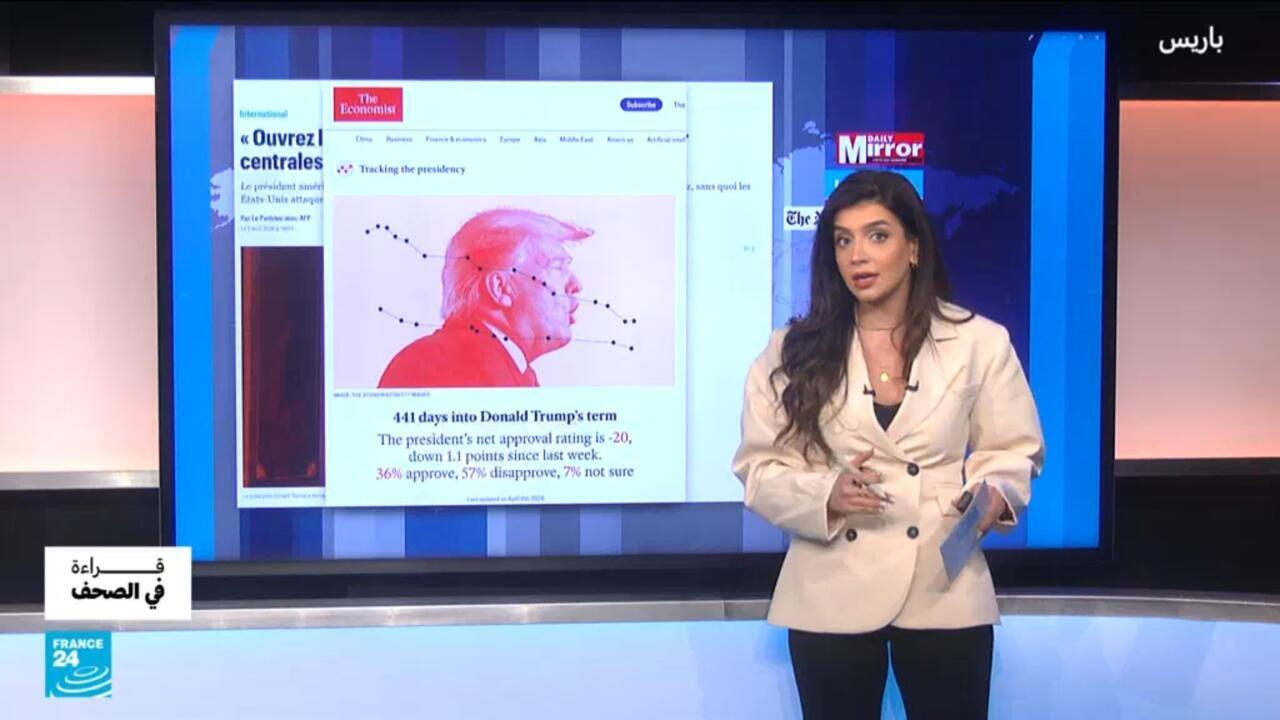
In a new escalation, former U.S. President Donald Trump has threatened Iran, pointing to chaos in the region and war crimes. These remarks come as his popularity declines, while Lebanese President Joseph Aoun's calls for negotiation with Israel gain prominence.
Arab newspapers discuss the contradictions in Trump's positions, where his escalation in rhetoric towards Iran reflects a decline in his popularity, raising questions about his political strategies. In Lebanon, President Joseph Aoun is at the forefront by criticizing the war and renewing his call for dialogue with Israel, reflecting the complex political trends in the region.
Details of the Event
Trump's threats come at a sensitive time, as tensions in the Middle East escalate. He indicated that any escalation from Iran would be met with a strong response, heightening the political rhetoric in the United States. In contrast, Aoun's positions emerge as a call for peace amid rising conflicts.
The newspapers also address Israeli threats to bomb the Masnaa crossing, which could have serious repercussions for Lebanon and Syria. Syria relies on a cautious neutrality policy, complicating the security situation in the region.
Background & Context
Historically, U.S.-Iranian relations have deteriorated significantly since the United States withdrew from the nuclear agreement in 2018. This withdrawal led to escalating tensions between the two countries, directly affecting stability in the region.
In Lebanon, President Joseph Aoun's position reflects a desire to avoid military escalation with Israel, as he seeks to maintain internal stability amid the economic and political crises the country is facing.
Impact & Consequences
Analyses indicate that Trump's threats could lead to heightened tensions in the region, impacting regional security. Additionally, Israeli threats to bomb the Masnaa crossing may provoke reactions from the Lebanese government, further complicating the situation.
Concerns are growing that these developments could lead to military escalation, negatively affecting civilians in Lebanon and Syria, who are already suffering from humanitarian crises.
Regional Significance
The Arab region is significantly affected by these tensions, as Christians in the Middle East find themselves victims of ongoing conflicts. With the approach of Easter, their suffering highlights a broader picture of conflicts in the region.
These circumstances require an urgent international response to maintain peace and stability, as any escalation could lead to serious repercussions at both regional and international levels.