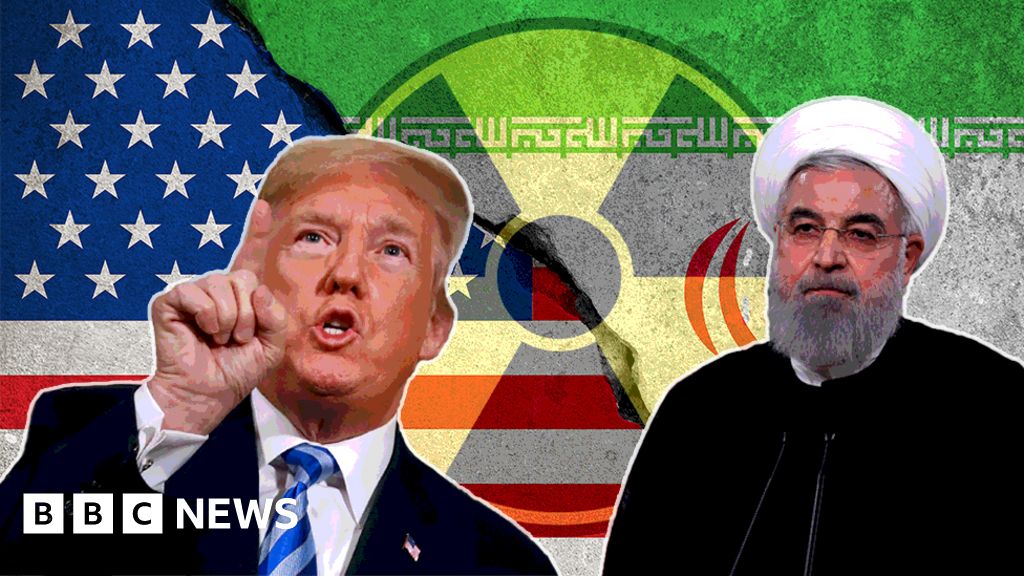
Noman Abu Aissa asserts that U.S. President Donald Trump's threats against Iran represent a psychological war that lacks novelty. These statements come at a sensitive time marked by increasing tensions in the region, where fears of a potential military escalation between the United States and Iran are rising.
Trump's recent statements are seen as part of his known strategy in dealing with Tehran, as he seeks to pressure the country through military and economic threats. However, Abu Aissa believes that these threats are not new; rather, they are a continuation of an old policy that has not yielded tangible results.
Details of the Event
Recently, Trump has unleashed a series of threats against Iran, indicating that any attack on U.S. interests would be met with a strong response. These remarks have elicited mixed reactions in political and media circles, with some viewing them as an attempt to increase pressure on Tehran, while others see them as mere statements aimed at bolstering his domestic position.
This comes amid rising tensions in the Middle East, where Iran is seeking to enhance its influence in Iraq, Syria, and Lebanon, increasing concerns for the United States and its allies in the region. Additionally, the presence of U.S. forces in Iraq and Syria raises the likelihood of direct clashes between the two sides.
Background & Context
The roots of tensions between the United States and Iran extend back several decades, with relations between the two countries experiencing significant escalation since Washington's withdrawal from the nuclear agreement in 2018. Since then, the U.S. has imposed strict economic sanctions on Iran, leading to a deterioration of the country's economic situation.
At the same time, Iran is striving to enhance its military capabilities, including the development of its nuclear program, which exacerbates tensions. Recent years have witnessed numerous military incidents, including attacks on oil tankers in the Arabian Gulf, which Iran has been accused of orchestrating.
Impact & Consequences
Analyses indicate that the continued escalation between the United States and Iran could lead to serious repercussions for regional and international security. The rising tensions could result in an outbreak of open military conflict, negatively impacting stability in the region.
Moreover, these tensions affect oil prices and global financial markets, as investors react to any news related to the potential conflict. Therefore, any escalation in the region could lead to an increase in oil prices, affecting the global economy as a whole.
Regional Significance
Neighboring Arab countries such as Iraq and Saudi Arabia are among the most affected by the tensions between Washington and Tehran. These countries are striving to maintain their internal stability and avoid any escalation that could impact their national security.
Furthermore, these tensions may lead to increased division among Arab states, as positions towards Iran and the United States vary. Consequently, the current situation requires Arab countries to take clear stances to protect their interests and security.
In conclusion, U.S. threats against Iran remain part of a complex political game, where regional and international interests intertwine. As these tensions continue, hope remains for reaching peaceful solutions to avoid any potential military escalation.