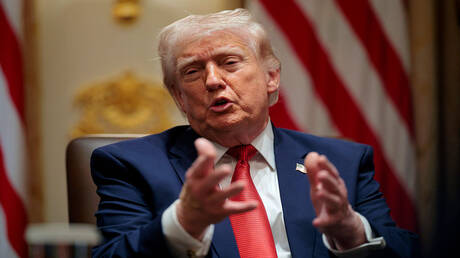
U.S. President Donald Trump has threatened to return Iran to the Stone Age if the Hormuz Strait is not opened. This statement was made during a press conference, where Trump noted that the new Iranian president, whom he described as "much less hardline and more intelligent than his predecessors," had approached the United States with a request for a ceasefire.
These remarks come at a sensitive time in U.S.-Iran relations, as tensions in the Gulf region are escalating. The Hormuz Strait, through which approximately 20% of global oil supplies pass, is a vital strategic point, making any threat to close it have significant repercussions on the global economy.
Details of the Event
During the conference, Trump emphasized that the United States would not tolerate any attempt by Iran to close the strait, indicating that such an action would provoke a strong reaction from his country. He added that the U.S. administration is closely monitoring the situation and is prepared to take necessary actions to protect its interests and those of its allies in the region.
It is noteworthy that Trump had previously indicated that the new Iranian president might be more open to dialogue, potentially paving the way for new agreements. However, his recent threats suggest that the United States still retains the option of using force if necessary.
Background & Context
Historically, U.S.-Iran relations have been tense, especially after Trump's withdrawal from the Iranian nuclear deal in 2018. Since then, the United States has imposed strict economic sanctions on Iran, leading to a deterioration of the country's economic situation and an increase in military tensions in the region.
In recent years, the Gulf region has witnessed an escalation in military activities, including attacks on oil tankers and oil facilities. These events have heightened fears of a full-scale military conflict in the region, raising concerns within the international community.
Impact & Consequences
Trump's threat to return Iran to the Stone Age reflects an escalation in political rhetoric between the two countries and could lead to increased tensions in the Gulf region. If Iran continues to challenge the United States, the situation could escalate militarily, directly affecting oil prices and global financial markets.
Additionally, these statements may impact the relationships between the United States and its allies in the region, as some allies may feel anxious about the potential for military escalation. At the same time, Iran may leverage these threats to strengthen its internal position and unify the populace around the issue of confronting external pressures.
Regional Significance
The tensions between the United States and Iran have significant implications for Arab countries, especially those located in the Gulf region. Military escalation could lead to economic and political repercussions for neighboring countries, increasing instability in the region.
Moreover, any military conflict could result in a flow of refugees and heightened sectarian tensions, threatening security and stability in Arab nations. Therefore, the international community is urged to work towards de-escalating the situation and preventing military escalation between the United States and Iran.
In conclusion, U.S.-Iran relations remain a focal point of global interest, with rising concerns about the consequences of any potential military escalation. The current situation requires all parties involved to exercise wisdom and restraint to avoid any escalation that could lead to catastrophic outcomes.