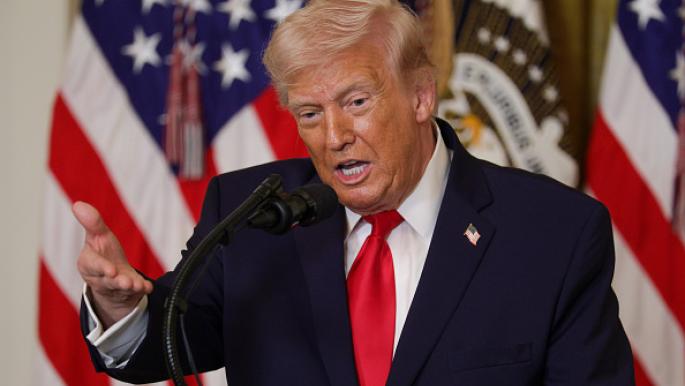
U.S. President Donald Trump has once again threatened Iran, indicating that any closure of the strategic Strait of Hormuz would result in severe consequences. These statements come at a critical moment as Tehran utilizes the strait as a means of pressure in the ongoing conflict.
Trump's remarks were made during a press conference, where he emphasized the importance of the strait, which is considered one of the most vital maritime passages in the world. He pointed out that any attempt by Iran to close it would face a firm response from the United States.
Details of the Event
As tensions rise between Washington and Tehran, Trump affirmed that his country would not tolerate any threats related to the Strait of Hormuz. This strait is a crucial artery for transporting oil and gas, with approximately 20% of the world's total oil supplies passing through it.
The American threats come amid increasing Iranian military activities in the region, as Tehran seeks to bolster its influence in the Arabian Gulf. Reports have indicated that Iran has enhanced its military presence in areas surrounding the strait, escalating tensions further.
Background & Context
Historically, the Strait of Hormuz has witnessed numerous conflicts and tensions, serving as a launch point for many wars and disputes in the region. Since the Islamic Revolution in Iran in 1979, relations between Iran and the United States have been strained, leading to escalating threats from both sides.
In recent years, Iran has utilized the strait as a means to exert pressure on Western nations, particularly in light of the economic sanctions imposed on it. The past period has seen several maritime incidents that have affected navigation in the strait, heightening global concerns.
Impact & Consequences
The American threats to Iran serve as a clear warning that any escalation in the region could lead to severe consequences. These tensions could impact global oil prices, as any closure of the strait could result in a sharp increase in prices.
Moreover, the American statements may provoke reactions from Iran's allies in the region, potentially intensifying the conflict. This situation poses a significant challenge to U.S. policy in the Middle East, as Washington seeks to maintain stability in the region.
Regional Significance
Tensions in the Strait of Hormuz directly affect neighboring Arab countries, many of which rely on oil supplies through this strait. Any escalation in the conflict could lead to increased tensions between Arab nations and Iran, impacting regional security.
Furthermore, any rise in oil prices due to these tensions could adversely affect Arab economies, making them more susceptible to economic fluctuations. Therefore, the situation in the Strait of Hormuz is a sensitive issue that requires careful monitoring.