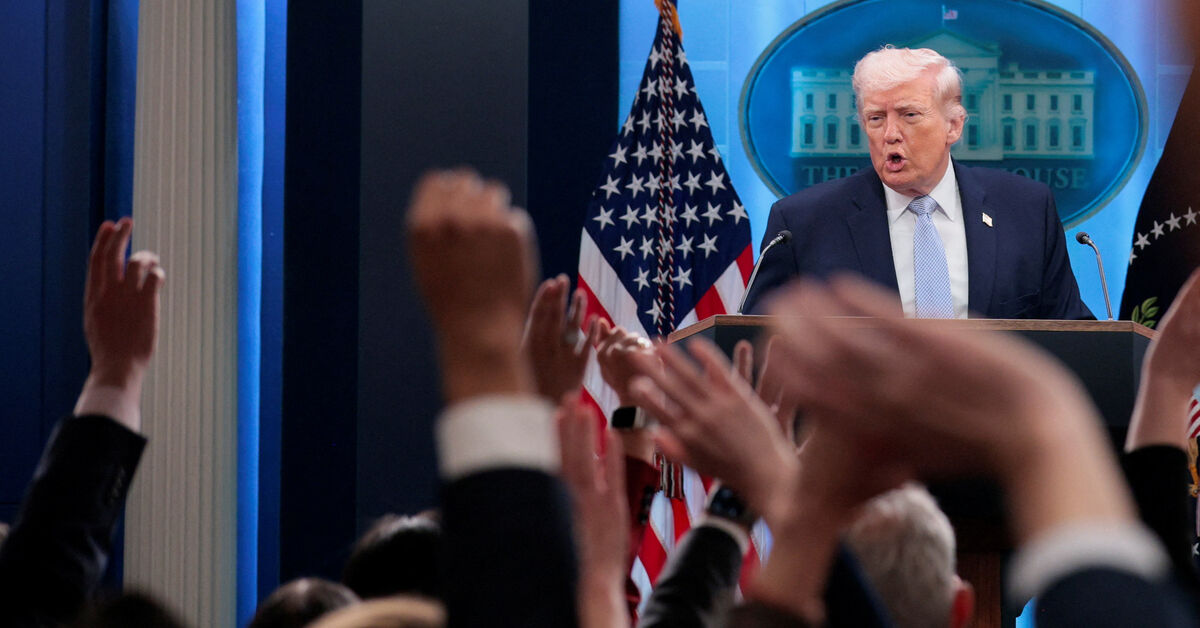
US President Donald Trump threatened on Monday to imprison the journalist who was the first to report the rescue of an American pilot in Iran, demanding that he reveal how he obtained that information. These remarks come at a sensitive time as tensions between the United States and Iran escalate, complicating the political landscape in the region.
Trump, who did not name the journalist, asserted that he would take legal action if the journalist did not disclose his source. This threat reflects the growing concern within the US administration regarding leaks of sensitive information, particularly concerning military operations and national security.
Details of the Incident
In related reports, it was noted that the American pilot was rescued after his aircraft experienced a malfunction during a mission in Iranian airspace. This incident has elicited mixed reactions in political and media circles, with some arguing that revealing details about the rescue could endanger the lives of American soldiers.
Furthermore, Trump believes that this information could impact future military operations, prompting him to adopt a strict stance against journalists who publish potentially sensitive or misleading information.
Background & Context
Historically, US-Iranian relations have seen increasing tensions since the US withdrawal from the nuclear agreement in 2018. Since then, Washington has imposed stringent sanctions on Tehran, leading to heightened military tensions in the region.
In recent years, the United States has increased its military presence in the Middle East, making it susceptible to criticism from Iran and its allies. This complex situation complicates the US administration's ability to handle intelligence information effectively, especially amid internal political pressures.
Impact & Consequences
Trump's threat to imprison journalists is a dangerous precedent in the history of American journalism, reflecting rising concerns about press freedom under the current administration. This trend could lead to a decline in trust between the media and the administration, negatively impacting transparency and accountability.
Additionally, this threat may provoke strong reactions from human rights organizations and civil society, which may view it as a violation of freedom of expression. If this threat is carried out, it could escalate tensions between the government and the press, affecting the media landscape in the United States.
Regional Significance
These developments are of significant importance to the Arab region, as the tensions between the US and Iran have direct implications for regional security. Many Arab countries are closely monitoring how these relations evolve, especially amid fears of escalating military conflicts.
Moreover, these events may influence domestic policies in Arab countries, where governments might use these tensions to bolster their authority or justify certain actions against opponents. Ultimately, the question remains about how these events will affect stability in the region.