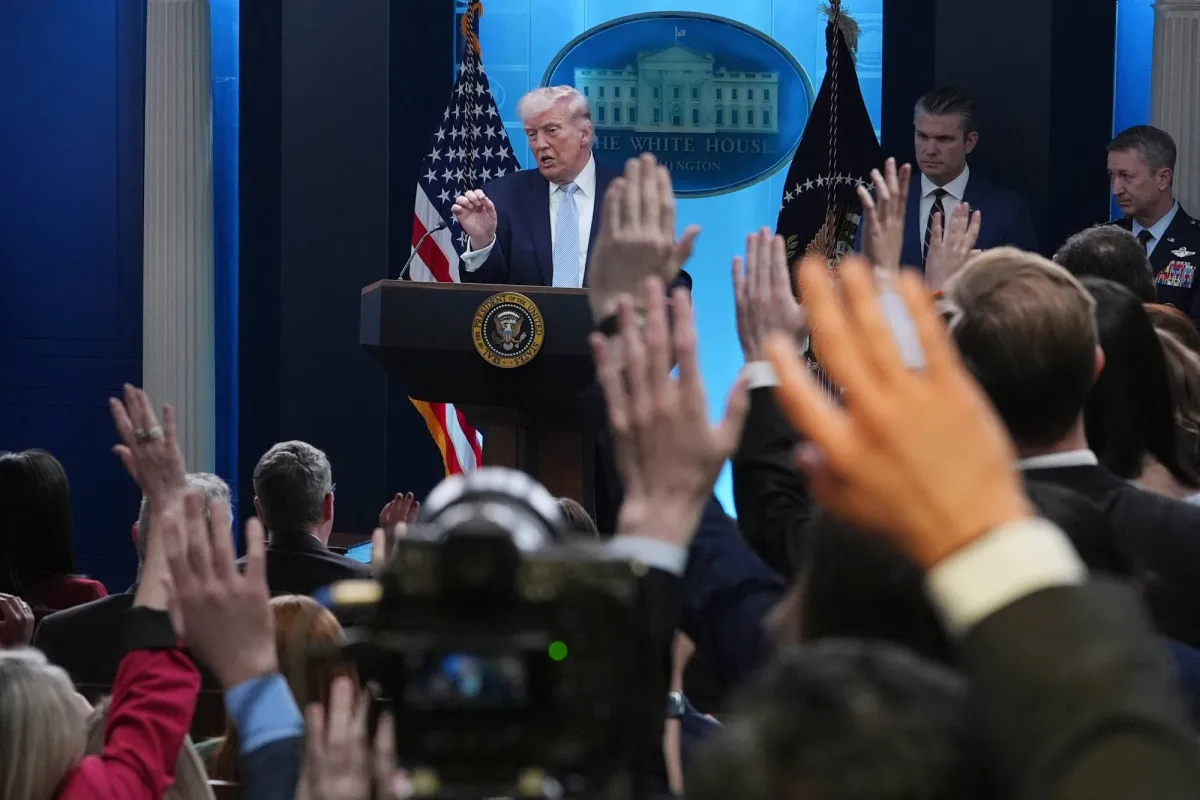
U.S. President Donald Trump threatened today (Monday) the journalist who was the first to leak news about the rescue of an American Air Force member in Iran with imprisonment if they do not reveal their source. These comments were made during a press conference at the White House, where Trump stated that disclosing the information jeopardized the rescue operation.
Trump's remarks represent a notable escalation in the U.S. administration's attack on the media, as he has privately complained about the negative coverage of the U.S.-Israeli war against Iran. He indicated that over 170 aircraft participated in the rescue operation, clarifying that one pilot was hiding in Iranian mountains.
Details of the Incident
Following the downing of an American fighter jet in Iran, media reports indicated that U.S. rescue forces successfully retrieved one of the pilots. Trump confirmed that revealing such information could endanger the life of the second pilot, although this pilot was also successfully rescued.
During the conference, Trump stated, "We hope to find this person," referring to the journalist who leaked the information. He added, "We will approach the media organization that published it and say: Hand them over or go to jail for national security reasons."
Background & Context
These statements come at a time when U.S.-Iran relations are experiencing increasing tension, with growing criticism of media coverage of events. Trump pointed out that some media outlets, such as the New York Times and CBS News, were among the first to publish the news, without naming the journalist or the specific organization involved.
In a related context, the head of the U.S. Federal Communications Commission, Brendan Carr, criticized media outlets that broadcast "fake news," indicating they have an opportunity to correct their course before renewing their licenses. These comments come amid increasing pressure on the media from the U.S. administration.
Impact & Consequences
Trump's statements raise questions about press freedom and the role of the media in covering military events. They also reflect a growing trend from the U.S. administration towards imposing restrictions on information related to national security.
These measures serve as a warning to journalists and correspondents, which may affect how they cover events in the future. Additionally, these statements could lead to further tension between the government and the media, negatively impacting freedom of expression.
Regional Significance
These developments are particularly significant for the Arab region, where fears of escalating conflict between the United States and Iran are rising. These statements may affect relations between Arab countries and Iran, especially amid ongoing tensions in the region.
Moreover, the escalation in American rhetoric could provoke reactions from Iran, complicating the security situation in the region. At the same time, these events may influence the stance of Arab countries in dealing with Iran, particularly given the increasing tensions.
In conclusion, Trump's statements reflect the escalating tensions in U.S.-Iran relations and highlight the challenges facing the media in covering these events. It remains to be seen how matters will evolve in the coming days.