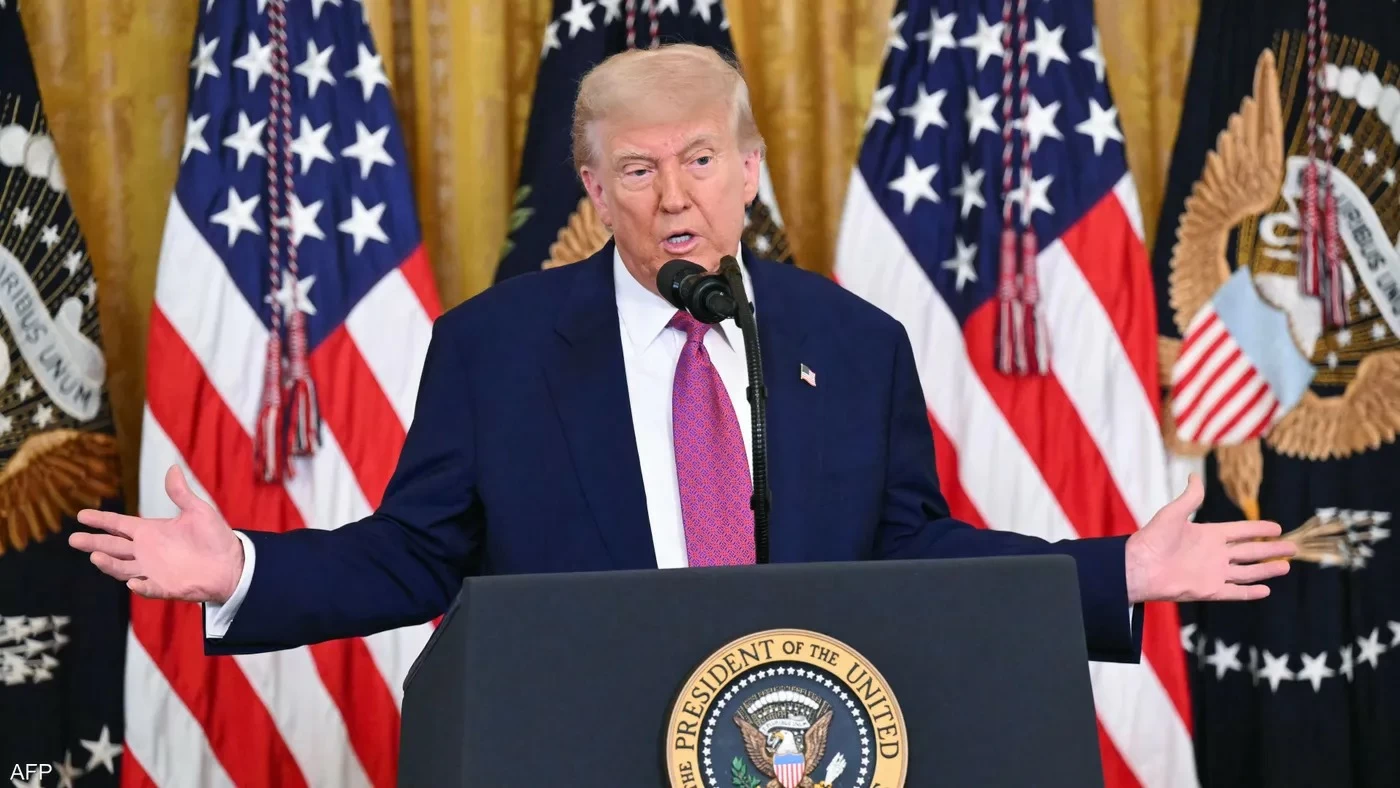
President Donald Trump, during a press conference at the White House, threatened to imprison the journalist who published the first report on the U.S. military's search for a weapons officer in an F-15E aircraft that was shot down over Iranian territory, if they do not disclose their sources. Trump stated, "The one who published the story will go to jail if they don't speak... and it won't be long," indicating that his administration would approach the media company that published the report, saying, "This is a matter of national security... Give us the source or go to jail."
The American president emphasized that the leak harmed the rescue operation, as it informed the Iranians of the presence of a missing American pilot, thereby endangering the officer and rescue personnel. Trump described the individual who leaked the information as a "sick person." The F-15E aircraft was shot down last Friday over Iran during ongoing military operations in the region, and it had two pilots on board, one of whom was rescued in a daring operation, while the search for the other officer (the weapons systems officer) continued before he was also rescued over the weekend.
Details of the Incident
The concerned journalist published the first report revealing that U.S. forces were searching for the missing officer inside Iranian territory before the second rescue operation was completed. Trump accuses this report of giving the Iranians an early signal, making the mission more difficult. Trump's threats come amid heightened tensions between the United States and Iran, where an open military conflict has been ongoing for weeks, including the closure of the Strait of Hormuz and exchanges of strikes.
Trump praised the rescue operation, describing it as "one of the boldest search and rescue operations in U.S. history," noting that U.S. forces faced heavy gunfire during the operation. Trump has taken a hardline stance against leaks related to national security, having previously threatened journalists and media personnel during his first term.
Background & Context
These threats coincide with rising tensions between the United States and Iran, as the region has witnessed significant military escalation. The F-15E aircraft is considered one of the main combat aircraft in the U.S. Air Force and has been used in multiple operations against targets in the Middle East. Journalistic leaks regarding U.S. military operations could negatively impact the strategies of the U.S. military and endanger the lives of soldiers.
Historically, relations between the United States and Iran have seen increasing tensions since Washington's withdrawal from the nuclear agreement in 2018, leading to the imposition of severe economic sanctions on Tehran. These events contribute to creating a tense environment that could lead to further escalation in military conflict.
Impact & Consequences
Trump's threat to imprison journalists could spark widespread legal controversy, as press freedom is protected under the First Amendment of the U.S. Constitution. Attempting to imprison a journalist for refusing to disclose their sources typically faces significant legal hurdles, and such a move could encounter immediate judicial challenges. This situation may lead to increased tensions between the U.S. government and the media, raising concerns about freedom of expression.
These threats are likely to affect how the media covers military and security events in the future, potentially leading to reduced transparency in journalistic reports regarding U.S. military operations.
Regional Significance
These events are particularly significant for the Arab region, as the escalation of tensions between the United States and Iran could impact security and stability in Gulf countries. Any military escalation could have serious repercussions on the regional economy, especially given the heavy reliance on oil exports.
Furthermore, Trump's threats may bolster Iran's position in the region, potentially increasing popular support for it in the face of the United States. These dynamics could affect relations between Arab countries and Iran, complicating the political landscape in the region.
In conclusion, these events highlight the importance of protecting press freedom amid military crises, as accurate and transparent information plays a vital role in understanding events and their repercussions.