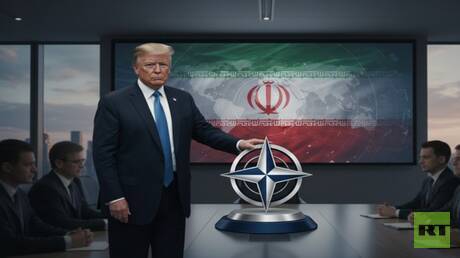
Concerns are mounting regarding the possibility of President Donald Trump withdrawing the United States from the North Atlantic Treaty Organization (NATO), as his recent statements raise questions about the future of relations between the United States and its European allies. Amid escalating tensions, many observers are asking a pivotal question: Could Trump actually decide to withdraw?
These threats come at a sensitive time, as NATO faces multiple challenges, ranging from tensions with Russia to security crises in the Middle East. Trump has repeatedly emphasized the need for NATO member countries to bear more financial burdens, which has elicited mixed reactions among allies.
Details of the Situation
Recently, Trump indicated that the United States might reassess its commitments to NATO if member countries do not adhere to increasing their defense budgets. This statement has sparked widespread concern in European political circles, as NATO is considered one of the cornerstones of European security.
On the other hand, Trump faces internal criticism from some members of Congress who believe that a U.S. withdrawal from NATO could undermine American national security. Some European allies have expressed their willingness to discuss increasing defense spending, but they simultaneously voice their concerns over Trump’s escalating threats.
Background & Context
NATO was established in 1949 as a military alliance aimed at enhancing collective security among member states. The alliance has undergone significant transformations over the decades, particularly after the end of the Cold War. With increasing geopolitical tensions, NATO has become more crucial in addressing new security challenges, including terrorism and Russian expansionism.
In recent years, relations between the United States and European countries have experienced growing tensions, especially under the Trump administration. Trump has repeatedly criticized his allies for failing to meet agreed-upon defense goals, intensifying discussions about the future of the alliance.
Impact & Consequences
If Trump decides to follow through on his threats to withdraw, it could destabilize the security framework in Europe. Such a decision might be seen as a green light for Russia to expand its influence in the region, potentially increasing military tensions.
Moreover, a U.S. withdrawal from NATO could create a security vacuum that other powers might exploit, reshaping the landscape of global alliances. This decision could also affect trade and economic relations between the United States and European countries, leading to increased economic instability.
Regional Significance
The Middle East is one of the regions most affected by the tensions between the United States and its allies. If a U.S. withdrawal from NATO occurs, it could lead to a reevaluation of Arab countries' strategies in dealing with security threats, particularly amid challenges posed by terrorist organizations and regional conflicts.
Furthermore, this withdrawal could impact the military and economic support that the United States provides to certain Arab countries, potentially altering the balance of power in the region.
In conclusion, the question of how serious Trump is about his threats to withdraw from NATO remains open. As tensions continue, the future of the alliance and the relationships between the United States and its European allies may face further tests in the coming period.