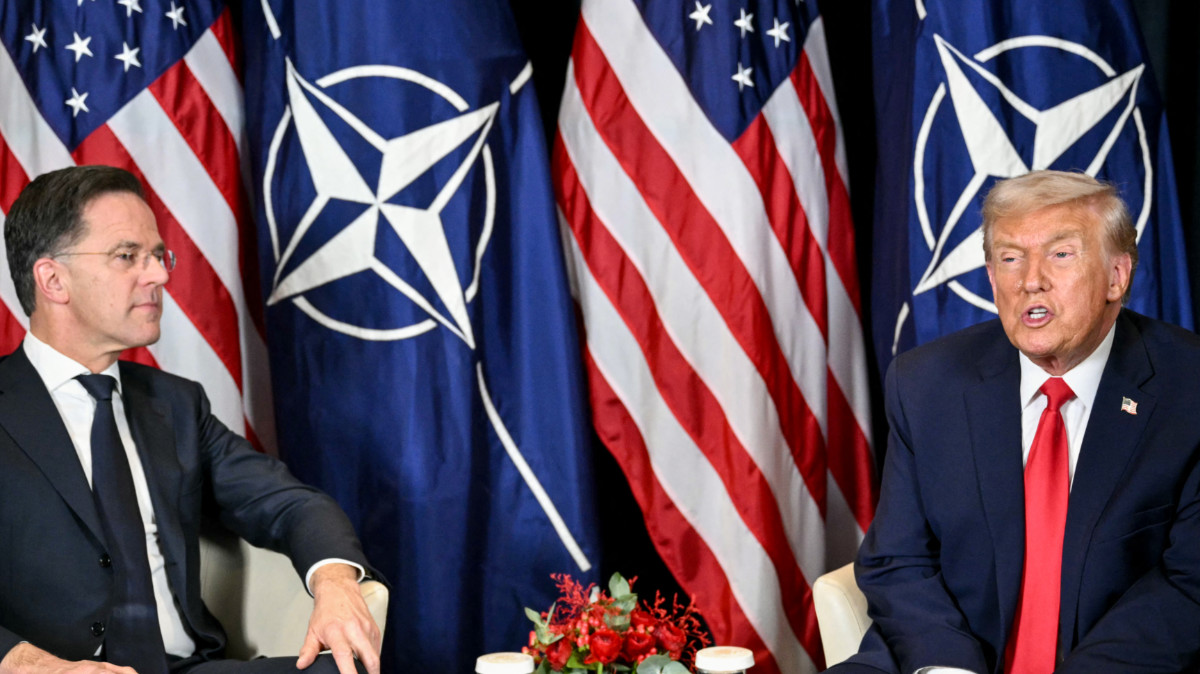
U.S. President Donald Trump announced in a speech from the White House that he is seriously considering withdrawing from NATO, expressing his dissatisfaction with European reactions to Iran's actions in the Strait of Hormuz. This announcement comes at a sensitive time as tensions rise between the United States and Iran, threatening to dismantle Western alliances that have lasted for decades.
Trump, who indicated that he "considers withdrawal from NATO without a doubt," confirmed that this decision could be "off the table for discussion." A report from the Financial Times stated that Trump is threatening to halt arms supplies to Ukraine as a means to pressure Europeans into joining a coalition aimed at reopening the Strait of Hormuz.
Details of the Event
As the conflict between the United States and Iran intensifies, Trump has begun informal phone conversations with the media, expressing his frustration with European countries, particularly the United Kingdom, for not supporting U.S. strikes against Iran. NATO, which was established after World War II, is considered the cornerstone of American security in Europe, with the U.S. joining in 1949.
However, a law passed in 2023 prevents the U.S. president from withdrawing from NATO without the approval of two-thirds of the Senate, raising questions about Trump's ability to implement his threats.
Context and Background
Concerns are growing in Europe about being drawn into a new military conflict, as many European nations, including France, Poland, and Italy, refuse to support the U.S.-Israeli war against Iran. Poland has confirmed it will not send air defense systems to the Middle East, while France and Italy have denied the U.S. access to their airspace and military bases.
According to Ian Lesser, Vice President of the German Marshall Fund in the United States, European leaders are worried about being asked to participate in military operations for which they had no role in shaping the strategy.
Impact and Consequences
The Trump administration is struggling to deal with Iranian control over the Strait of Hormuz, which is considered a vital transit point for about 20% of global energy supplies. Trump's statements have varied from threatening to "annihilate" Iran to downplaying the significance of the strait, suggesting that little of U.S. energy supplies passes through it.
In a social media post, Trump urged his allies to "take their oil," warning that the United States would not be there to help them as they had not been there to support it. This statement reflects the growing gap between the United States and its NATO allies.
Impact on the Arab Region
These developments directly affect the Arab region, as any escalation in the U.S.-Iran conflict could lead to increased tensions in the Arab Gulf. Many Arab countries rely on energy supplies from the Gulf, and any disruption in these supplies could negatively impact their economies.
Under these circumstances, Arab nations must be cautious in their dealings with major powers and seek to achieve a balance in their relations with the United States and Iran, especially in light of rapidly changing geopolitical dynamics.