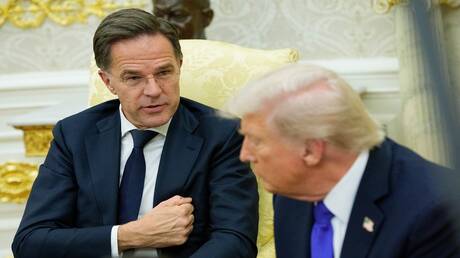
U.S. President Donald Trump announced he is seriously considering withdrawing the United States from NATO after the alliance refused to provide support in its conflict with Iran.
Trump's statements come at a sensitive time, as relations between the United States and Iran are increasingly strained, raising questions about NATO's commitment to supporting its members against external threats. Trump expressed his dissatisfaction with the lack of adequate support from the alliance, prompting him to consider more drastic options.
Details of the Event
During a press conference, Trump confirmed that the United States might take serious steps toward withdrawing from NATO if the alliance continues to ignore Washington's needs in the context of the conflict with Iran. He pointed out that NATO has not provided the necessary support at a time when tensions in the region are escalating, making it ineffective in achieving the strategic goals of the United States.
Trump, who has long criticized NATO for what he perceives as insufficient contributions from member states, believes that withdrawal could be the best option if the situation does not improve. This statement comes at a critical moment, as fears of a potential military escalation in the region are growing.
Background & Context
NATO was established in 1949 as a military alliance aimed at enhancing collective security among member states against external threats. However, in recent years, there has been a divergence of opinions regarding the alliance's role and significance, especially amid rapid geopolitical changes.
In recent years, the United States has taken unilateral steps on various international issues, raising concerns among its NATO allies. This has led to increasing calls within the alliance to strengthen cooperation and coordination among member states, particularly in light of rising threats from countries like Iran and Russia.
Impact & Consequences
If the United States decides to withdraw from NATO, it could have significant implications for European and global security. Such a move could lead to the disintegration of existing military alliances and increase instability in the region, potentially opening the door for increased military activities by countries like Iran.
Moreover, a U.S. withdrawal could encourage some NATO member states to reassess their commitments to the alliance, which could erode trust among member nations and heighten tensions in international relations.
Regional Significance
The developments in the relationship between the United States and NATO on one side and Iran on the other are particularly significant for the Arab region. Any steps towards a U.S. withdrawal from NATO could alter the security dynamics in the Middle East, reflecting on existing conflicts.
In the event of escalating conflict with Iran, Arab countries may find themselves in a difficult position, as they will have to deal with the repercussions of any potential military escalation. Additionally, a reduction in U.S. support could weaken the ability of Arab nations to confront regional threats.
In conclusion, Trump's statements regarding withdrawal from NATO serve as a wake-up call to the world, highlighting the need to reassess military alliances amid rapid geopolitical changes.