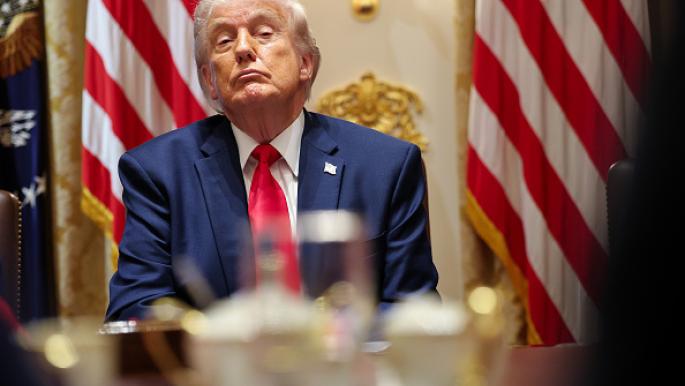
U.S. President Donald Trump has threatened Oman, a strategic ally of Washington, with military action if it supports Iran regarding the reopening of the Strait of Hormuz. These statements were made during a press conference on Wednesday, where Trump asserted that any Omani support for Tehran would be met with a military response from the United States.
Trump's remarks come at a time when the region is experiencing increasing tensions due to the ongoing dispute over the Strait of Hormuz, which is considered one of the most important maritime passages in the world. Approximately 20% of the world's total oil passes through this strait, making it a sensitive strategic point.
Details of the Event
During the conference, Trump indicated that Oman should be cautious in its stance towards Iran, warning that any alliance with Tehran could lead to serious repercussions. He emphasized that the United States would not hesitate to use military force to protect its interests and those of its allies in the region.
This threat reflects Trump's hardline policy towards Iran, as he seeks to diplomatically and militarily isolate the country. The statement has elicited mixed reactions from observers and analysts, who believe that such threats could escalate tensions in the Gulf region.
Background & Context
Historically, Oman has played a mediating role in regional conflicts, maintaining good relations with both Iran and the United States. Trump's threat may alter the nature of relations between Oman and Iran, placing the Sultanate in a precarious position.
On the other hand, the Strait of Hormuz has witnessed numerous incidents in recent years that have heightened tensions, including attacks on oil tankers. These events have made the region a focal point of international concern, as major powers seek to protect their interests.
Impact & Consequences
If the United States follows through on its threats, it could lead to military escalation in the region, negatively impacting the global economy. Additionally, any attack on Oman could destabilize other Gulf countries, resulting in a refugee influx and increased sectarian tensions.
Potential repercussions also include effects on global oil markets, where any escalation could significantly raise oil prices. This situation could impact the economies of oil-consuming nations and increase economic pressures on producing countries.
Regional Significance
This threat reflects the rising tensions in the Gulf region, where Arab nations are increasingly anxious about any military escalation. Oman, which has long been a neutral country, may find itself compelled to take difficult positions under these circumstances.
Ultimately, the current situation requires Arab nations to take effective diplomatic steps to avoid escalation and work towards enhancing security and stability in the region. Dialogue and cooperation among countries is the optimal way to prevent future crises.