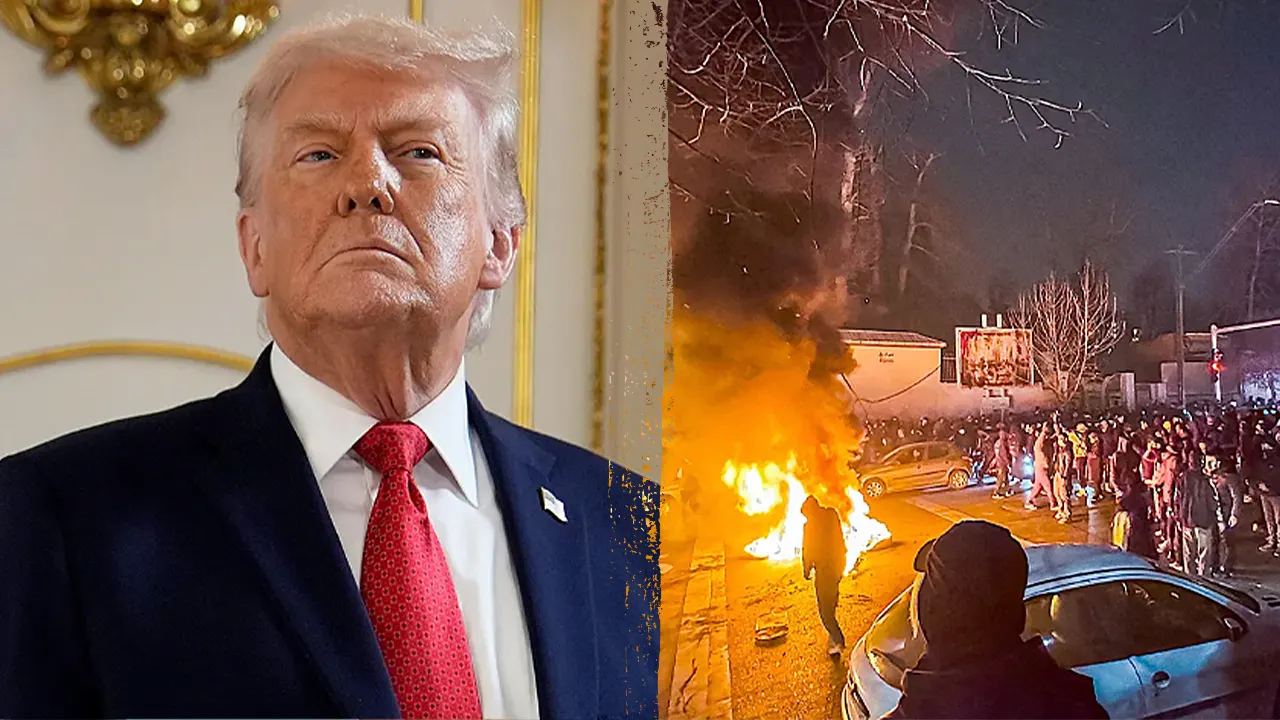
U.S. President Donald Trump announced that the United States intends to launch strong strikes against Iran in the coming weeks, a move that could heighten tensions in the Middle East. These statements come at a critical juncture, as fears of a potential military escalation between the two countries are on the rise.
Trump, speaking at a press conference, emphasized that the United States would not hesitate to take strict measures against Iran, indicating that these actions are aimed at protecting American interests and those of its allies in the region. He also noted that Iran has crossed boundaries with its aggressive behavior, necessitating a strong response from Washington.
Details of the Announcement
Trump's statements come at a sensitive time, as U.S.-Iran relations have been increasingly strained since the U.S. withdrawal from the Iranian nuclear deal in 2018. Since then, Washington has imposed severe economic sanctions on Tehran, significantly impacting the Iranian economy and exacerbating internal crises.
Recently, Iran has ramped up its military activities, including targeting commercial vessels in the Arab Gulf, raising alarms among neighboring countries and the United States. In response, Washington has sent military reinforcements to the region, including an aircraft carrier, in a bid to deter any potential attacks from Iran.
Background & Context
Historically, U.S.-Iran relations have been tense since the 1979 Islamic Revolution, which severed diplomatic ties between the two nations. Since then, the region has witnessed numerous crises and conflicts in which Iran has played a role, making it a target of U.S. foreign policy.
In recent years, tensions have escalated significantly, especially following the killing of Iranian General Qasem Soleimani in a U.S. airstrike in Iraq, which provoked a violent reaction from Iran. Tehran considered this attack an infringement on its sovereignty, further intensifying the tensions.
Impact & Consequences
If the United States follows through on its threats, it could lead to significant military escalation in the region, threatening the stability of Gulf Arab states and impacting global oil markets. Additionally, any military action could draw other countries into the conflict, complicating the situation further.
The repercussions of these statements may also include an increase in cyberattacks from Iran, which may seek to retaliate against any aggressions by targeting U.S. infrastructure or that of its allies in the region. This escalation could also affect U.S. relations with its European allies, who are seeking a diplomatic resolution to the crisis.
Regional Significance
The tensions between the United States and Iran directly impact neighboring Arab countries, raising fears of escalating armed conflicts. Countries like Iraq, Syria, and Lebanon may find themselves at the center of the conflict, threatening their stability and security.
Moreover, any military escalation could lead to a flow of refugees from conflict zones to neighboring countries, increasing the pressures on these nations already grappling with humanitarian and economic crises.
In conclusion, eyes remain fixed on the upcoming developments in U.S.-Iran relations, as any move could significantly impact security and stability in the region.