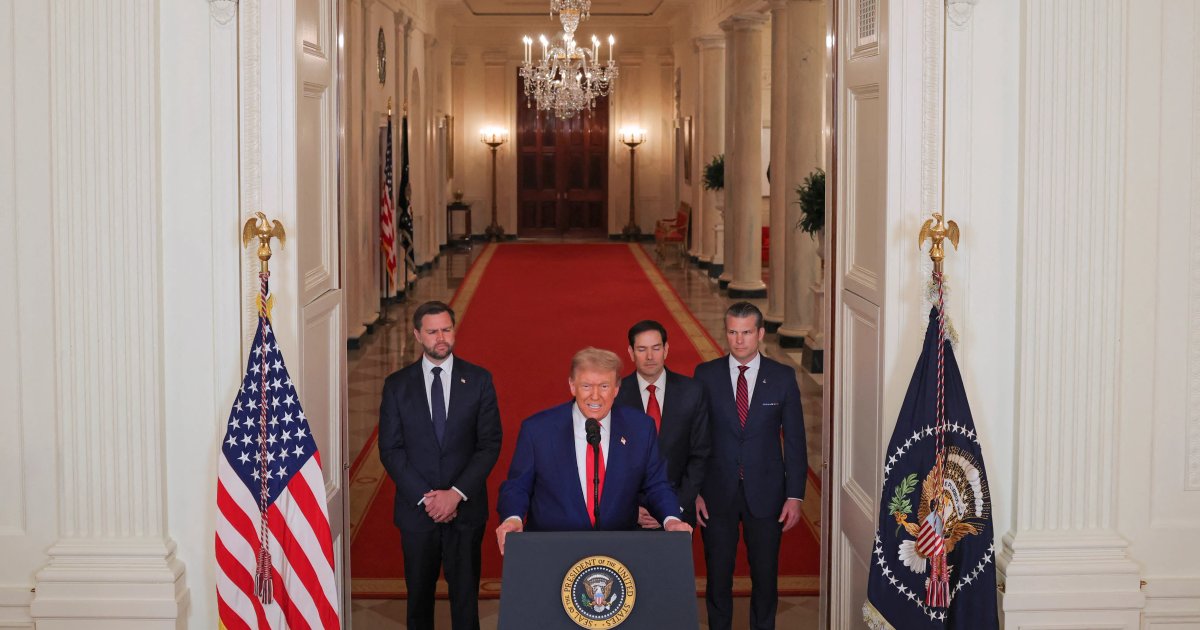
The White House spokesperson, Caroline Levitt, announced that the United States will act in accordance with the law after President Donald Trump threatened to target Iran's energy and water infrastructure. This statement was made during a press conference held on Monday, where Levitt emphasized that the U.S. Armed Forces will always adhere to legal standards.
Levitt's remarks were in response to questions regarding Trump's threats, which could be considered a violation of international law. Trump indicated that if a peace agreement is not reached, the United States would "blow up and completely remove" all power plants, oil wells, and water desalination facilities in Iran.
Details of the Event
Earlier, the relations between the United States and Iran witnessed a notable escalation, as the U.S. and Israel carried out attacks on targets within Iran, including the capital Tehran, resulting in damage and civilian casualties. In response, Iran launched attacks on Israeli sites and U.S. military facilities in the region, further heightening tensions.
The Arabian Gulf region, particularly the Strait of Hormuz, is a vital point for the transport of oil and natural gas, and recent tensions have led to an effective blockade on this waterway, negatively impacting oil and gas exports from Gulf countries to global markets.
Background & Context
Historically, U.S.-Iranian relations have been marked by recurring tensions since the 1979 Islamic Revolution in Iran, which led to several military conflicts and diplomatic disputes. In recent years, these tensions have intensified following the U.S. withdrawal from the Iranian nuclear deal in 2018, resulting in strict economic sanctions on Tehran.
Iran is considered one of the largest oil producers in the world, and Trump's threat to target its energy infrastructure represents a serious escalation that could have far-reaching implications for the global economy, as many countries rely on Iranian oil.
Impact & Consequences
The recent U.S. escalation serves as a clear warning to Tehran and may provoke military responses from the Iranian side, potentially plunging the region into a cycle of violence. Targeting Iranian energy infrastructure could be deemed a war crime under international law, placing the United States in a precarious position before the international community.
Moreover, any military escalation could directly affect global oil prices, as it may lead to price increases due to instability in the region. Additionally, any military conflict could disrupt navigation in the Strait of Hormuz, complicating the global economic situation further.
Regional Significance
Neighboring Arab countries to Iran, such as Iraq and those in the Arabian Gulf, find themselves in a highly sensitive position, as they could be directly affected by any military escalation. Targeting Iran could have negative repercussions on regional security, prompting countries like Saudi Arabia and the United Arab Emirates to bolster their military capabilities in the face of potential threats.
Ultimately, this escalation highlights the importance of diplomatic dialogue to resolve conflicts, as military escalation will only exacerbate conditions and increase human suffering in the region. The stability of the Middle East heavily relies on the ability of the involved parties to reach peaceful solutions.