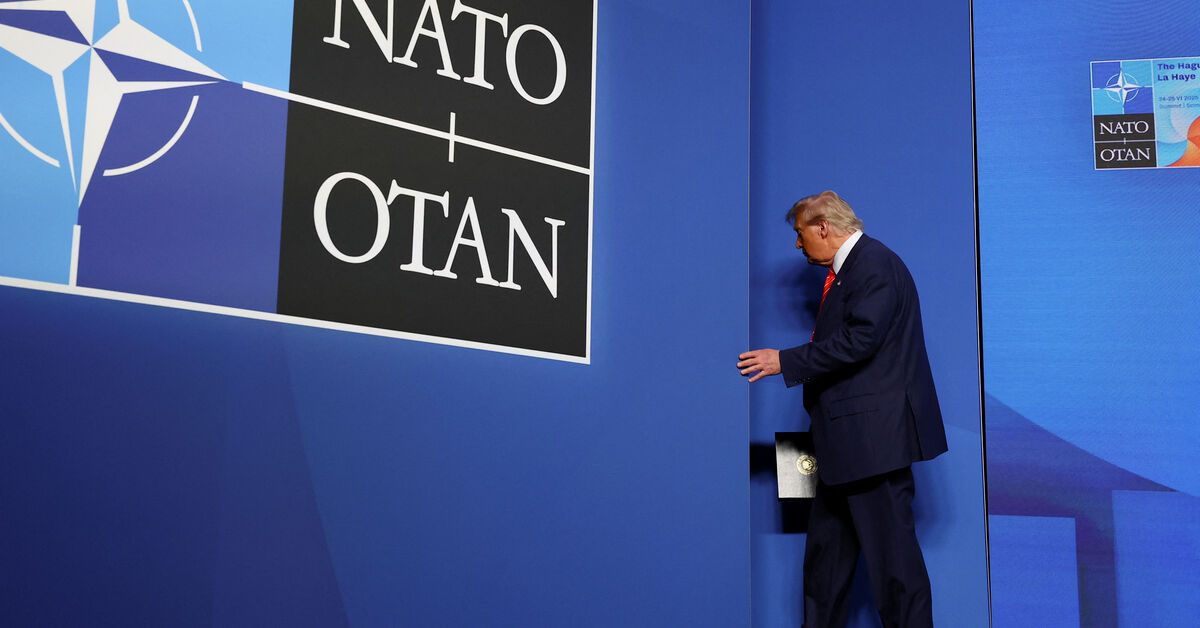
US President Donald Trump threatened on Wednesday to withdraw the United States from the North Atlantic Treaty Organization (NATO) due to the lack of response from European countries to his call for sending ships to the Hormuz Strait, which is considered a vital strategic passage in the Arabian Gulf. These threats come at a time when criticisms of the military alliance, established 77 years ago, are escalating, raising questions about the future of military cooperation between the United States and its European allies.
This threat arises amid rising tensions in the Gulf region, where the Hormuz Strait is a crucial corridor for transporting oil and natural gas. Trump has expressed his dissatisfaction with the insufficient support from European nations, prompting him to adopt a harsher stance towards the alliance that he has long regarded as the foundation of European and American security.
Details of the Event
In his recent statements, Trump emphasized that the failure of European countries to send ships to the Hormuz Strait is a sign of their lack of commitment to their responsibilities towards the alliance. Experts have pointed out that Trump may not be able to unilaterally decide to withdraw the United States from NATO, although he often makes major decisions without congressional approval, raising concerns about the stability of the alliance.
These threats are part of Trump's foreign policy, which focuses on enhancing American interests, as he seeks to place more financial and military burdens on European nations. This stance has elicited mixed reactions from European leaders, who view NATO as the cornerstone of security on the continent.
Background & Context
NATO was established in 1949 as a military alliance aimed at countering Soviet threats during the Cold War. Since then, the alliance has evolved to encompass a wide range of security issues, including counter-terrorism and cybersecurity. However, in recent years, there has been a decline in trust between the United States and its European allies, especially under Trump's administration, which has taken hardline positions on many international issues.
Concerns are growing that a US withdrawal from NATO could destabilize Europe, where many countries rely on American military support to face external threats. In recent years, tensions between Iran and Western countries have escalated, increasing the importance of military cooperation in the region.
Impact & Consequences
If the United States decides to take concrete steps towards withdrawing from NATO, it could lead to radical changes in the balance of power in Europe. European countries may find themselves compelled to enhance their military capabilities further, potentially leading to a new arms race in the region. Additionally, such a withdrawal could strengthen Russia's position in the area, as Moscow seeks to expand its influence in Eastern Europe and the Middle East.
Moreover, a US withdrawal from NATO could impact trade and economic relations between the United States and European countries, as many American companies depend on security stability in Europe to expand their operations. Therefore, any change in this context could negatively affect the American economy as well.
Regional Significance
The Arabian Gulf region is among the most affected areas by tensions between the United States and Iran, with approximately 20% of global oil supplies passing through the Hormuz Strait. If tensions continue to escalate, this could lead to rising oil prices and increased economic pressures on oil-importing Arab countries.
Additionally, any change in US policy towards NATO could affect the stability of the region, as many Arab countries rely on American support to face security threats. Thus, the future of NATO may have far-reaching implications for security and stability in the Arab region.