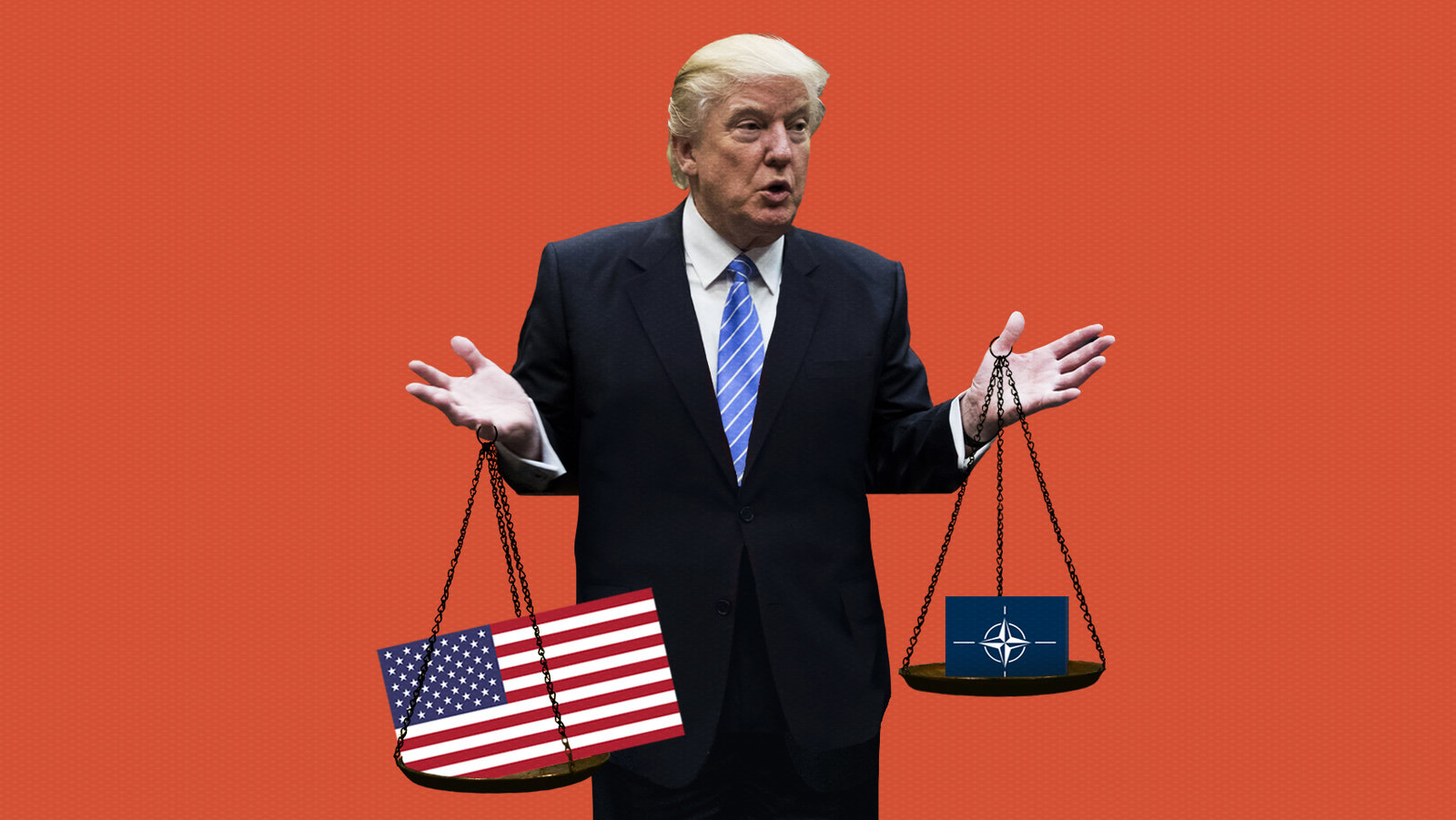
In a controversial statement, U.S. President Donald Trump revealed that he is contemplating the possibility of withdrawing the United States from NATO, following the alliance's unwillingness to support him in facing Iranian challenges. This remark came during his conversation with the British newspaper 'The Telegraph', where Trump confirmed that this option is now being seriously considered.
Trump added that the United States has long viewed NATO as a 'paper tiger', referring to the alliance's weakness despite its apparent strength. He indicated that Russian leadership is aware of this weakness, complicating the security situation in the region.
Details of the Event
Trump's statements come at a sensitive time, as relations between the United States and Iran have seen a notable escalation. At the end of February, the United States and Israel launched attacks on Iranian targets, resulting in damage and civilian casualties. In response, Iran carried out attacks on Israeli and U.S. sites in the Middle East.
This military escalation reflects the increasing tension in the region and places NATO in a precarious position, as it is expected to be a key player in any U.S. strategy to confront Iranian threats. However, the alliance's refusal to provide support to Washington on this issue could weaken the United States' position and strengthen Iran's.
Background & Context
NATO was established in 1949 as a military alliance aimed at countering Soviet threats during the Cold War. With the collapse of the Soviet Union, the alliance's missions evolved to include confronting new threats such as terrorism and extremism. Nevertheless, NATO still faces significant challenges in how to deal with countries it considers threats, such as Iran.
Historically, the United States has been the driving force behind NATO, providing military and financial support to member states. However, in recent years, Trump has criticized the alliance, arguing that it does not deliver the expected benefits for the United States, leading to growing concerns about the possibility of Washington's withdrawal.
Impact & Consequences
If the United States decides to withdraw from NATO, it would deal a significant blow to the alliance and could lead to a reshaping of the security landscape in Europe. European NATO member states would be concerned about losing American support, which might prompt them to bolster their military capabilities independently.
Furthermore, a U.S. withdrawal could enhance Russia's influence in the region, as Moscow would find an opportunity to expand its sway over countries that had relied on American protection. This shift in security dynamics could create a more complex and challenging environment for dealing with regional threats.
Regional Significance
For the Arab region, any change in U.S. policy towards NATO could directly impact security situations. Arab countries facing threats from Iran, such as Saudi Arabia and the UAE, may find themselves in a difficult position if the United States retracts its support.
Additionally, escalating tensions between the United States and Iran could lead to heightened conflicts in the region, threatening stability in countries like Iraq, Syria, and Lebanon. Therefore, closely monitoring these developments will be essential to understand how they affect Arab interests.
In conclusion, the future of U.S.-NATO relations remains unclear, especially amid increasing challenges from Iran. Trump's statements reflect a significant shift in American policy, necessitating Arab countries to reassess their security strategies.