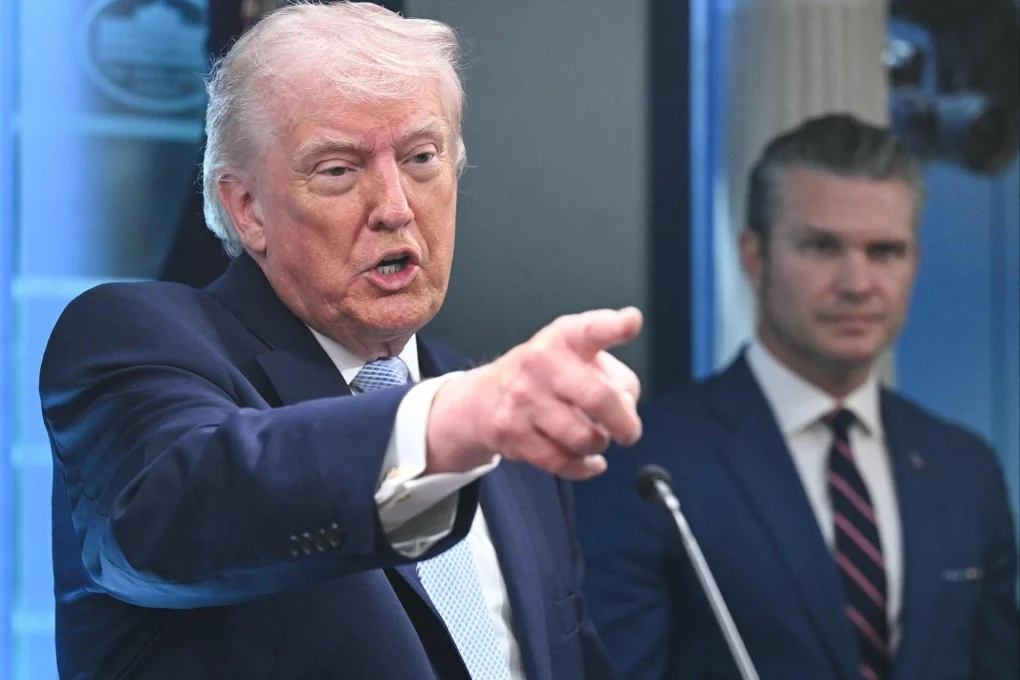
In a new move reflecting the escalating tensions between the United States and Iran, President Donald Trump has issued a new warning calling on Iran to reach a peace agreement. This comes at a time when both parties are facing a significant trust gap, along with a lack of necessary guarantees to achieve any progress in negotiations. Trump has set a new deadline for reopening the Strait of Hormuz, urging Iran to take tangible steps by 8 PM Washington time on Tuesday.
This warning is the third of its kind since the conflict erupted on February 28, with Iranians facing serious threats regarding the destruction of their vital facilities such as power plants and bridges if an agreement is not reached. Trump's statements indicate that the situation may escalate further if Iran continues to reject American demands.
Details of the Event
The U.S.-Iranian relations are characterized by ongoing tension, with recent years witnessing an escalation in rhetoric from both sides. Trump, who is seeking to achieve diplomatic successes ahead of the upcoming presidential elections, appears determined to pressure Iran into making concessions. Meanwhile, Iran continues to assert its stance against external pressures, complicating the situation further.
On the other hand, Israel plays a pivotal role in this equation, viewing Tehran as an existential threat. Analyses suggest that any potential agreement may require guarantees from other countries, which the current situation lacks. This ambiguity in guarantees complicates negotiations and reflects a state of uncertainty in the region.
Background & Context
Historically, U.S.-Iran relations have experienced significant fluctuations. Since the Iranian Revolution in 1979, relations have deteriorated sharply, leading to the imposition of stringent economic sanctions on Tehran. These sanctions have severely impacted the Iranian economy, prompting the government to seek ways to negotiate with the United States.
In recent years, the region has seen an escalation of conflicts, including those in Syria and Yemen, where Iran plays a key role. These conflicts have complicated relations between Iran and the United States, making any peace agreement more challenging.
Impact & Consequences
If an agreement is not reached, the consequences will be dire for the entire region. Military escalation could lead to a comprehensive conflict, affecting both regional and global security. Additionally, ongoing tensions may result in rising oil prices, impacting the global economy.
Moreover, any escalation could negatively affect relations between the United States and its allies in the region, increasing instability. At the same time, extremist groups may benefit from this chaos to enhance their influence.
Regional Significance
For Arab countries, the escalation between the United States and Iran poses a significant challenge. Many countries in the region rely on price stability in the oil market, and any escalation could directly impact their economies. Ongoing conflicts may also lead to an influx of refugees and increased sectarian tensions.
Therefore, achieving peace between the United States and Iran is not only important for both parties but is also an urgent necessity to ensure the stability of the entire region. Ultimately, the question remains: Will diplomacy succeed in overcoming these obstacles and achieving peace?