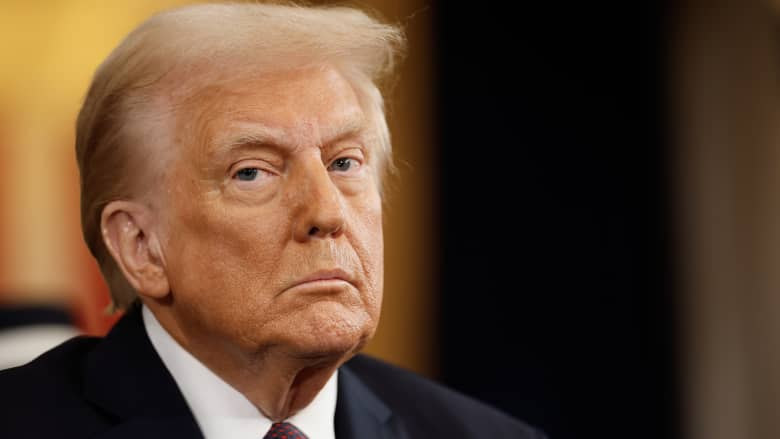
In a controversial statement, former U.S. President Donald Trump urged the Kingdom of Saudi Arabia to join the Abraham Accords, noting that the Middle East is undergoing significant transformations due to the ongoing conflict with Iran. Trump emphasized during a conference held in Miami that "the future of the region has never been brighter than it is now."
During his speech, Trump addressed Saudi official Yasir Al-Rumayyan, saying, "I hope you will finally join the Abraham Accords," adding, "Can you go back and explain that? The time is now." Trump referred to his previous discussions with Saudi Crown Prince Mohammed bin Salman, indicating that Riyadh has been slow to join these accords, considering Iranian influence in the region as the main obstacle.
Details of the Event
Trump's call comes at a sensitive time for the region, as Iran continues to bolster its influence in countries such as Iraq, Syria, and Lebanon. This influence has raised concerns among many Arab nations, including Saudi Arabia, which views Iran as a major regional competitor. It is worth noting that the Abraham Accords, signed in 2020, resulted in the normalization of relations between Israel and several Arab countries, including the UAE and Bahrain.
Despite the pressures, Saudi Arabia maintains that normalization with Israel depends on progress in resolving the Palestinian conflict. Saudi officials have stated on multiple occasions that they will not take steps toward normalization until tangible progress is made on this issue.
Context and Background
Historically, Saudi Arabia has been one of the most prominent supporters of the Palestinian cause, playing a significant role in advocating for Palestinian rights. However, geopolitical changes in the region, including the rise of Iran as a regional power, have prompted some Arab nations to reassess their policies. In recent years, there have been shifts in relations between certain Arab countries and Israel, sparking widespread debate in political and public circles.
The Abraham Accords represent a historic step in the peace process in the Middle East, marking a shift in traditional Arab positions toward Israel. Nonetheless, these accords still face significant challenges, particularly regarding the Palestinian issue.
Impact and Consequences
If Saudi Arabia were to join the Abraham Accords, it could fundamentally alter regional dynamics. This move would strengthen Israel's position in the region and may encourage other nations to take similar steps. However, it could also lead to increased tensions with Iran, which views Saudi Arabia as a primary adversary.
Moreover, Saudi Arabia's accession to these accords could provoke strong reactions from Palestinian factions, who might see it as a betrayal of their cause. Therefore, any Saudi move toward normalization would require sensitive management to ensure that it does not exacerbate the conflict in the region.
Impact on the Arab Region
Trump's call for Saudi Arabia to join the Abraham Accords serves as a real test for Saudi foreign policy. While Riyadh seeks to strengthen its relations with major powers, it faces internal and external pressures to maintain its traditional stance in support of the Palestinian cause.
Ultimately, developments in the Middle East remain closely tied to the regional balance of power, and Trump's invitation may open the door to new discussions about the future of Arab-Israeli relations. However, challenges remain, and it is unclear how Saudi Arabia will respond to these pressures.