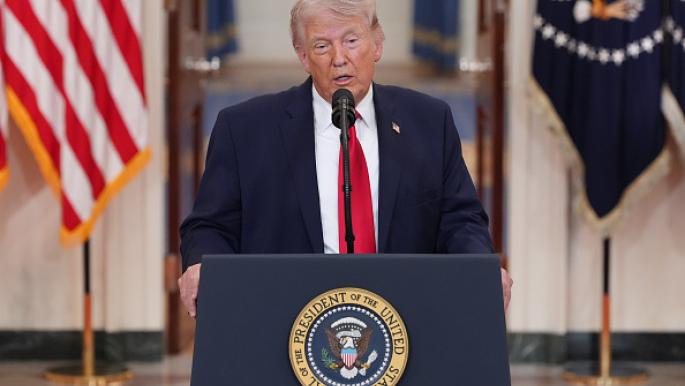
US President Donald Trump stated on Truth Social that the United States has the capability to open the Strait of Hormuz, indicating that this will require more time. These remarks come in light of increasing tensions in the region, where the Strait of Hormuz is a vital point for the transportation of oil and natural gas, making it a focal point for the world.
Trump's statements come at a sensitive time, as US-Iran relations are experiencing heightened tensions, especially following a series of military and political events that have unfolded in the region in recent months. The Strait of Hormuz is one of the busiest waterways in the world, with approximately 20% of the world's total oil passing through it.
Details of the Statement
In his post, Trump did not provide specific details on how or when the strait could be opened, but he indicated that the United States is prepared and capable of doing so. These statements come at a time when concerns are growing over potential threats from Iran, which controls a significant portion of the coastlines overlooking the strait.
Trump's remarks are part of a broader strategy to bolster the United States' position in the region, as he seeks to emphasize his country's strength in the face of security challenges. Additionally, these statements may be an attempt to reassure US allies in the region, who are worried about the rising Iranian influence.
Background & Context
The Strait of Hormuz has seen increasing tensions in recent years, with a rise in maritime incidents and threats from Iran. In 2019, several oil tankers were attacked, raising alarm in the international community. The United States has also sent military reinforcements to the region in an effort to protect maritime navigation and ensure energy security.
Iran considers the Strait of Hormuz part of its sovereignty and views any US intervention in the area as a threat to its national security. Conversely, the United States aims to secure the flow of oil through this vital corridor, making the situation in the region extremely complex.
Impact & Consequences
Trump's statements come at a critical juncture, as they could influence global oil prices, which are significantly affected by any tensions in the region. If the Strait of Hormuz is opened, it could lead to price stabilization; however, any escalation in tensions could result in a sharp increase in prices.
Moreover, these remarks may impact the relationships between the United States and its allies in the region, as Trump seeks to enhance security and economic cooperation with Gulf states. At the same time, they may heighten tensions with Iran, which could perceive these statements as provocative.
Regional Significance
The Arab region, particularly the Gulf states, is at the heart of these tensions. Any escalation in the Strait of Hormuz could directly affect the economies of these countries, which heavily rely on oil exports. Additionally, maritime security in the region is vital for the stability of the global economy.
Ultimately, Trump's statements regarding the opening of the Strait of Hormuz remain a contentious topic, intertwining political and economic interests. The international community will need to closely monitor developments, as any changes in the situation could impact security and stability in the region.