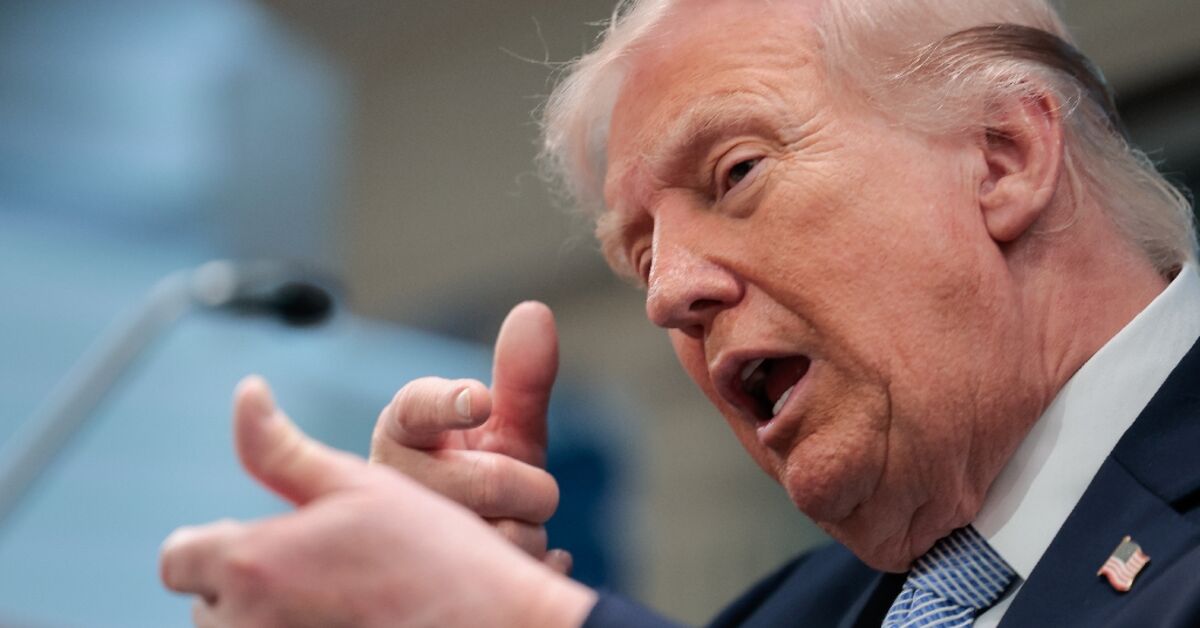
US President Donald Trump confirmed on Wednesday evening that American forces deployed near Iran will remain in the region until a 'real agreement' is achieved. This statement comes at a sensitive time as Washington enters a fragile two-week ceasefire with Tehran following escalating tensions in the area.
The ceasefire, reached on Tuesday, is already showing signs of collapse, with Israel conducting airstrikes on targets in Lebanon, complicating the situation further. Additionally, Washington's stance contradicts some of Iran's demands to end the conflict, raising questions about the potential success of upcoming negotiations.
Details of the Situation
Trump's remarks come amid growing concerns over rising tensions in the Middle East. American forces have been stationed in the region as part of a strategy to counter Iran's increasing influence. Trump emphasized that the presence of these troops is essential to ensure security and stability in the area until a comprehensive agreement that safeguards the interests of all parties is reached.
The current ceasefire represents an opportunity for both sides to de-escalate tensions; however, recent events indicate that the situation could deteriorate again if demands are not addressed effectively. Military actions by Israel could lead to a new escalation, further complicating the scenario.
Background & Context
Relations between the United States and Iran have been increasingly strained since Washington's withdrawal from the nuclear agreement in 2018. Since then, the US has imposed stringent economic sanctions on Iran, impacting its economy and leading to rising public protests within the country.
In recent years, Iran has intensified its military activities in the region, including supporting armed groups in Iraq, Syria, and Lebanon. This escalation has prompted the United States to bolster its military presence in the Arabian Gulf, heightening tensions between the two sides.
Impact & Consequences
Trump's recent statements could lead to heightened tensions in the region, as the presence of American forces may be perceived as a provocation by Tehran. If Iran continues to disregard US demands, the situation could spiral into a new military escalation.
Any escalation in the conflict could significantly impact oil prices and global financial markets, given that the Middle East is a vital area for energy supplies. Furthermore, any escalation could result in serious humanitarian consequences for civilians in the region.
Regional Significance
The situation in Iran and its impact on the Arab region presents a significant challenge for Arab states. Many Arab countries are concerned about the increasing Iranian influence in the region, which could destabilize countries like Iraq, Syria, and Lebanon.
The current ceasefire represents an opportunity for Arab nations to engage in peace efforts; however, it also poses a challenge, as any escalation could have negative repercussions on regional security. It is crucial for Arab states to promote dialogue and cooperation to avoid any potential escalation.