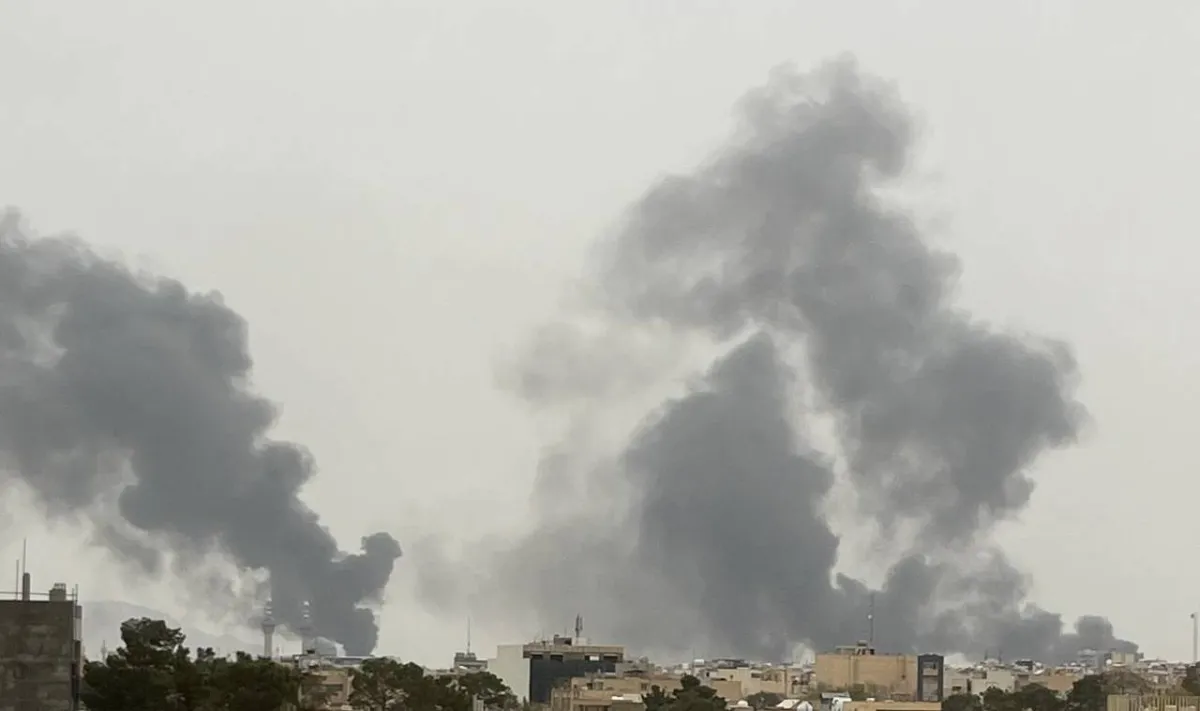
The ongoing conflict between the United States and Iran has taken a sharp turn, as President Donald Trump issued a warning to Tehran, demanding the opening of the Strait of Hormuz within 48 hours and threatening to target Iranian power stations. Trump's threat came just one day after U.S. analysts forecasted a 'de-escalation' of military operations, adding further pressure in energy markets, especially since the Strait of Hormuz is a vital corridor for over one-fifth of the world's oil and gas supplies.
In response, Tehran warned of an immediate reaction if its energy facilities were subjected to any attack. A spokesman for the Iranian General Staff confirmed that the Strait of Hormuz remains open to all non-hostile entities, stating that Tehran reserves the right to retaliate against any strike. Iranian analyst Mohammad Baqer Qalibaf noted that targeting Iranian power stations would make other U.S.-occupied facilities in the region legitimate targets.
This escalation comes at a time when the past few weeks have seen military exchanges between U.S. and Israeli forces against Iranian sites. Military reports have indicated that U.S. forces have carried out strikes on Iranian facilities used for storing cruise missiles aimed at ships. U.S. Central Command Admiral Brad Cooper stated that Iran's ability to threaten navigation in the Strait of Hormuz has been compromised, as U.S. forces continue their plan to eliminate Iran's capability of projecting influence.
Amid mutual threats, Iranian leaders have asserted that any targeting of Tehran would be treated as an open declaration of war and threatened to engage U.S. and Israeli forces in the region. One Iranian leader stated that such an escalation could lead to widespread devastation of energy networks if subjected to attacks. International relations have noticeably shifted in response to the Iranian-Israeli conflict, with Tehran seeking international support for its narrative of having been attacked.
Internally, Iran has witnessed a wave of warnings and threatening statements, with several officials affirming that Tehran will not hesitate to use its military capabilities in response to any external attack. The Iranian military operations chief, General Ali Abdollahi, indicated that Iran has prepared an offensive strategy, accompanied by advanced technologies and weapons.
Meanwhile, Western officials have noted that any threat to navigation in the Strait of Hormuz directly impacts global markets, raising questions about security around oil supplies. The escalation could influence oil prices, prompting importing countries to reassess their economic policies.
Regarding diplomatic efforts, Iranian Foreign Minister Abbas Araghchi contacted a group of diplomats, emphasizing the importance of dialogue to safeguard energy facilities while highlighting the violations Tehran faces in military incursions.
In the Arab context, these developments can be understood through the increased concerns that markets and trade flows may be affected by the escalating crisis, potentially raising the economic cost for regional countries heavily reliant on oil exports.
This conflict once again highlights the complexities of relationships between major powers in the region and their impact on political and economic alliances, alongside the increasing military dimensions of diplomatic options. Thus, powerful Arab states must intervene effectively to protect their interests.
Ultimately, this intricate situation will continue to shape relationships and balances in the Middle East, placing it on the frontlines of conflict between global powers.