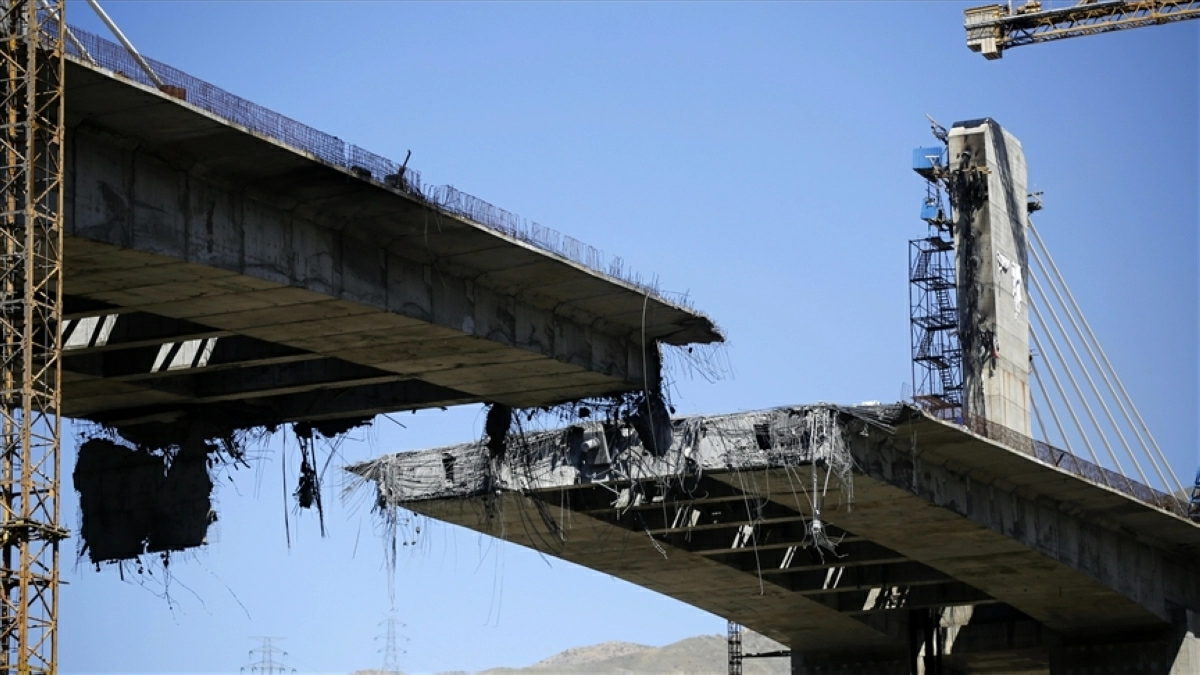
U.S. President Donald Trump warned Iran on Sunday of severe consequences if it does not reopen the Strait of Hormuz, indicating that next Tuesday will be 'Energy Day' and 'Bridge Day.' These statements come at a sensitive time as regional tensions escalate following U.S.-Israeli attacks on Iran.
In a post on the 'Truth Social' platform, Trump stated, 'Tuesday will be an unforgettable day in Iran, where we will witness unprecedented strikes.' He also warned that Iran would face 'hell' if it did not comply with his demands to reopen the strait, which is a lifeline for many countries in the region.
Details of the Event
Trump's remarks come as hostilities between the United States and Iran intensify, with U.S. and Israeli forces launching attacks on Iranian targets since February 28. This campaign has resulted in the deaths of over 1,340 people, including Iran's Supreme Leader Ali Khamenei.
In response to these attacks, Iran has launched drone and missile strikes on targets in Israel, as well as in Jordan, Iraq, and Gulf states. Tehran has also restricted the movement of ships through the Strait of Hormuz, further escalating tensions in this vital global energy region.
Background & Context
Historically, the Strait of Hormuz is one of the most important waterways in the world, through which approximately 20% of the world's oil passes. The strait has witnessed ongoing tensions between Iran and the United States, particularly after Washington's withdrawal from the Iranian nuclear deal in 2018.
Iran views the Strait of Hormuz as a strategic point, using it as leverage against Western countries. In recent years, Iran has increased its military activity in the region, raising concerns among neighboring countries and the United States.
Impact & Consequences
If the United States follows through on its threats, it could lead to a significant escalation in the conflict, negatively impacting global oil markets. Any military escalation could also provoke reactions from other countries in the region, complicating the security situation further.
There are growing fears that any escalation could lead to a full-scale war in the region, which would affect regional stability and increase civilian suffering. The continuation of these tensions could also have economic repercussions for countries that rely on Iranian oil.
Regional Significance
The tensions between the United States and Iran directly affect Arab countries, especially those located in the Gulf. Arab nations that rely on oil imports may face rising prices as a result of any military escalation.
Moreover, the tense security situation could impact foreign investments in the region, potentially hindering economic growth. Under these circumstances, Arab countries must adopt strategies to address the security and economic challenges arising from these tensions.