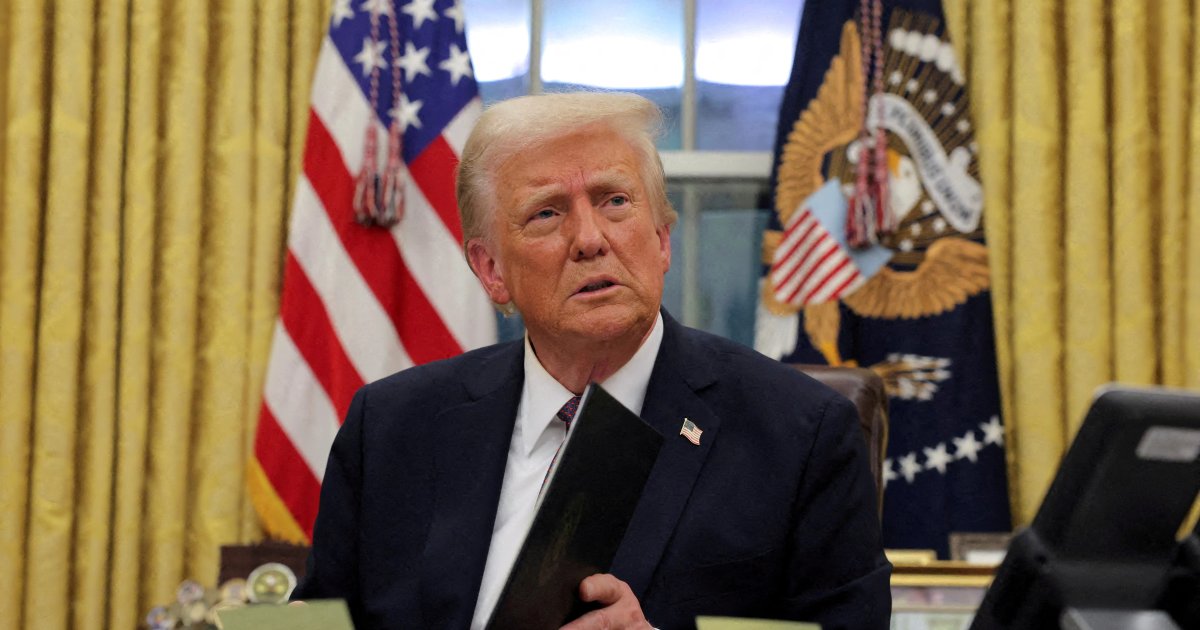
U.S. President Donald Trump has announced his withdrawal of support for allies in reopening the Strait of Hormuz, one of the most critical maritime passages for energy transport, amid Iran's complete control over it. Trump indicated that reopening this vital oil artery is no longer among his priorities, reflecting a shift in U.S. strategy towards the region.
This announcement comes at a time when tensions between the United States and Iran are escalating, as the latter seeks to enhance its influence in the region by controlling vital maritime routes. It appears that Trump is moving away from the option of direct military intervention, raising questions about the future of U.S. policy in the Arabian Gulf.
Details of the Announcement
In statements made by Trump, he confirmed that reopening the Strait of Hormuz is not a priority, which implies that the United States may abandon its traditional role as protector of maritime routes. The Strait of Hormuz is a vital transit point for approximately 20% of global oil supplies, and thus any Iranian movements in this context could significantly impact global energy markets.
These statements follow a series of events in the region, including attacks on oil tankers and Iran's threats to close the strait. Under these circumstances, it seems that Trump prefers to focus on domestic issues rather than engage in new conflicts in the Middle East.
Background & Context
Historically, the Strait of Hormuz has been a focal point for geopolitical conflicts, witnessing numerous crises between Iran and Western countries. In recent years, tensions have notably escalated following the U.S. withdrawal from the Iran nuclear deal in 2018, which led to the imposition of severe economic sanctions on Tehran.
Iran seeks to bolster its influence in the region by supporting armed groups in Iraq, Syria, and Lebanon, complicating the security situation in the Gulf. There are also concerns that escalating tensions could lead to an open military conflict, especially given the mutual threats exchanged between Washington and Tehran.
Impact & Consequences
Trump's withdrawal of support for reopening the Strait of Hormuz could increase tensions in the region, as Iran may feel emboldened to take bolder steps. Additionally, this decision could affect global oil prices, as any escalation in the region could lead to significant price hikes.
Furthermore, this shift in U.S. policy may result in a loss of confidence among America's traditional allies in the region, prompting them to seek new alliances or enhance their military capabilities independently.
Regional Significance
The Gulf Arab states, particularly Saudi Arabia and the United Arab Emirates, are among the most affected by this situation. With increasing Iranian influence, these countries may find themselves compelled to bolster their military defenses or seek new international support to address security challenges.
This situation could also impact political stability in the region, potentially leading to an escalation of sectarian or nationalist conflicts, further complicating the security landscape in the Middle East.
In conclusion, amid these developments, the question remains about how the United States and its allies will respond to the growing challenges in the region. It seems that U.S. strategy is moving towards reducing military engagement, which could leave a vacuum that Iran may exploit to enhance its influence in the Gulf.