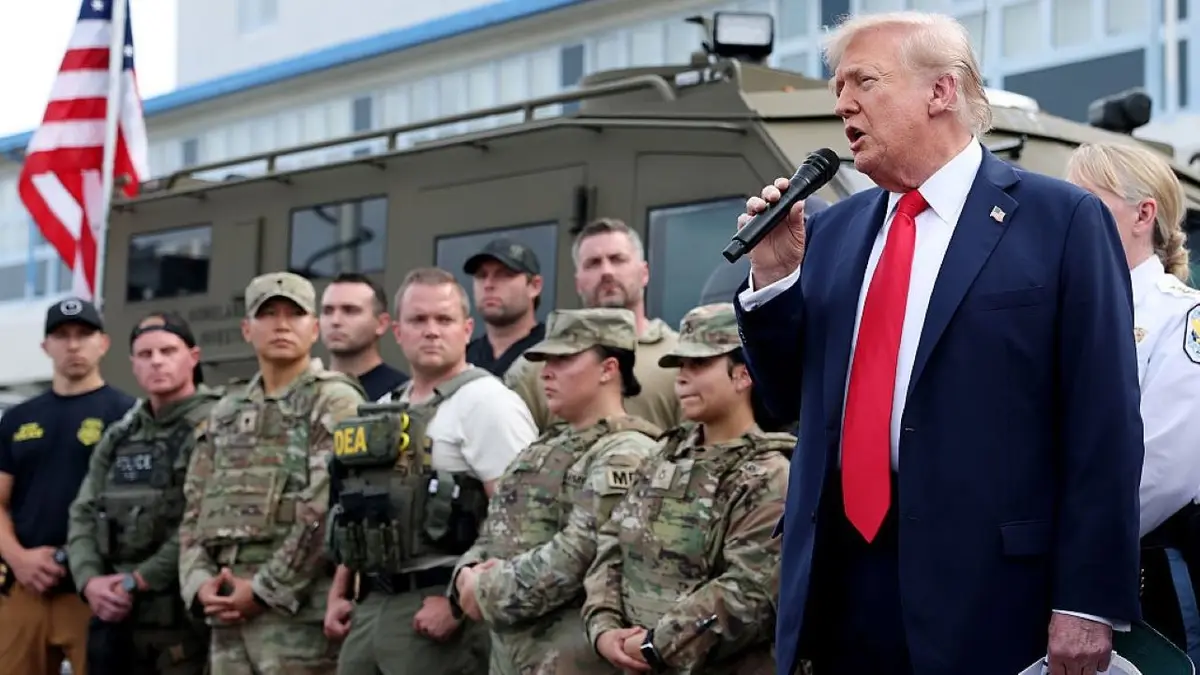
Former U.S. Deputy Secretary of Homeland Security revealed that the deadline set by former President Donald Trump might merely be a facade for military realignment in the region. These statements come at a time of increasing geopolitical tensions, as Trump seeks to bolster his military stance in response to global challenges.
The former U.S. official clarified that this deadline could be used as a means to justify new military movements, raising questions about the previous administration's intentions in dealing with international crises. He indicates that this strategy may be part of a larger plan aimed at reshaping U.S. military power in specific areas.
Details of the Event
In comments made during an interview, the former U.S. Deputy Secretary of Homeland Security confirmed that the deadline announced by Trump in the context of tensions with certain countries could serve as a cover to justify military realignment. He pointed out that this move might aim to enhance the U.S. military presence in areas experiencing escalating conflicts.
He also added that this strategy could involve expanding military bases and strengthening cooperation with allies, reflecting the previous administration's desire to maintain its influence on the international stage. This analysis is part of a broader vision regarding how the United States addresses increasing security challenges.
Context and Background
These statements come at a sensitive time, as international relations are experiencing heightened tensions, particularly with the rise of threats from certain nations. The Trump administration was known for its strong military orientation, seeking to enhance the U.S. presence in regions such as the Middle East and Asia.
Historically, the United States has employed similar strategies to justify its military actions, raising questions about the impact of these policies on regional and international stability. This context is part of the complex dynamics governing international relations today.
Consequences and Impact
This strategy is expected to increase tensions in targeted areas, as other nations may feel threatened by the enhancement of the U.S. military presence. Furthermore, these actions could provoke reactions from the concerned countries, increasing the likelihood of escalation in existing conflicts.
Moreover, these policies may affect U.S. relations with its allies, as some may express concerns over the growing military orientation. Consequently, this strategy could lead to a reevaluation of international alliances and the formation of new coalitions in the future.
Impact on the Arab Region
In the Arab context, these military movements could affect stability in the region, where many countries are grappling with internal and external conflicts. Some Arab nations may feel apprehensive about the bolstered U.S. presence, potentially leading to heightened tensions in areas such as the Middle East.
Additionally, this strategy may influence the relationships between Arab countries and the United States, necessitating a reassessment of political and military stances. Under these circumstances, the question remains regarding how these policies will impact regional security in the future.
In conclusion, U.S. military movements under the Trump administration remain a contentious topic, where strategic interests intersect with increasing security challenges. Concerned nations must closely monitor these developments.