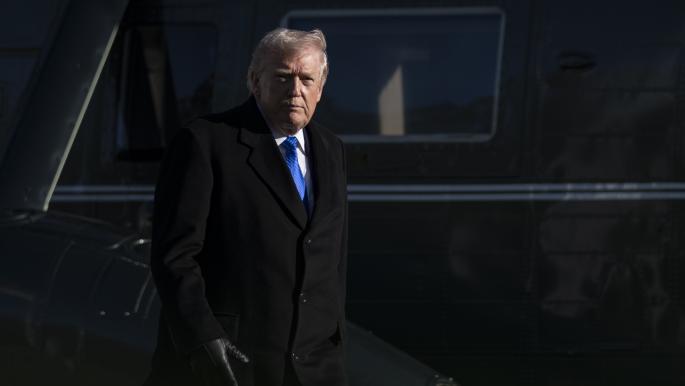
U.S. President Donald Trump appears to live in a world of his own, where his self-centered vision dominates everything around him. He perceives the world solely through the lens of himself and an America as he imagines it, raising concerns about how this perspective affects both domestic and foreign American policies.
Trump's statements and actions are characterized by a focus on enhancing his personal image, while neglecting many significant global issues. This pattern of thinking reflects a state of political isolation, where Trump seems to disregard the opinions of others and relies solely on his own perceptions.
Event Details
Recently, several reports have indicated that Trump adopts an approach that closely resembles that of Nazi leader Adolf Hitler, in terms of self-focus and ignoring objective realities. This similarity, although it may seem exaggerated, raises alarm among many regarding the political trends that his administration may follow.
This vision is evident in many of his stances, as Trump speaks of America as if it is beset by external conspiracies, which enhances a sense of extreme nationalism among his supporters. He also promotes the idea that any criticism of him is an attack on America itself, creating an atmosphere of division within American society.
Background & Context
Historically, the United States has seen many presidents who have followed a nationalist approach, but none have used language of incitement and division quite like Trump. Since the beginning of his campaign, Trump has relied on rhetoric that focuses on national identity, contributing to heightened feelings of division among Americans.
This approach has not merely been an electoral strategy but has become part of his policies after taking office. Trump has made decisions that align with his self-centered vision, such as withdrawing from international agreements and reducing cooperation with traditional allies.
Impact & Consequences
The repercussions of Trump's self-absorbed vision extend beyond the United States, significantly affecting international relations. The nationalist tendencies he embraces could lead to the dismantling of traditional alliances, weakening the United States' ability to influence global issues.
Moreover, this type of leadership may bolster the rise of nationalist movements in other countries, threatening global stability. The world today requires international cooperation to tackle shared challenges, such as climate change and terrorism, but Trump's vision may hinder that.
Regional Significance
For the Arab region, Trump's self-centered vision could exacerbate crises. His nationalist policies may contribute to deepening divisions within Arab countries and heightening tensions between them. Additionally, his disregard for humanitarian issues in the region could worsen humanitarian crises.
For instance, Trump's stance on the Palestinian issue has complicated the situation, as many Arab countries view his policies as reinforcing occupation and diminishing peace prospects. This could negatively impact relations between the United States and Arab nations.
In conclusion, it seems that Trump lives in a world of his own making, where his self-centered vision intertwines with American politics. This approach carries significant risks at both the domestic and international levels, prompting observers to consider how it may affect the future of American politics and the world.