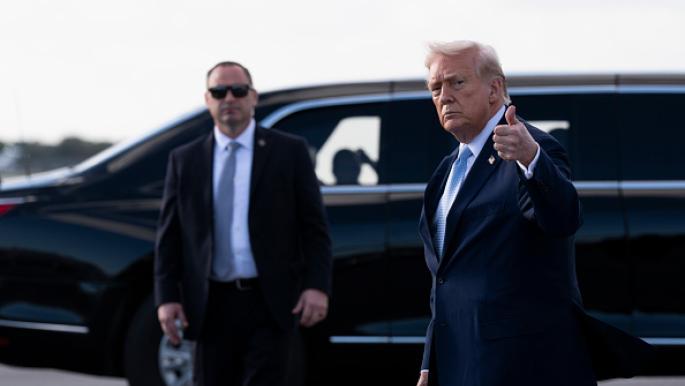
Washington anxiously awaits the end of the 48-hour deadline set by President Donald Trump for Iran, which expires this evening. Trump's warning, issued last Saturday, has laid the groundwork for new tensions between the United States and Iran, intensifying conflicts in the Middle East.
This warning comes at a time of growing fears of potential military escalation, as Trump stated that military options remain on the table if Iran does not comply with pressure. The prevailing uncertainty in the American capital reflects the impact of strategies towards Tehran, which has once again come under the spotlight after a period of relative calm.
Details of the Warning
President Trump issued the warning during a time of alarming tensions between the United States and Iran. The warning follows a series of statements and mutual threats between the two countries. Trump has expressed his displeasure with Iranian actions, indicating that Washington will take strict measures if Iran continues to violate international agreements.
The announced threats include the possibility of renewing economic sanctions and imposing greater pressures on the Iranian government, which could exacerbate the economic and social issues the country is already facing. European nations are preparing for possible intervention, as European leaders closely monitor the situation amid fears that events may lead to a direct military confrontation.
Background & Context
The history of relations between the United States and Iran is marked by tensions and conflicts. Since Washington's withdrawal from the Iranian nuclear agreement in 2018, relations have significantly worsened. This deterioration is not only limited to the political landscape but has also extended to economic and social dimensions, as Iran currently suffers from multiple crises due to resource shortages and economic sanctions.
Today, as tensions rise, it should be noted that Trump is part of an administration accustomed to wielding military power as an available option. We have seen previously how developing countries confront this burden and often resort to distorted options to manage crises.
Impact & Consequences
Trump's issuance of the warning could have global effects that extend beyond Iranian borders. Any potential escalation might influence global oil prices, in addition to impacting international politics. The Iranian streets, already in distress due to harsh economic conditions, may witness further unrest should military escalation occur.
While some observers warn of potential internal uprisings in Iran due to this pressure, research indicates that external pressures often reinforce nationalistic sentiments, which could complicate any political change process.
Regional Significance
These developments have clear implications for the security situation in the Middle East. Neighboring Arab countries, especially those with strained relations with Iran, are closely monitoring the situation. The possibility of conflict escalation is expected to plunge the region into new crises, potentially leading to increased displacement due to military attacks.
There are also ramifications for Arab relations with both Washington and Tehran, as there are concerns over the use of economic and military pressures as tools to achieve political goals.
In conclusion, the fate of American-Iranian relations remains ambiguous amid these growing tensions. Everyone is awaiting Tehran's responses, which may determine the course of events in the coming hours, and undoubtedly, these events will affect the geopolitical landscape of the region.