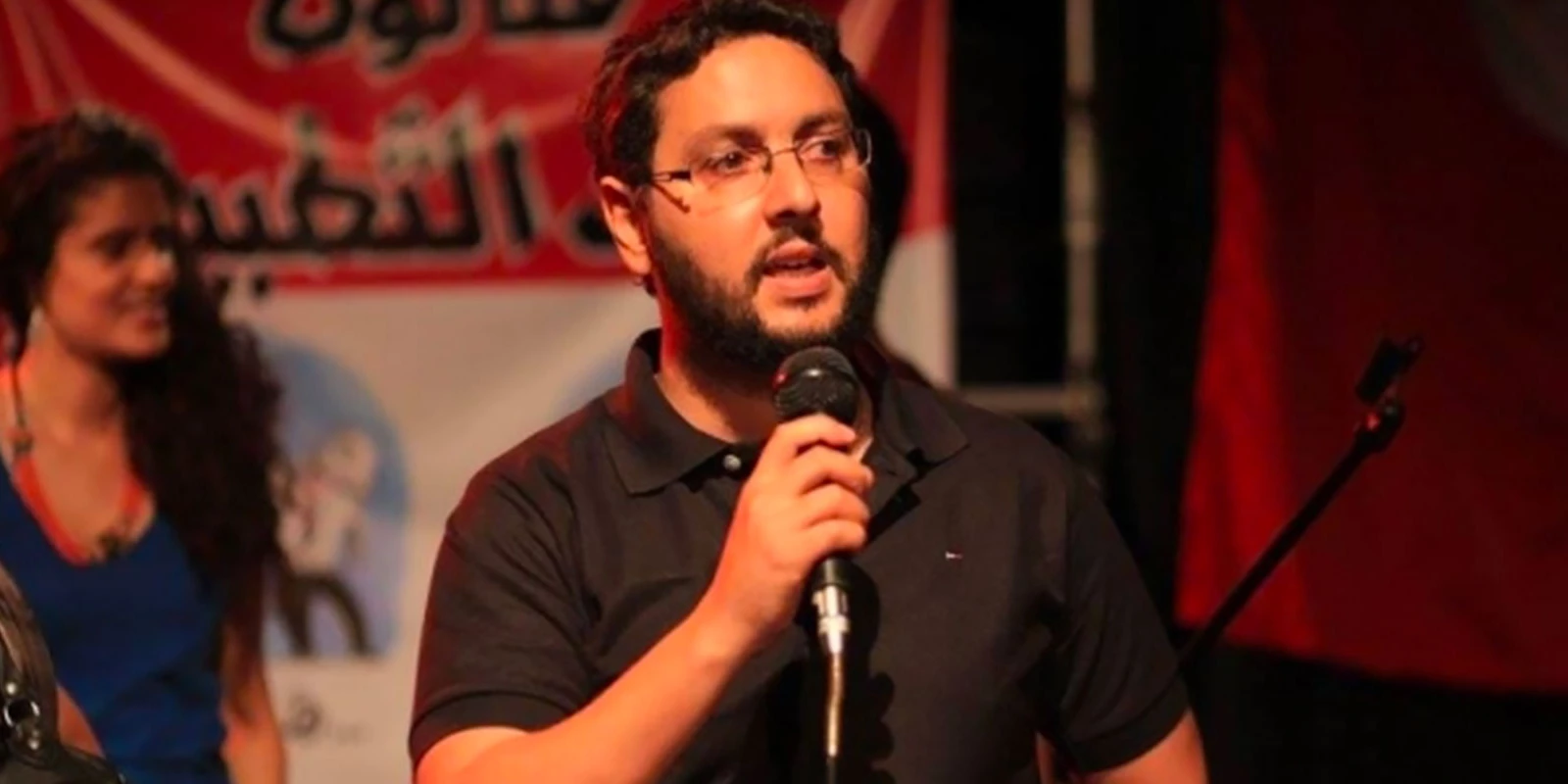
A Tunisian court has sentenced journalist Ghassan Ben Khalifa to two years in prison, a move described by the Tunisian Journalists' Syndicate as a troubling escalation against freedom of expression in the country. This ruling comes amid increasing local and international criticism regarding the deterioration of press freedom in Tunisia, with the syndicate asserting that this decision represents a systematic targeting of dissenting voices.
Ghassan Ben Khalifa, who serves as the editor-in-chief of the website 'Inhayaz,' faced charges related to publishing 'false news' in a case dating back over three years. Ben Khalifa has denied these charges, indicating that they are fabricated and reflect the authorities' failure to handle criticism.
Details of the Case
In an official statement, the Tunisian Journalists' Syndicate expressed deep concern over the ruling, noting that this step occurs within the context of an escalating crackdown on journalists and dissenters since 2021. Another court had previously issued prison sentences in January against journalists Murad Al-Zghidi and Borhan Bseiss for three and a half years on tax evasion charges, which critics deemed a means of retaliation for their reporting.
These events coincide with rising criticism from international human rights organizations, which indicate that the Tunisian government is conducting a crackdown that includes opponents, such as politicians, journalists, and civil activists. Since President Kais Saied dissolved parliament in 2021, the government has begun ruling by decree, raising concerns about the decline of democracy in the country.
Background & Context
Following the popular uprising in 2011 that ousted former President Zine El Abidine Ben Ali, Tunisia experienced a period of freedom of expression and political critique. However, President Saied's consolidation of power since 2021 and his imposition of new decrees have weakened democratic guarantees and led to the prosecution of journalists on vague charges.
The Journalists' Syndicate states that public media, including television and official radio stations, have become a mouthpiece for the authorities, with independent journalists being prevented from working freely and many facing legal actions in multiple cases. This situation raises significant concerns about the future of press freedom in Tunisia.
Impact & Consequences
The ruling against Ben Khalifa is viewed as part of a broader trend towards restricting freedom of expression in Tunisia, reflecting growing concerns about human rights in the country. This escalation may lead to further frustration among journalists and activists and could contribute to a culture of fear regarding criticism.
Moreover, these events may affect Tunisia's image in the international community, where pressure is mounting on the Tunisian government to improve its human rights record. Under these circumstances, the government may find itself under greater pressure from international organizations calling for respect for freedom of expression and human rights.
Regional Significance
Tunisia is considered a model for many Arab countries that have undergone political transformations following the Arab Spring. The decline of freedom of expression in Tunisia could have negative repercussions on neighboring countries, as it may be used by other regimes as a pretext to justify the suppression of dissenting voices.
At the same time, this situation may inspire activists and journalists in other countries to continue their struggle for freedom of expression, drawing inspiration from Tunisia's past experiences. Maintaining press freedom is vital for any democracy, and the international community must continue to pressure governments to ensure human rights.
In conclusion, the ruling against Ghassan Ben Khalifa reflects significant challenges facing freedom of expression in Tunisia and should serve as a motivation for the international community to stand with journalists and activists in their struggle for their rights.