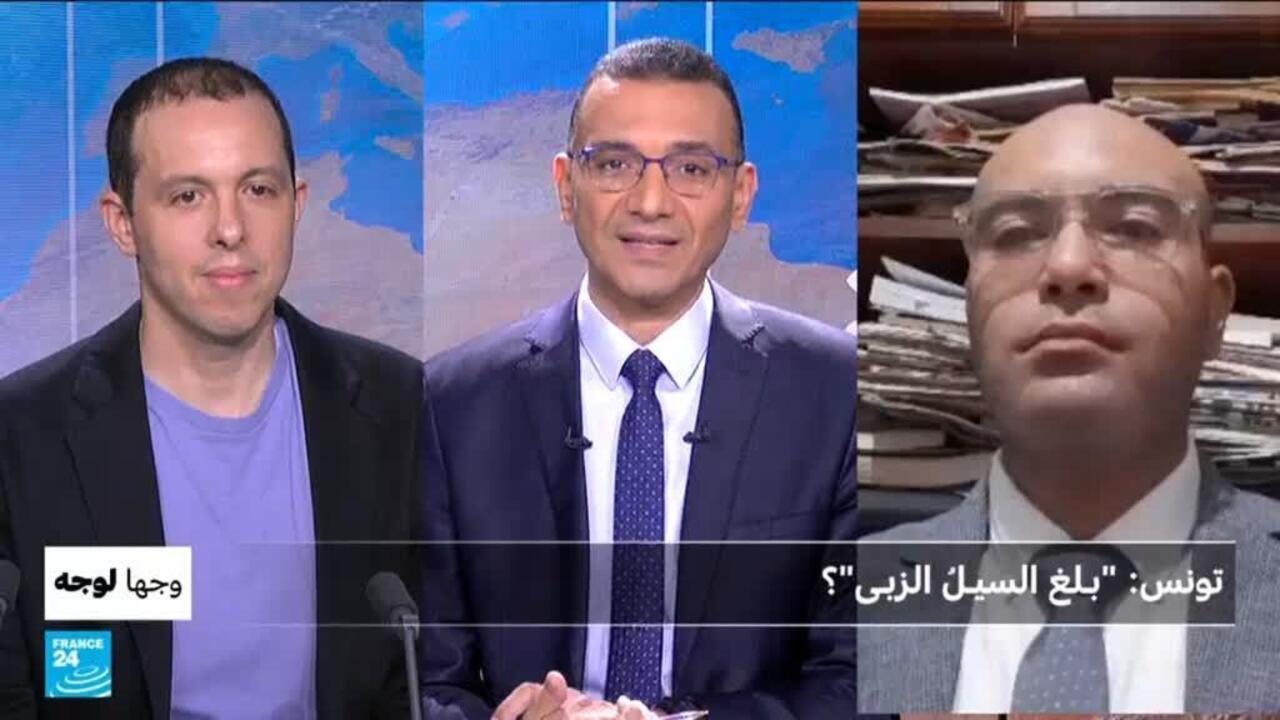
The Tunisian Ministry of Defense has ignited widespread debate following the release of an official statement affirming the army's neutrality and independence, emphasizing its rejection of attempts to involve the army in political disputes. This statement comes at a time when the phrase 'the flood has reached its peak,' originally used by the Tunisian president to criticize the performance of state institutions, has transformed into a protest slogan raised by activists and artists across the country.
The remarks made by the Tunisian Minister of Defense were in response to growing criticisms regarding the army's role in political life, where the ministry asserted that any attempt to question the army's neutrality constitutes a crossing of red lines. This statement has elicited mixed reactions among political and public circles, with some viewing it as a reflection of anxiety regarding the country's stability.
Details of the Event
In the context of the ongoing debate, political writer and researcher Suhail Al-Mazriqi confirmed during his appearance on the program 'Face to Face' that the situation in Tunisia necessitates that the army remains distanced from political disputes. He noted that the use of the phrase 'the flood has reached its peak' by activists reflects a general sense of frustration with the government's performance and state institutions.
On his part, Hatim Al-Nafiti, a researcher at the Institute for Studies on the Arab and Islamic World, explained that this phrase has become a symbol of protest against corruption and mismanagement, reflecting a deterioration of trust in official institutions. He added that the army, as the protector of the state, must maintain its neutrality in these sensitive circumstances.
Background & Context
Historically, Tunisia has witnessed several attempts to involve the army in politics, especially following the revolution that ousted the Ben Ali regime in 2011. Since then, successive governments have attempted to maintain a delicate balance between civilian and military authority. However, recurring political and economic crises have increased pressure on the army, making it a target for criticism.
In recent years, public protests against the government have intensified, exacerbating social and economic crises. These conditions have contributed to strengthening the army's role as a trusted entity in the eyes of some citizens, while others believe that military intervention in politics could threaten the emerging democracy.
Impact & Consequences
This debate may have far-reaching implications for the political situation in Tunisia. If the army continues to be used as a tool in political conflicts, it could lead to a deterioration of trust in civilian institutions and exacerbate societal divisions. Additionally, the continuation of protests may place greater pressure on the government, potentially necessitating military involvement in civil affairs.
On the other hand, if the government can effectively address economic and social issues, it may reduce public discontent and bolster the army's position as a protector of democracy. In this context, the army's role remains crucial in maintaining stability in the country.
Regional Significance
Tunisia is considered a model in the Arab region following the Arab Spring revolutions, and political developments there may influence other countries facing similar crises. If Tunisia succeeds in navigating this sensitive phase, it could serve as an example for other nations striving for political stability.
Conversely, if conditions worsen, it could destabilize the entire region, recalling the experiences of countries that have witnessed military interventions in politics. Therefore, what happens in Tunisia is of concern not only to Tunisians but also to the peoples of the entire region.