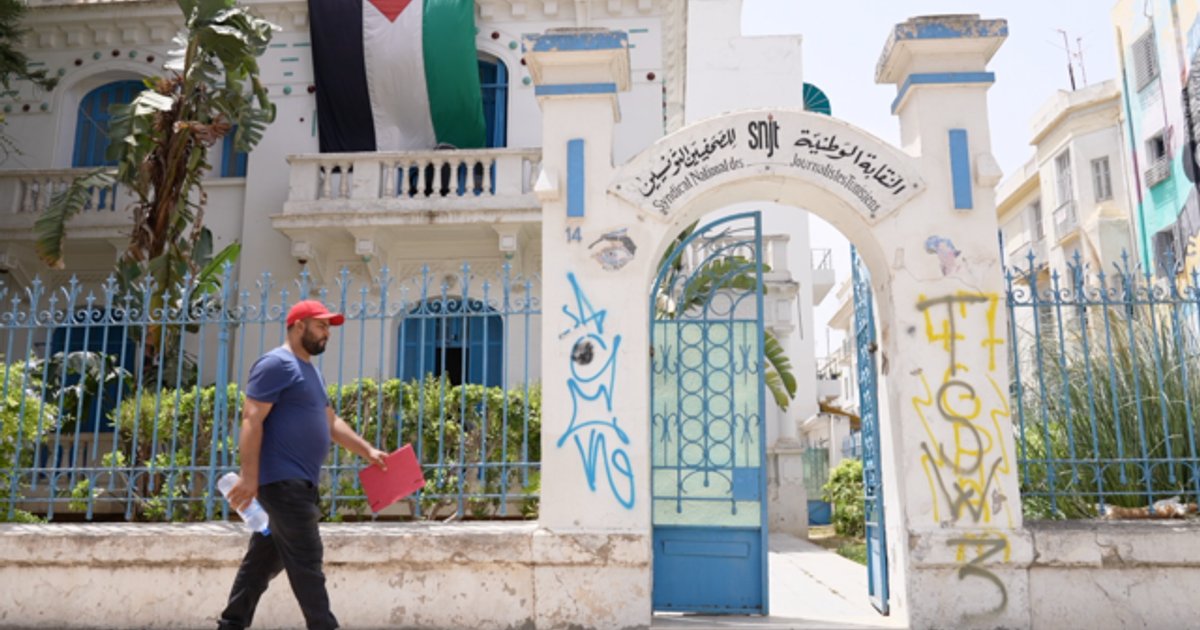
Tunisia has experienced a profound transformation in its media landscape in recent years, with rising pressures on journalists and media outlets prompting many to seek digital alternatives. Among these alternatives, political podcasts have emerged as a space for free discussion, away from direct censorship and the pressures of sponsors.
With the decline of freedoms and the tightening grip of the state on traditional media, podcasts have become a "lifeline" for journalists seeking to express their opinions without restrictions. Since 2021, the state of press freedom has notably deteriorated, with cases of arrests and trials of journalists, such as Murad Al-Zghidi and Bouhane Bseis, becoming commonplace. These actions have been classified by international organizations as punishments for their opinions and criticisms of the authorities.
Details of the Situation
Tunisia witnessed widespread protests in 2025 against the denial of work cards to journalists and the disruption of filming permits, which the Tunisian Journalists' Syndicate deemed a "systematic targeting of journalism." The media landscape became increasingly complicated with the implementation of Decree No. (54) concerning cyber crimes, which has become a tool for pursuing critics of the government. This situation has made working in traditional institutions fraught with danger, pushing journalists to seek platforms with less oversight.
On September 13, 2022, Tunisian President Kais Saied issued a decree aimed at combating information and communication system crimes, imposing penalties of up to five years in prison for anyone who publishes false news. The experience of journalist Mohamed Al-Yousfi, who worked for more than six years hosting a radio program before resigning in 2022, exemplifies this shift. Al-Yousfi stated that political programs no longer find a place in the classic media space, necessitating a migration to the digital realm.
Context and Background
Today, podcasts are seen as an extension of the spaces that have shrunk within traditional media, especially after self-censorship reached unprecedented levels, particularly during the coverage of the 2024 presidential elections. Some journalists have indicated that they were forced to choose their words carefully for fear of punishment. This digital environment has allowed for the discussion of sensitive issues such as political arrests, conspiracy cases, and trials of opponents, away from direct censorship, even though Decree No. (54) remains a "sword hanging" over anyone operating in the digital space.
Ziad Dabbour, the head of the Tunisian Journalists' Syndicate, confirmed that the restrictions imposed on freedom of publication are not circumstantial but structural, as freedom of publication is threatened by the control of capital and governments over media institutions. Nevertheless, Dabbour believes that the digital revolution and online platforms have provided journalists with an opportunity to reclaim their voices amid the crisis of trust between the public and traditional media.
Consequences and Impact
Nawal Bayzid, the owner of a podcast specializing in individual and political freedoms, warns that despite the freedom of podcasts, they have not completely escaped the influence of laws, as Decree No. (54) has become a starting point for self-censorship due to fears of prosecution for any opinion or stance. Although podcasts represent an opportunity to break the monopoly, there are concerns about them deviating from their profession and turning into mere chatter.
Researcher at the Institute of Journalism and News Sciences, Noor Hamdi, confirmed with statistics the shift towards podcasts, noting that Tunisia has recorded over 277 podcasts classified into four sectors: alternative media, investigative journalism, podcasts specializing in human rights, and those addressing social issues. This increasing interest reflects the audience's needs, as podcasts provide narratives, depth, and details that traditional media often fails to deliver.
Impact on the Arab Region
Amid expanding restrictions on traditional journalism, podcasts today remain a new voice for journalists seeking freedom and an audience striving for an alternative narrative to the official discourse. With the continued pursuit of dissenting voices and the prosecution of over 70 individuals since 2022 for their opinions, the question remains open: Will podcasts continue to be a space for freedom? Or will they soon turn into a new battleground between journalists and the authorities?
In conclusion, podcasts in Tunisia represent a unique experience that reflects the challenges faced by journalists amid increasing restrictions, while simultaneously reflecting the community's desire for more accurate and objective information.