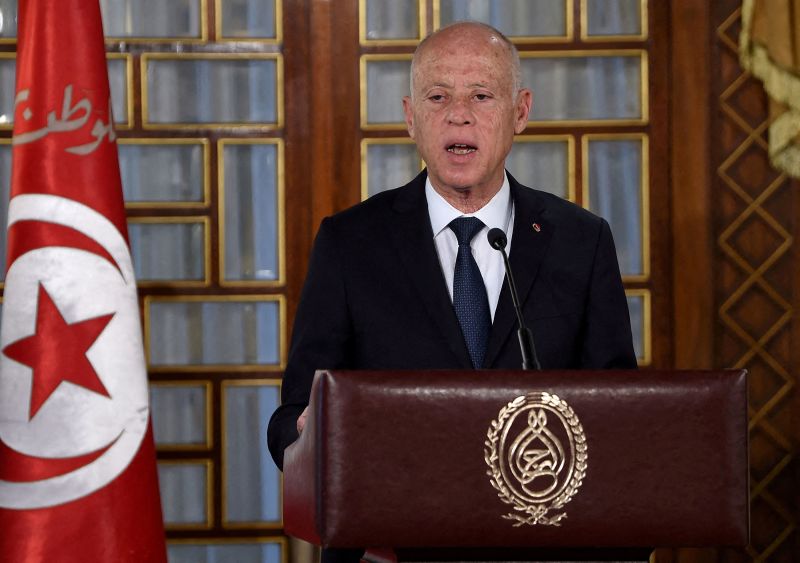
Tunisian President Kais Saied emphasized that the state is not managed by dubious posts and tweets that spread lies, amid the controversy sparked by the Italian newspaper Il Foglio. The newspaper alleged that there are discussions within decision-making circles in Italy searching for a 'successor' to President Saied, which provoked widespread reactions in Tunisia.
Saied's statements came at a sensitive time for Tunisia, where the president faces significant political and economic challenges. He deemed these reports as not reflective of reality, asserting that the Tunisian state relies on its institutions and laws rather than rumors or misleading news.
Details of the Incident
In his remarks, Saied pointed out that such news aims to destabilize Tunisia and incite chaos. He stressed the importance of national unity in facing these challenges, emphasizing that the Tunisian people are the ones who determine their fate, not any external entity.
The controversy raised by the Italian newspaper is not the first of its kind, as Tunisia has witnessed numerous attempts by some foreign media to interfere in its internal affairs in recent years. This comes at a time when Tunisia is striving to enhance its sovereignty and political independence.
Background & Context
Historically, Tunisia has experienced several political crises since the revolution that ousted the Ben Ali regime in 2011. With increasing economic and social pressures, the political situation has become more complex. Since taking office in 2019, Kais Saied has sought to rebuild the political system in the country, which requires strong public support.
The Italian press, such as Il Foglio, is among the media outlets that frequently cover Tunisian affairs, reflecting a growing European interest in the developments in Tunisia. However, the publication of inaccurate news can exacerbate internal situations.
Impact & Consequences
Such news can lead to increased political tensions in Tunisia, as some may feel that there are attempts to interfere in the country's affairs. Additionally, these statements could affect the relations between Tunisia and Italy, especially given the need for cooperation between the two countries in various fields.
Moreover, this news may bolster Saied's position among his supporters, as it can demonstrate to them that he is confronting attempts at external interference. This could enhance his popularity domestically, but at the same time may intensify criticism from opponents.
Regional Significance
Tunisia is seen as a model for many Arab countries undergoing a transitional phase. The stability of Tunisia can have a positive impact on neighboring countries, while any disturbances could lead to negative repercussions in the region. Therefore, what happens in Tunisia is of interest to many Arab nations striving for political stability.
In conclusion, the situation in Tunisia remains under scrutiny, as everyone looks to see how President Saied will handle these challenges. The recent statements reflect the importance of maintaining national sovereignty in the face of external pressures.