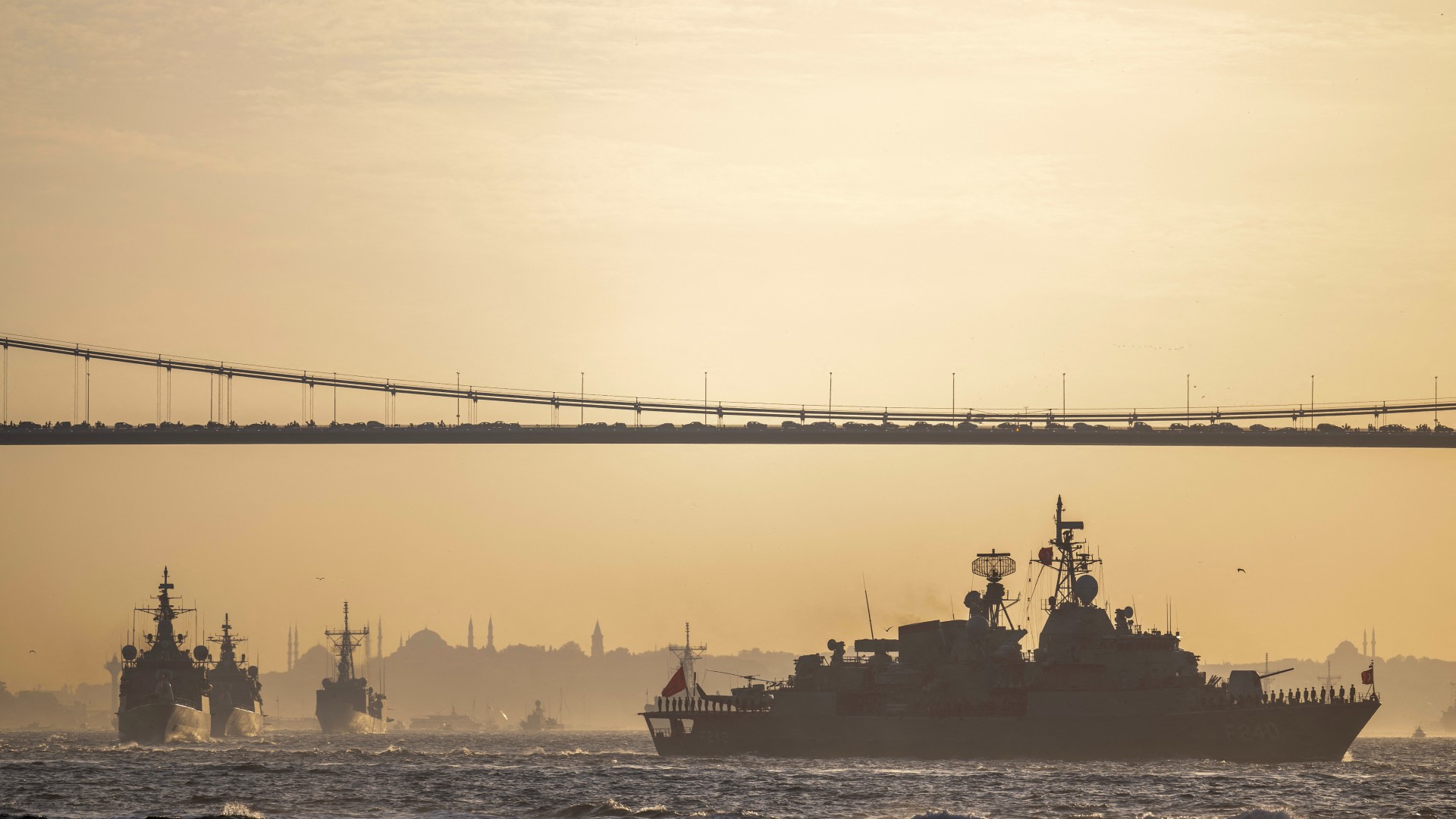
The Turkish Ministry of Defense has announced the establishment of a naval command in Istanbul, which will oversee a maritime mission under the umbrella of potential security guarantees for Ukraine. This announcement comes at a sensitive time as Turkey seeks to enhance its role in the region following the ongoing war between Ukraine and Russia since 2022.
In a statement, Turkish Foreign Minister Hakan Fidan confirmed last January, after the Alliance of Willing Nations summit in Paris, that Ankara would take responsibility for this mission if a final settlement is reached between Ukraine and Russia. The ministry noted that 33 countries have expressed their readiness to participate in this initiative.
Details of the Initiative
This initiative includes the establishment of an operations headquarters for the force known as the Multinational Force for Ukraine (MNF-U) in Paris, where a core staff has been formed. The ministry clarified that the role of the Maritime Component Command (MCC) will be undertaken by Turkey to maintain security and stability in the region and ensure a balance of power in accordance with the Montreux Convention.
The headquarters for the maritime component command was established as of August 25, 2025, and the core staff is entirely composed of Turkish military personnel. A social media post regarding the visit of French General Jean-Pierre Fag, the operations commander, and British General Richard Stewart Charles Bell, the deputy commander, to the maritime component command in the Beikoz district of Istanbul, raised some confusion among observers, as some believed that a NATO command was being established in Istanbul.
Background & Context
The Montreux Convention is one of the significant agreements that imposes restrictions on the entry of warships from non-Black Sea states, especially during times of war. The Russian embassy has refrained from criticizing Turkey, praising Ankara's balanced and responsible stance in implementing the convention. The details of the naval command were agreed upon during a meeting of the Alliance of Willing Nations in Ankara in April 2025, where Turkey convinced its partners to continue leading planning activities in the maritime domain.
The ministry announced that 14 countries have declared their intention to contribute to the maritime component command; however, contributions related to maritime platforms will only come from coastal states, namely Turkey, Romania, and Bulgaria. The ministry also added that the Black Sea Mine Countermeasure Force is a non-NATO initiative established by Turkey, Romania, and Bulgaria under Ankara's leadership.
Impact & Consequences
This step is part of Turkey's efforts to enhance its role in regional security, particularly amid ongoing tensions between Russia and Ukraine. This initiative is expected to strengthen military cooperation among Black Sea states, which could contribute to regional stability. Additionally, the presence of a Turkish naval command may alter the power dynamics in the Black Sea, enhancing Ankara's ability to influence regional security decisions.
Through this initiative, Turkey aims to bolster its position as an active regional power, potentially opening new avenues for cooperation with Western countries in addressing security challenges. Furthermore, this step may lead to increased military investments and defense cooperation among participating countries.
Regional Significance
These developments are particularly significant for the Arab region, as they reflect geopolitical changes in the Black Sea that could impact Arab countries. Increased military cooperation in the Black Sea may enhance regional security, positively affecting the stability of the Middle East. Additionally, strengthening Turkey's role in regional security could pave the way for further Arab-Turkish cooperation in various fields.
In conclusion, this move by Turkey represents part of a broader strategy to enhance security and stability in the region, reflecting the challenges and opportunities faced by countries amid current global tensions.