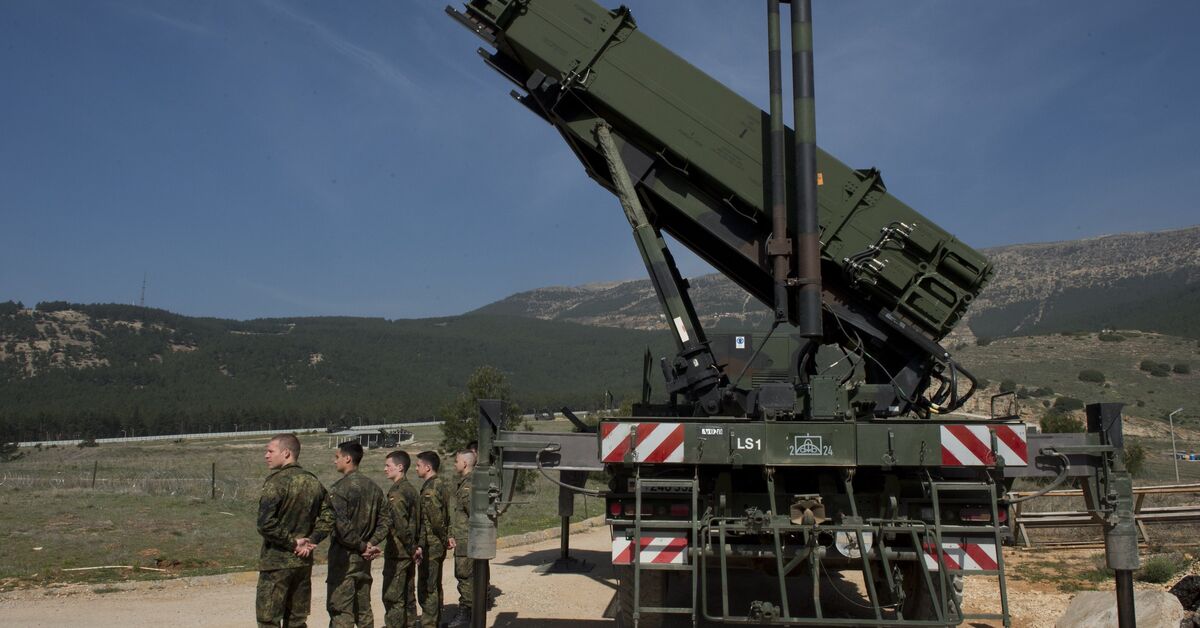
Turkey announced that NATO air defenses successfully neutralized a ballistic missile launched from Iran that entered its airspace, marking the fourth interception of its kind since March. These developments come at a time when relations between Turkey and Iran are increasingly strained, raising concerns about regional security.
According to official data, the missile was detected early on Tuesday morning, prompting NATO's air defense systems to intervene swiftly to intercept it before it could cause any damage. This incident reflects Turkey's capability to protect its airspace from external threats and reinforces its position as a key supporter of regional security.
Details of the Incident
This incident is part of a series of events that have occurred in the region, with three other missiles intercepted since March, indicating a rise in tensions between Iran and neighboring countries. Turkey has shown its readiness to address any potential threats, working to enhance its defensive capabilities in collaboration with its NATO allies.
These developments come at a sensitive time, as fears grow over escalating conflicts in the Middle East, particularly with ongoing tensions between Iran and the United States, as well as between Iran and Gulf states. Turkey has emphasized the importance of international cooperation in addressing these threats, stressing the need to bolster regional security.
Background & Context
Historically, relations between Turkey and Iran have experienced numerous fluctuations, with periods of cooperation and periods of tension. In recent years, concerns over Iran's nuclear program have prompted many countries to adopt more cautious stances toward Tehran. Additionally, conflicts in Syria and Iraq have complicated relations between the two countries, with Turkey supporting factions opposed to the Syrian regime, while Iran backs the regime.
Moreover, the presence of U.S. military bases in the region exacerbates tensions, as Iran views these bases as a threat to its national security. In this context, Turkey seeks to strengthen its position as a supporter of regional security, making it a key player in the political and military equations in the Middle East.
Impact & Consequences
These incidents could escalate tensions between Iran and Turkey, potentially affecting stability in the region. The continuation of such attacks may compel Turkey to take more decisive actions, which could heighten military confrontations. At the same time, these developments might lead to increased cooperation between Turkey and Gulf states, as all parties seek to enhance regional security.
These events also signal changes in military strategies in the region, as countries strive to bolster their defensive capabilities to confront rising threats. Furthermore, these incidents could impact relations between Turkey and the West, as Turkey may be viewed as a strong ally in countering Iranian threats.
Regional Significance
These developments directly affect Arab countries, as Iran is a key player in many regional conflicts, including those in Iraq, Syria, and Yemen. The escalation of tensions between Turkey and Iran could lead to a reshaping of alliances in the region, which may impact security and stability in Arab nations.
Ultimately, these incidents remain indicative of the ongoing tensions in the Middle East, necessitating that Arab countries adopt cautious stances and coordinate their efforts to enhance regional security.