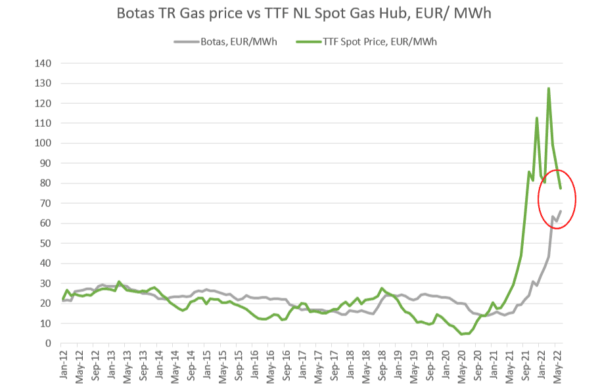
The Turkish Energy Market Regulatory Authority has announced a new increase in electricity and gas prices by 25%, which has recently come into effect. This move reflects the growing pressures on the energy sector due to rising production and distribution costs, directly affecting Turkish households.
The authority stated in an official announcement that "due to the increase in electricity production and distribution costs, retail electricity prices have risen by 25%, and natural gas prices have been raised by the same percentage on average for household consumption." This increase means that the household consumption bill for 100 kilowatt-hours will reach 323.8 Turkish Lira, equivalent to approximately 7.4 dollars.
Details of the Price Increase
According to statements from the state-owned Turkish energy company (BOTAŞ), retail electricity prices for residential apartments have risen by 25% due to increased production and distribution costs. The same percentage has been applied to natural gas prices for residential apartments, adding to the financial burdens on families in the country.
This increase comes amid growing disruptions in oil and gas markets, where prices have surged significantly due to geopolitical tensions in the Middle East. Since the onset of American-Israeli strikes on Iran on February 28, global supplies have been significantly affected, contributing to the worsening energy crisis.
Background & Context
Historically, Turkey has experienced fluctuations in energy prices, heavily relying on imports to meet its gas and oil needs. In recent years, pressures on the Turkish government have increased due to rising global prices, prompting it to take stringent measures to address these challenges.
Additionally, political tensions in the region, including conflicts in Syria and Iraq, have negatively impacted the stability of energy markets. These combined factors have led to increased production costs, which directly reflect on electricity and gas prices in the country.
Impact & Consequences
This price increase poses a significant challenge for Turkish families, as it will lead to increased financial burdens on citizens. Under the current economic conditions, this rise may affect the purchasing power of households, exacerbating economic and social pressures.
Furthermore, this increase may lead to public protests, as citizens express their dissatisfaction with rising living costs. The Turkish government will face significant challenges in managing these situations, especially with upcoming elections on the horizon.
Regional Significance
The energy crisis in Turkey is part of a broader crisis affecting many countries in the Arab region. With rising energy prices, neighboring countries that rely on imports from Turkey or engage with it in energy sectors may be impacted.
Moreover, tensions in the Middle East could lead to further disruptions in energy markets, affecting price stability in Arab countries. It is crucial for Arab nations to monitor these developments and take proactive measures to address any potential repercussions.
In conclusion, the increase in electricity and gas prices in Turkey reflects the significant challenges the country faces amid global crises. An effective response from the government and society is required to confront these challenges and achieve stability in the energy sector.