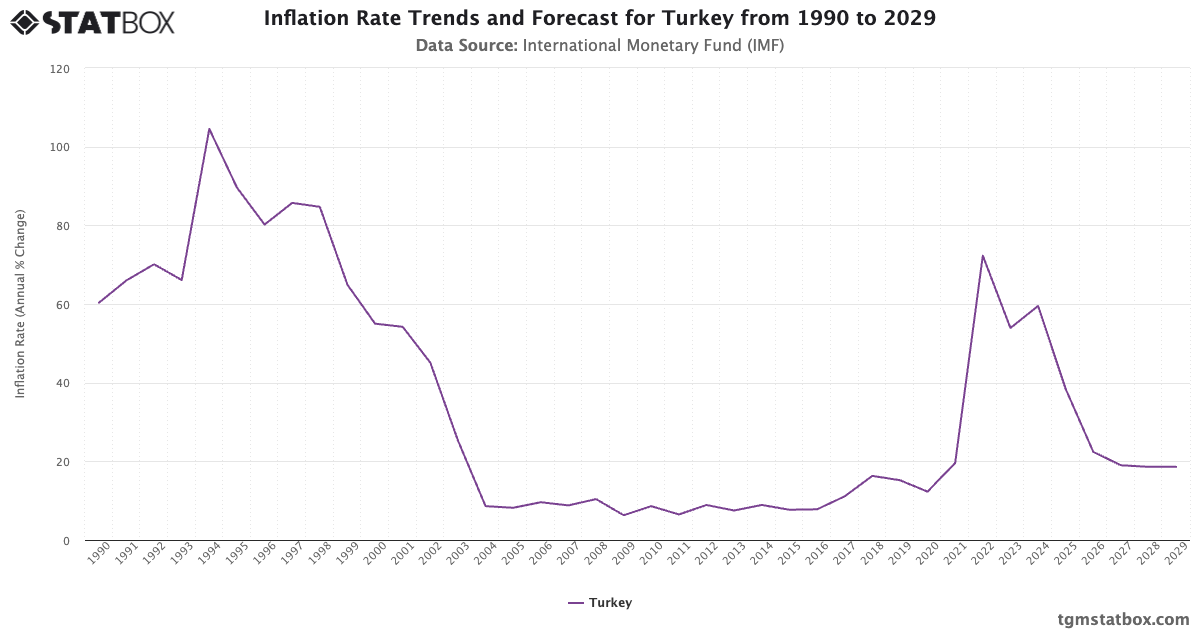
Turkey's annual inflation rate has decreased to 30.87% in March, compared to 31.53% in February, reflecting a continued downward trend in inflation rates despite economic pressures stemming from regional conflicts.
The Turkish Statistical Institute reported today, Friday, that consumer prices saw a monthly increase of 1.94% in March, while the producer price index rose by 2.3%.
Details of the Event
Economists had anticipated a rise in the consumer price index of 2.4% in March, which would have led to an annual inflation average of 31.46%. However, the actual reading came in lower than those estimates, indicating some success of monetary policies in curbing inflation.
It is noteworthy that the U.S.-Israeli war on Iran, which began on February 28, has significantly impacted markets, leading to increases in energy and food prices—factors that threatened to disrupt the downward trend in inflation that started late last year.
Background & Context
Turkey faces multiple economic challenges, as the war in the region has increased pressures on the Turkish lira, prompting the central bank to take stringent measures to maintain currency stability. In March, the lira experienced a wave of pressures with a decline in its value, but interventions by the central bank helped mitigate losses, with the currency dropping by only 1.2%.
The central bank governor, Fatih Karahasan, previously stated that monetary authorities would continue to adopt a tight monetary policy to support efforts to reduce inflation, emphasizing the importance of maintaining lira stability amid current economic conditions.
Impact & Consequences
The decline in the inflation rate may reflect some success in monetary policies, but it does not necessarily mean the end of economic challenges. The rise in energy and food prices due to regional conflicts may continue to affect the Turkish economy, necessitating additional measures from policymakers to ensure price stability.
Furthermore, the ongoing war in the region could exacerbate economic conditions, placing additional pressures on the Turkish government to address these challenges. It is crucial for global markets to monitor developments in Turkey, as any changes in economic policies may impact foreign investments.
Regional Significance
Turkey is considered one of the key countries in the region, and any changes in its economy could affect neighboring Arab countries. Rising inflation or price stability in Turkey can influence trade and investments between Turkey and Arab nations.
Additionally, the economic situation in Turkey may cast a shadow over regional stability, as any escalation in regional conflicts could impact food and energy security in Arab countries.
In conclusion, the economic situation in Turkey remains under observation, as current challenges may require a swift and effective response from the Turkish government to ensure economic stability.