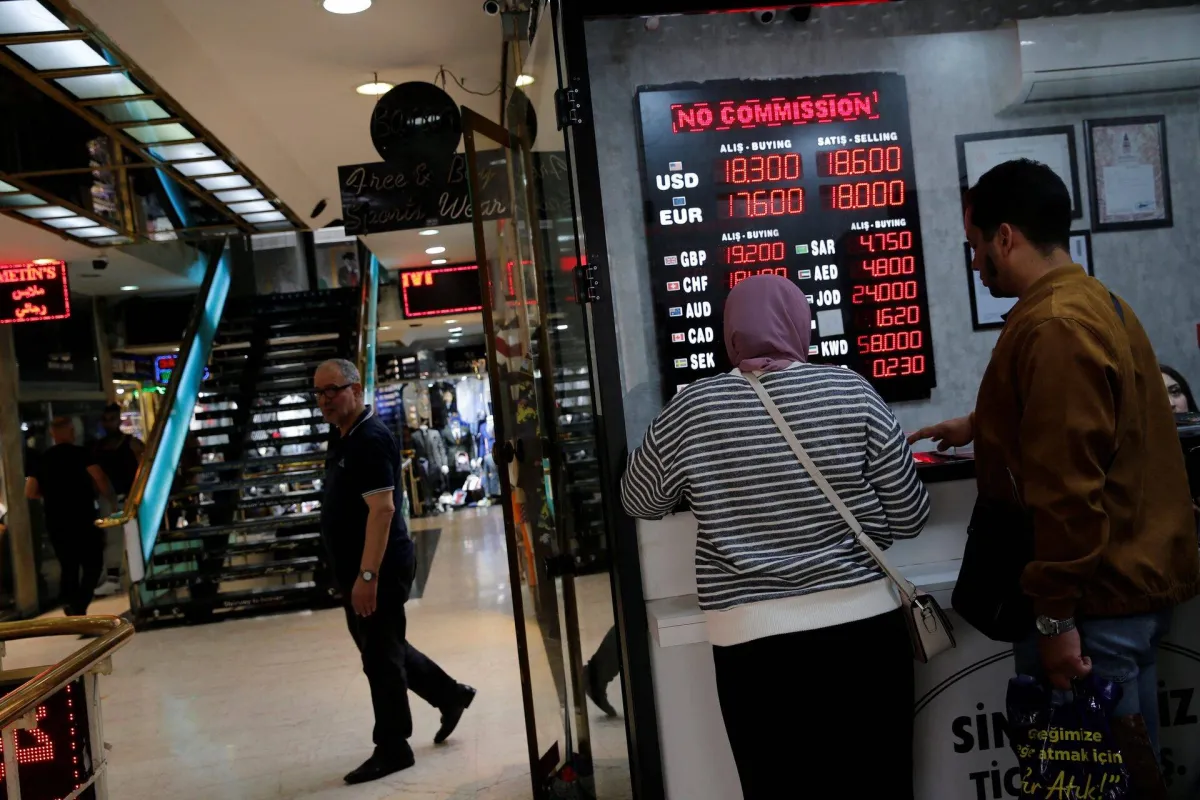
The Turkish market experienced a notable recovery, with banking and airline stocks leading a rise of over 4%. The Turkish lira was on track to record rare daily gains on Wednesday, following the announcement of a two-week ceasefire agreement in the Middle East, which restored confidence in global markets.
As of 08:23 GMT, the BIST 100 Index rose by 4.3%, while the banking index increased by 8.8%. Additionally, shares of Turkish airlines Turkish Airlines and Pegasus each saw gains of over 6%, according to Reuters.
Details of the Ceasefire Agreement
The United States and Iran agreed to a two-week ceasefire, with Pakistani Prime Minister Shehbaz Sharif announcing via X that he invited Iranian and American delegations to meet in Islamabad on Friday. This agreement comes at a sensitive time, as the exchange rate of the Turkish lira was recorded at 44.5400 against the dollar, up from Tuesday's close of 44.6065.
The lira had lost about 1.5% since the onset of U.S.-Israeli strikes on Iran at the end of February, with a total loss of 3.6% since the beginning of the year. However, the figures indicate real gains amid inflation reaching 10% in the first quarter.
Background & Context
Prior to the agreement, economists anticipated that the central bank would implement a cumulative tightening of monetary policy by 300 basis points through liquidity measures, given the current key interest rate of 37%. Markets are now watching whether the ceasefire will extend into a more sustainable arrangement, which could reshape expectations regarding monetary policy tightening at the central bank's monetary policy committee meeting scheduled for April 22.
As geopolitical tensions cast shadows over travel in the Middle East, Saudi Arabia continues to solidify its position as an emerging tourist destination, achieving remarkable performance in the first quarter of 2026, welcoming approximately 28.9 million tourists, with an estimated growth of 16% compared to the same period last year.
Impact & Consequences
Gulf stock markets surged during early trading, driven by improved investor sentiment following U.S. President Donald Trump's announcement of a two-week ceasefire agreement with Iran, which positively impacted global markets as well. This rise coincided with strong gains in Asian markets, where the Japanese Nikkei index climbed by about 5.4%, while the KOSPI index in South Korea jumped 6.8%.
Trump clarified that the agreement remains conditional on Iran's compliance with halting disruptions to oil and gas supplies through the Strait of Hormuz, through which about one-fifth of global oil and liquefied natural gas trade passes. In return, Iranian Foreign Minister Abbas Araghchi confirmed that Tehran would halt its counterattacks and ensure the safety of navigation in the strait if the attacks against it ceased.
Regional Significance
On the market front, the general index in Saudi Arabia opened up by 1.4%, supported by gains in banking and energy stocks, with Aramco's share rising by 2.1% and Al Rajhi Bank by 2.4%. The Dubai Financial Market Index also recorded a strong increase, peaking at 8.5% during trading, marking its highest daily level in over 11 years.
Conversely, oil prices fell sharply; Brent crude contracts dropped by 13.3% to reach $94.78 per barrel, as concerns about supply disruptions eased. This decline could affect the stability of financial markets in the region and reshape investment strategies.
In conclusion, this agreement represents an opportunity to improve economic conditions in the region, as investors seek to restore confidence in the markets after a period of tensions.