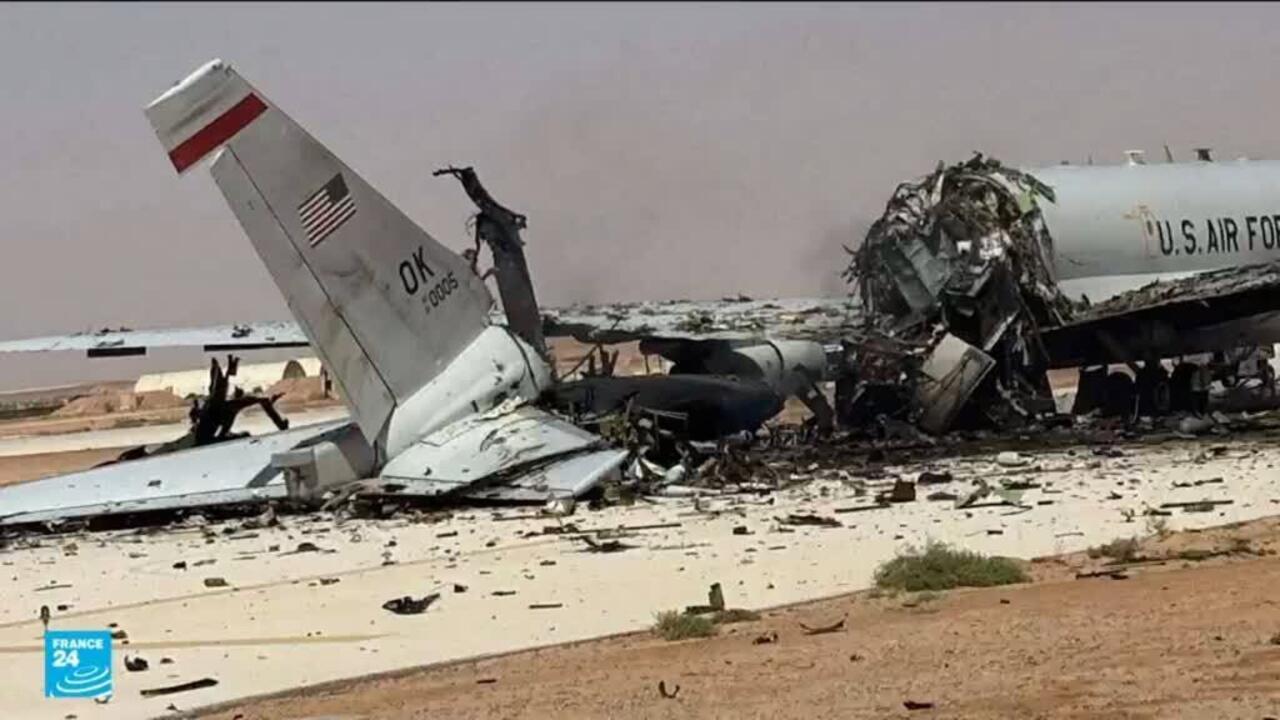
Two individuals were injured in Al-Kharj, close to the Saudi capital Riyadh, as a result of debris from an intercepted drone. The incident took place in the area housing Prince Sultan Air Base, which hosts American military personnel. This event comes at a time when Iranian attacks on Gulf states are ongoing, heightening tensions in the region.
In a related context, Iranian Foreign Minister Abbas Araghchi called on Saudi Arabia to remove American forces from its territory, asserting that Iranian attacks target only its enemies. These statements reflect the escalating conflict between Iran and the United States and its allies in the region, with growing concerns about a potential military confrontation.
Details of the Incident
The incident in Al-Kharj underscores the increasing tensions in the region, as Iran seeks to bolster its military position against what it perceives as threats from the United States and its allies. The intercepted drone was reportedly targeting Prince Sultan Air Base, one of the main military bases utilized by American forces in the area.
Prince Sultan Air Base serves as a strategic hub for American forces, playing a vital role in military operations against organizations like ISIS, as well as monitoring Iranian activities in the region. Recent Iranian attacks reflect Tehran's strategy of sending warning messages to its adversaries, especially given the presence of American troops in Gulf states.
Background & Context
Historically, relations between Iran and Gulf states have been marked by increasing tensions, particularly following the United States' withdrawal from the Iranian nuclear deal in 2018. This withdrawal led to the re-imposition of economic sanctions on Iran, prompting it to take escalatory steps in the region.
Saudi Arabia is one of the most prominent countries opposing Iran, as Riyadh seeks to counter Iranian influence in the region. Iranian attacks on military facilities in Saudi Arabia, such as the attack on Aramco facilities in 2019, indicate the rising tensions between the two sides.
Impact & Consequences
Iranian attacks on American bases in the region could provoke military responses from the United States, increasing the likelihood of conflict escalation. Should the attacks continue, the United States may consider bolstering its military presence in the region, potentially leading to further tensions.
Any military escalation in the region would have significant repercussions on the global economy, particularly in the energy sector. The Arabian Gulf is one of the most crucial maritime routes for oil trade, and any threat to these routes could impact global oil prices.
Regional Significance
Tensions between Iran and Gulf states directly affect security and stability in the Arab region. Neighboring Arab countries, such as Iraq and Syria, are suffering from the repercussions of these tensions, as Iran seeks to enhance its influence in these nations.
Moreover, military escalation could lead to an influx of refugees and increased humanitarian crises in the region, necessitating an urgent international response. Arab states must cooperate to address these challenges and work towards enhancing security and stability in the region.
In conclusion, the situation in the Arabian Gulf remains tense, with ongoing Iranian attacks on American bases. The current circumstances require effective diplomatic dialogue to avoid military escalation and ensure security and stability in the region.