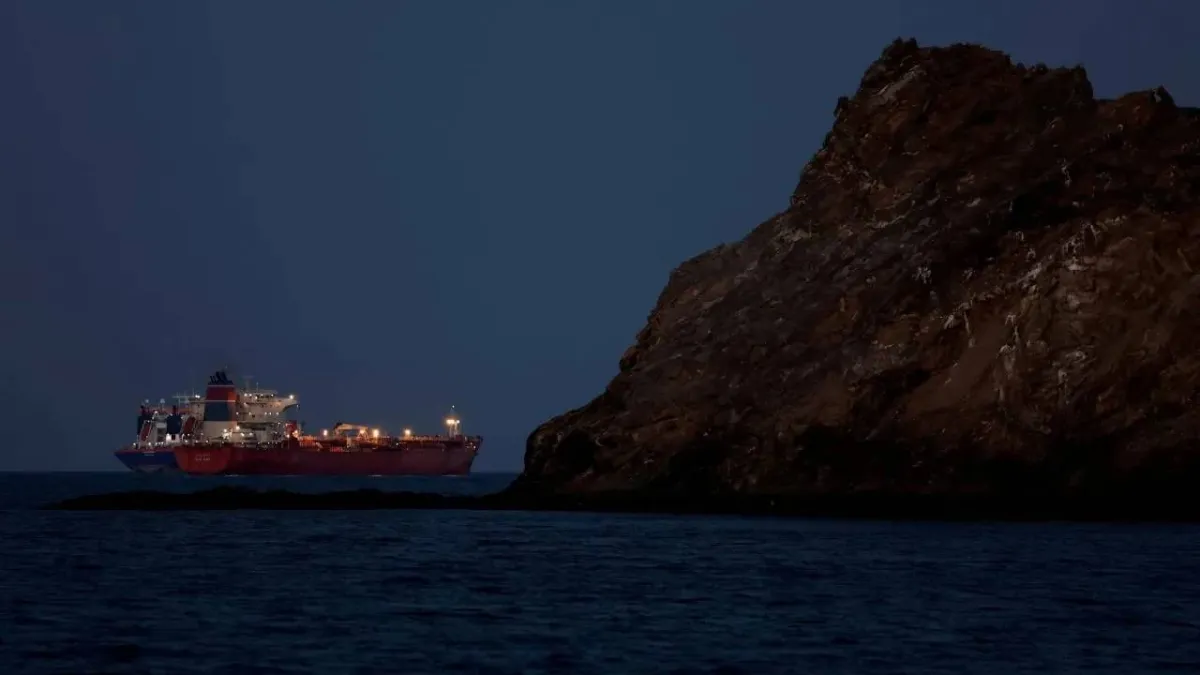
Two liquefied petroleum gas carriers, 'PW Elm' and 'PW Teer', have crossed the Strait of Hormuz heading to India, according to shipping data from the London Stock Exchange Group and Kepler. This step comes at a time when the region is witnessing increasing tensions due to the US-Israeli war on Iran, which has led to a near-total halt of shipping traffic in the strait.
Iran, for its part, confirmed days ago that 'non-hostile vessels' could cross if they coordinated with Iranian authorities. Data showed that the two vessels, flying the Indian flag, crossed the Gulf and are now in the eastern part of the Strait of Hormuz.
Details of the Event
India is currently working on gradually moving its stranded liquefied petroleum gas shipments out of the strait, with four shipments having been transferred so far via the carriers Shivalik, Nanda Devi, Payne Gas, and Jag Vasant. Rajesh Kumar Sinha, an official at the Indian Ministry of Shipping, reported that as of last Friday, there were 20 vessels flying the Indian flag, including five LNG carriers, stranded in the Gulf.
Data indicates that the LNG carriers 'Gag Vikram', 'Green Asha', and 'Green Sanvi' remain in the western sector of the Strait of Hormuz. These conditions reflect the significant challenges faced by India, the second-largest importer of LNG in the world, which is experiencing its worst gas crisis in decades.
Background & Context
Last year, India consumed approximately 33.15 million tons of liquefied petroleum gas, or cooking gas, with imports accounting for about 60 percent of demand. Most of these imports came from the Middle East, making India heavily reliant on the stability of shipments through the Strait of Hormuz.
The US-Iranian-Israeli war has led to threats to farmers and food prices worldwide, with mineral fertilizer prices in global markets rising by about 40 percent since the beginning of the year, according to German experts in the sector. Additionally, Qatar Energy has halted production at the world's largest urea plant, further complicating the situation.
Impact & Consequences
India has been significantly affected by this crisis, as the government has reduced supplies allocated to industries in a bid to protect households from any cooking gas shortages. Furthermore, the decline in LNG supplies coming from Qatar has led to reduced production at three urea plants, exacerbating the crisis.
At the same time, the United Nations food agency has warned that many low-income countries were already experiencing food insecurity before the outbreak of the war, reflecting the global impacts of these tensions.
Regional Significance
The effects of these tensions extend beyond India, as the closure of the Strait of Hormuz, through which about 20 percent of global oil and LNG trade passes, could have significant economic repercussions for Arab countries. Rising gas and fertilizer prices may also impact food security in the region, increasing pressure on governments.
Under these circumstances, Arab countries must seek alternative strategies to ensure the stability of energy and food supplies, especially as tensions in the region continue.