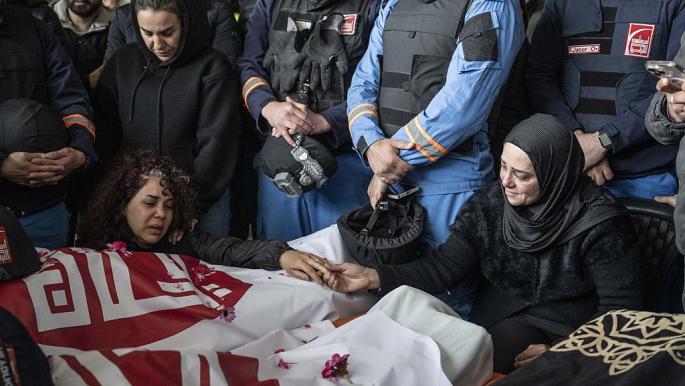
Two paramedics were martyred in an Israeli airstrike on the city of Nabatieh in southern Lebanon, where their colleagues gathered to bid them farewell in a poignant scene reflecting the suffering in the region. The airstrike, which occurred today, Wednesday, comes amid escalating Israeli aggression against Lebanese territory, resulting in numerous casualties.
Dozens of paramedics in Nabatieh gathered around the coffins of their colleagues, a scene that reflects the solidarity and pain experienced by the Lebanese community under current circumstances. Participants in the farewell expressed their deep sorrow for the loss of their colleagues who died while performing their humanitarian duty to save lives.
Details of the Incident
The Israeli airstrike targeted a residential area in Nabatieh, leading to the martyrdom of the paramedics and injuries to others. Local sources confirmed that the attack occurred at a sensitive time, as the area was experiencing increasing tension due to the Israeli military escalation in the south.
Nabatieh is considered one of the cities that has faced multiple assaults by the Israeli occupation forces, making it a hot spot in the ongoing conflict. Reports have shown that these airstrikes have caused significant destruction and directly affected the lives of civilians.
Background & Context
Historically, Lebanon has witnessed numerous armed conflicts and Israeli assaults, especially since the beginning of the occupation in 1982. Since then, airstrikes have become part of the Israeli military strategy against Lebanon, leading to the loss of many lives and the destruction of infrastructure.
In recent years, tensions between Lebanon and Israel have escalated, particularly following repeated attacks along the border. Additionally, the internal political situation in Lebanon, which is suffering from economic and political crises, complicates matters and makes civilians more vulnerable.
Impact & Consequences
The martyrdom of the paramedics in Nabatieh reflects the deep impact of Israeli assaults on the Lebanese community, as feelings of fear and anxiety among the population increase. These incidents may also lead to greater escalation in the conflict, threatening the stability of the entire region.
Calls from humanitarian organizations and the international community are increasing to stop the Israeli assaults, as they consider these attacks to be in violation of international laws and exacerbating the humanitarian situation in Lebanon.
Regional Significance
The events in Lebanon are part of the larger picture of the Arab-Israeli conflict, where the Palestinian cause remains at the heart of disputes in the region. The martyrdom of the paramedics highlights the suffering of civilians and strengthens calls for Arab solidarity with Lebanon and Palestine.
Moreover, the military escalation in Lebanon may affect relations between Arab countries and Israel, potentially leading to a reevaluation of security and political cooperation strategies in the region.
The martyrdom of the paramedics in Nabatieh reminds us of the necessity to work for peace and stability in the region, reflecting the significant challenges faced by Arab communities amid ongoing conflicts.