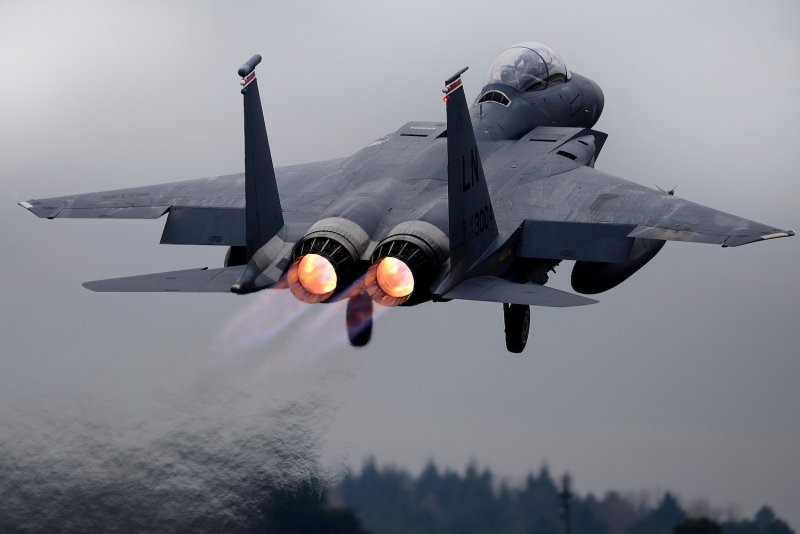
Iranian and American sources confirmed the crash of two US fighter jets over Iran and the Gulf, with pilots rescued and one still missing. This incident highlights the risks faced by American and Israeli aircraft despite assurances from President Donald Trump and his Defense Secretary Mark Esper regarding air dominance. The first aircraft, a F-15E, was shot down by Iranian fire, while the second, an A-10 Warthog, crashed over Kuwait after coming under Iranian fire.
In the search efforts for the missing pilot, two Blackhawk helicopters came under Iranian fire but managed to exit Iranian airspace. The extent of injuries to the aircraft crews remains unclear, and there is no precise information regarding the fate of the missing pilot from the F-15E.
Details of the Incident
The Iranian Revolutionary Guard announced that they are conducting search operations in the area where the aircraft fell in southwestern Iran, with the local governor promising to honor anyone who captures or kills "enemy combatants." Meanwhile, Iranians celebrated the downing of the two jets on social media, with Mohammad Baqer Qalibaf, the Speaker of the Iranian Parliament, describing the American and Israeli war as having shifted from "regime change" to hunting pilots.
Reports indicate that the F-15E has two seats, one for the pilot and the other for a weapons systems officer, but it remains unclear which of them was rescued. Additionally, American pilots receive specialized training to handle such situations, but few speak Persian, making it a significant challenge to remain undetected while awaiting rescue.
Background & Context
These incidents come at a highly sensitive time, as US-Iran relations have escalated significantly since the onset of the conflict. Since the start of the US military campaign against Iran, more than 13 American soldiers have been killed, and over 300 others have been injured. The military pressures have led to an escalation of Iranian attacks on Israel and US-aligned Gulf states, complicating the regional situation further.
Earlier, Trump issued threats to target Iranian bridges and power stations, reflecting the rising tensions between the two sides. Images released by Iranian media showed parts of the downed American aircraft, further heightening tensions in the region.
Impact & Consequences
These incidents raise questions about the United States' ability to maintain control in Iranian airspace, especially with a missing pilot who may still be alive inside Iran. This situation increases the pressure on the Trump administration at a time when it is experiencing declining public support for the war, and it threatens to escalate the conflict further.
Moreover, the reciprocal attacks between the US and Iran could lead to significant economic repercussions, as oil markets have experienced sharp fluctuations following the recent escalation, impacting the global economy. Markets closed after oil prices surged by 11%, reflecting growing concerns over the escalating conflict.
Regional Significance
These events signal a rise in tensions in the Gulf region, which may affect the Arab Gulf states that rely on stability in the area. The US embassy in Beirut has warned of the potential targeting of universities in Lebanon by Iran and its allies, raising security concerns in the region.
In conclusion, these incidents reflect the increasing risks faced by American forces in the Middle East and raise questions about the future of the conflict and its impact on regional security.