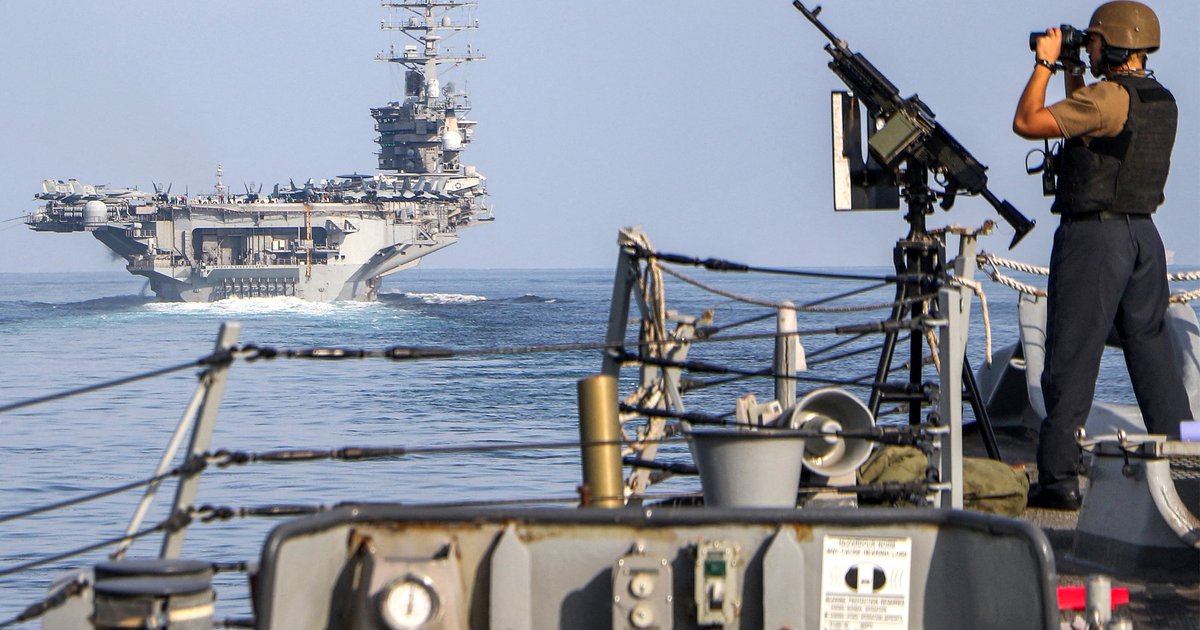
The United Arab Emirates has called for the establishment of an international maritime force aimed at reopening the Strait of Hormuz, which has been suffering from restrictions imposed by Iran on navigation. Reports indicate that the UAE has informed its allies of its intention to join this force, emphasizing that the goal is to create the largest possible coalition of countries.
Informed sources confirmed that "the focus is on establishing a broad international force," clarifying that "this is not about going to war with Iran, but about addressing the threats facing the global economy." This development comes at a time when the region is witnessing escalating tensions, as several vessels have been attacked by Iran since the onset of the conflict on February 28.
Details of the Event
The UAE is seeking to confront the Iranian threats that have increased recently, as Tehran has targeted more than ten ships in Gulf waters. The Strait of Hormuz is considered one of the most important maritime passages in the world, through which approximately 20% of the world's oil passes. Therefore, any threat to navigation in this strait can significantly impact the global economy.
This call comes at a sensitive time, as relations between Iran and the United States have notably escalated following attacks on vessels in the region. This international coalition is viewed as a strategic move by the UAE to enhance its national security and ensure the safety of navigation in the Strait of Hormuz.
Background & Context
Historically, the Strait of Hormuz has been a theater for numerous conflicts and geopolitical tensions. In recent years, Iran has increased its influence in the region, raising concerns among Gulf states. Following attacks by Israel and the United States on Iran, Tehran has exploited the situation to bolster its control over the strait.
It is worth noting that the Strait of Hormuz is a vital transit point for oil, with shipments from Gulf countries passing through it to global markets. Thus, any escalation in the region could lead to rising oil prices and affect the global economy.
Impact & Consequences
The formation of an international force to reopen the Strait of Hormuz could lead to significant changes in the security dynamics of the region. This coalition is likely to increase pressure on Iran, potentially prompting it to take escalatory steps or to retreat from some of its positions. Additionally, the presence of an international force in the region may enhance maritime navigation stability, benefiting the global economy.
However, this move could also escalate tensions between Iran and Western countries, which may negatively impact regional security. Therefore, balancing the enhancement of security while ensuring that the conflict does not escalate will be crucial in the coming phase.
Regional Significance
These developments are of great importance to Arab countries, as any escalation in the Strait of Hormuz could affect Arab oil exports. Furthermore, strengthening cooperation among Arab states to confront Iranian threats could enhance regional security.
Ultimately, the question remains as to how Iran will respond to this call for the formation of an international force, and whether it will take escalatory steps or seek de-escalation. The situation in the region requires close monitoring, as any development could impact regional and global stability.