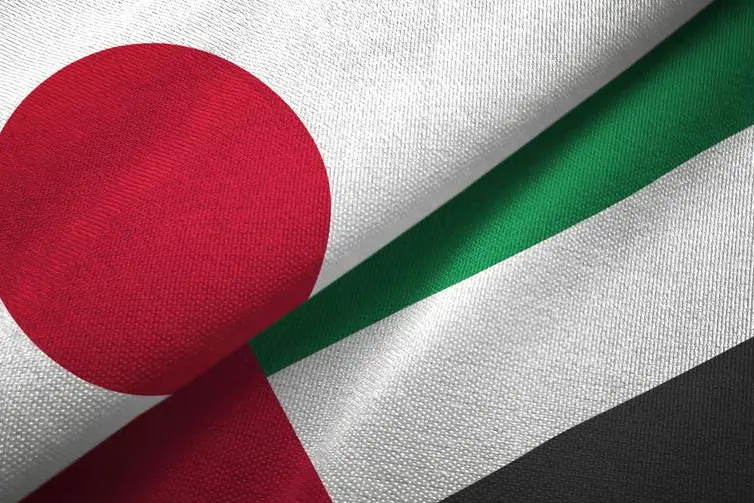
In a move that reflects the depth of bilateral relations between the United Arab Emirates and Japan, the President of the UAE, Sheikh Mohammed bin Zayed Al Nahyan, awarded the Japanese Ambassador to the UAE, Kazuhiko Kojima, the First-Class Independence Medal. This honor comes in recognition of the ambassador's efforts to strengthen cooperation between the two countries across various fields.
Ambassador Kojima, who has held his position since 2019, has played a significant role in developing economic and cultural relations between the UAE and Japan. His efforts have contributed to enhancing trade exchanges and increasing Japanese investments in the UAE, reflecting the mutual trust between the two nations.
Details of the Ceremony
The ceremony honoring Ambassador Kojima took place during an official event held at the Presidential Palace, where Sheikh Mohammed bin Zayed expressed his appreciation for the ambassador's efforts in strengthening bilateral relations. He emphasized that this medal reflects the UAE's commitment to enhancing international cooperation and building strategic partnerships with friendly countries.
Sheikh Mohammed bin Zayed also highlighted the importance of UAE-Japan relations, which have spanned over 50 years and witnessed remarkable development in various fields, including economy, culture, and technology.
Background & Context
Diplomatic relations between the UAE and Japan were established in 1971, and since then, these relations have experienced significant growth. Japan is considered one of the UAE's most important trading partners, with the volume of trade between the two countries exceeding 20 billion dirhams annually.
The UAE seeks to strengthen its relations with Japan through a range of initiatives, including cooperation in renewable energy and modern technology. Japan is also regarded as a strategic partner in sustainable development projects implemented by the UAE.
Impact & Consequences
The awarding of the First-Class Independence Medal to Ambassador Kojima is a step that reflects the high regard Japan holds in the UAE. This honor may contribute to enhancing bilateral relations and encourage further cooperation in the future.
This event also reflects the UAE's strategic direction towards strengthening its relations with Asian countries, especially in light of global economic and political changes. This recognition is expected to open new avenues for cooperation between the UAE and Japan in multiple fields.
Regional Significance
The UAE-Japan relations serve as a model in the region, potentially contributing to enhancing Arab cooperation with Asian countries. Strengthening relations with Japan could open the door for other Arab nations to develop strategic partnerships with Tokyo, benefiting Arab economies.
Amid global economic challenges, relations with Japan could provide an opportunity for countries in the region to benefit from advanced Japanese technology and expertise in various fields, contributing to sustainable development.
In conclusion, honoring the Japanese ambassador reflects the depth of relations between the UAE and Japan and underscores the importance of international cooperation in addressing shared challenges. This cooperation is expected to continue to grow, benefiting both countries.