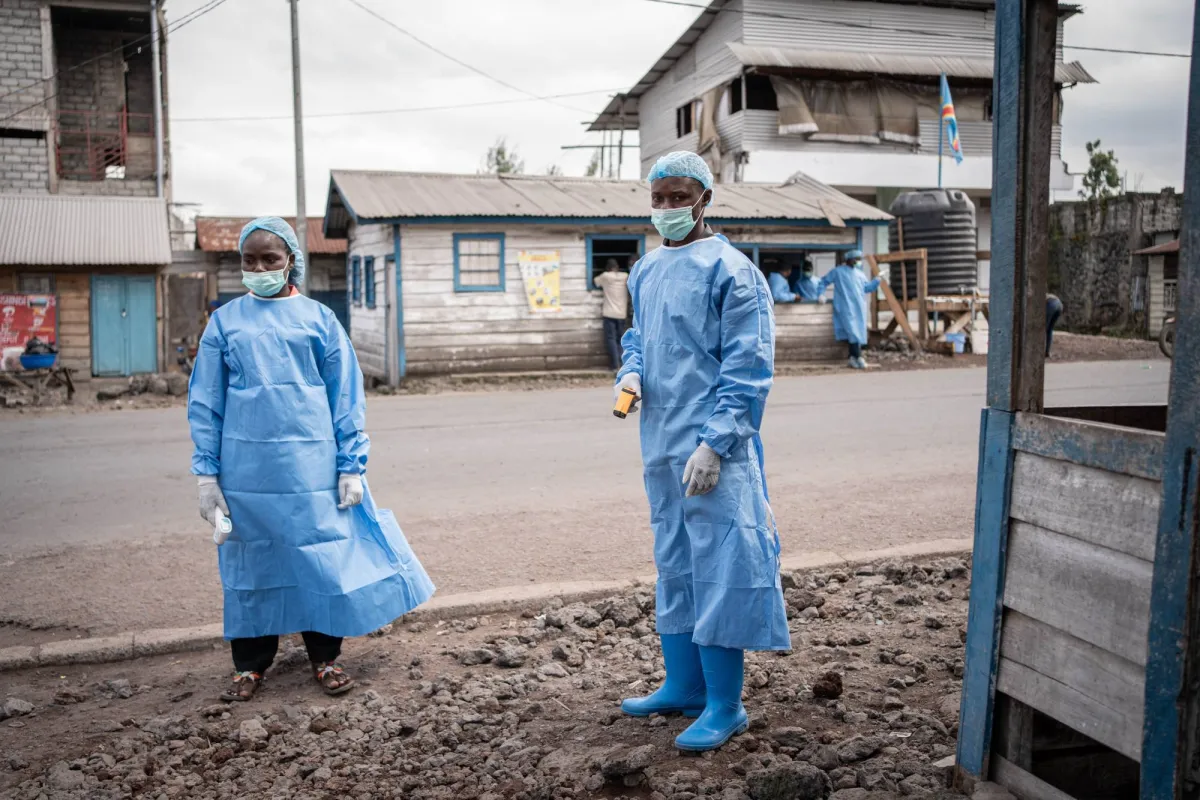
The Democratic Republic of Congo is currently in a state of health emergency due to an Ebola outbreak, with over 900 suspected cases and 220 deaths reported since the outbreak began on May 15. As fears grow about the virus spreading to neighboring countries, Uganda has taken the unprecedented step of temporarily closing its borders.
On Wednesday, Ugandan authorities announced the closure of the border with the Democratic Republic of Congo, allowing only disease control teams and humanitarian aid to pass. This decision comes amid the outbreak of a new variant of the virus known as Bundibugyo, which has a mortality rate of 50% in the absence of an approved vaccine or treatment.
Details of the Outbreak
The Democratic Republic of Congo is experiencing its seventeenth outbreak of Ebola, struggling with a severe shortage of medical resources. At the Roamabara Hospital, one of the outbreak hotspots, patients are arriving under difficult conditions, with complaints about a lack of resources. The sister of one patient stated, "We thought she had malaria, but her condition did not improve."
The Ituri region, where Roamabara Hospital is located, faces additional challenges due to weak state presence and attacks from armed groups, complicating efforts to contain the epidemic. Medical teams have been forced to set up a temporary isolation ward after the tents established by the NGO Alima were burned down.
Background & Context
Historically, the Democratic Republic of Congo has witnessed several outbreaks of Ebola, but this wave comes at a time when the country is grappling with armed conflicts and internal strife. The Director-General of the World Health Organization, Tedros Adhanom Ghebreyesus, warned that the conflict in eastern Congo complicates efforts to contain the virus, calling for an immediate ceasefire.
Reports indicate that the current situation requires urgent international cooperation to ensure humanitarian aid reaches affected areas, as frontline workers are facing significant challenges in providing healthcare.
Impact & Consequences
Concerns are rising that the Ebola outbreak could lead to a regional health crisis, especially with Uganda closing its borders. This measure may impact trade and economic activity between the two countries, exacerbating economic challenges in the region.
The virus outbreak could also lead to an increase in displacement cases, as populations seek to flee affected areas. Health authorities have warned that the actual numbers of infected individuals may be much higher than those officially recorded.
Regional Significance
Although the Ebola outbreak is occurring far from Arab countries, its effects may extend to the region through heightened fears of epidemic spread. International cooperation in combating epidemics is essential for maintaining public health.
In conclusion, the current situation requires a swift and effective response from the international community to ensure the containment of the virus and prevent its spread to new areas.