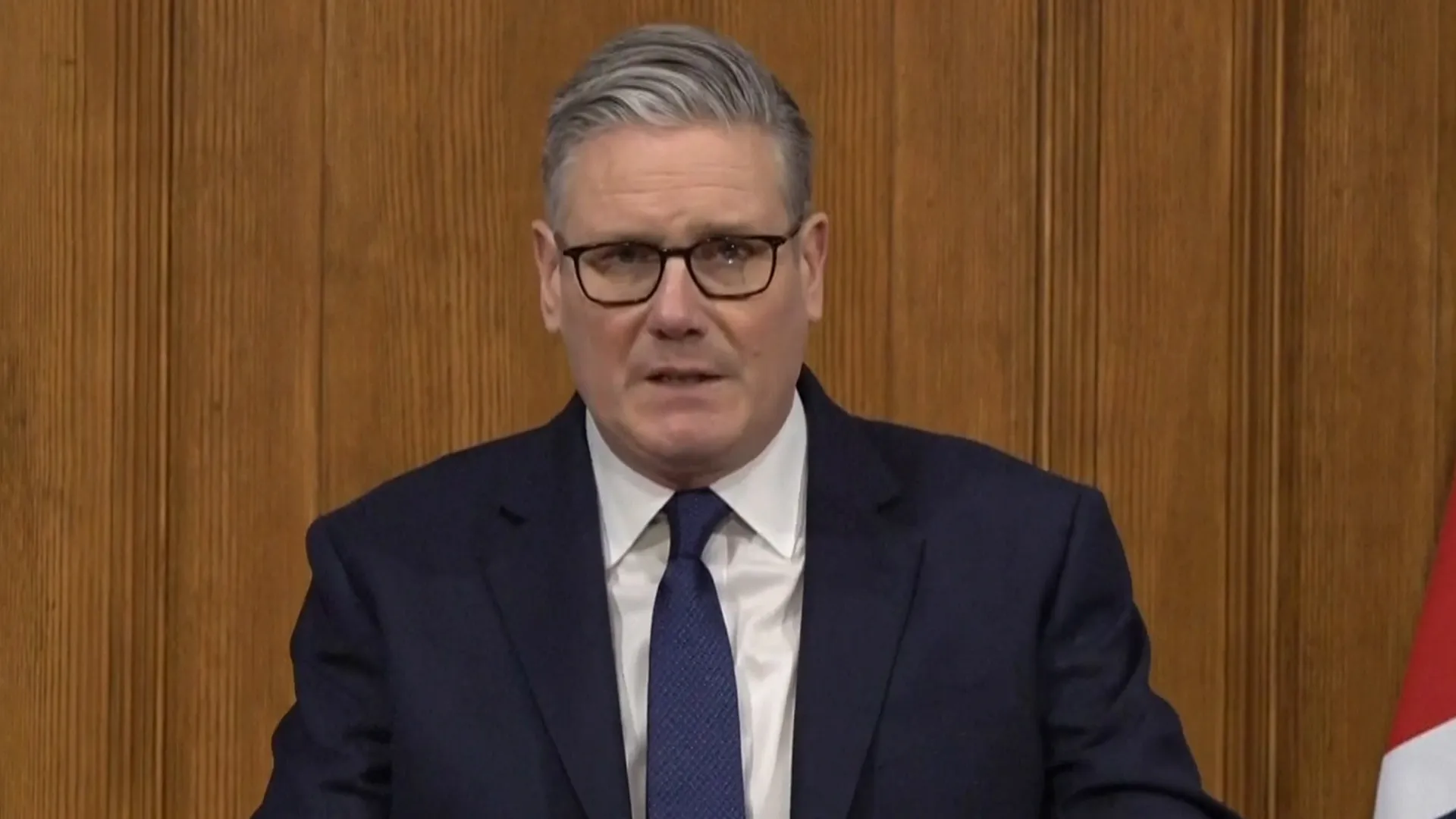
British Prime Minister Keir Starmer has asserted that his country will not be drawn into the ongoing war in the Middle East, noting that this conflict does not serve British national interests. He clarified that the priority is focused on de-escalation and reopening the Strait of Hormuz, which is considered a vital artery for global energy.
During a press conference, Starmer explained that his government is working through all diplomatic channels to achieve this goal, referring to meetings held by the Foreign Secretary and the Chancellor with their counterparts in the G7. He also mentioned the field movements of the Defence Secretary in the region, reflecting the UK government's commitment to enhancing maritime security in the Gulf.
Details of the Event
Starmer pointed out that London has successfully rallied support from 35 countries for a statement of intent aimed at enhancing maritime security in the Gulf. He announced that a meeting will be held at the end of this week to discuss the necessary political and diplomatic measures to ensure freedom of navigation. He noted that this meeting will be followed by a gathering of military planners to discuss ways to secure the strait after hostilities cease, considering the task complex and requiring close coordination between political and military efforts to ensure the safety of vessels and the continued flow of vital goods.
Starmer emphasized that the challenges are not only related to security but also to the safety of passage through the strait, which necessitates a unified international front. He clarified that the UK has played a "clear and quiet" leadership role since the beginning of the crisis, based on protecting its national interests.
Background & Context
Starmer's statements come at a time when the Middle East is witnessing an escalation of conflicts, raising concerns among many Western nations about the possibility of being dragged into new conflicts. The region has suffered from ongoing tensions for decades, affecting its economic and political stability. In light of these circumstances, the UK government is seeking to take proactive steps to ensure that the conflict does not impact its national security.
Starmer also referred to the domestic repercussions of the war, expressing concern among Britons over the scenes of escalation and the potential for their country to become involved in the conflict. He affirmed that his government would not allow this under any circumstances, stressing the importance of taking urgent measures to alleviate the burdens on families.
Impact & Consequences
The UK government's plan to address the crisis includes reducing energy costs and cutting tariffs on oil until September, with daily monitoring of market developments and the impacts of the conflict. The plan also includes support for the most vulnerable groups at risk of losing heating, alongside investment in clean energy to achieve energy security and reduce dependence on fluctuations linked to Russia and Iran.
Starmer explained that the government has frozen drug prices for a year, raised public wages, and has plans to lift around 450,000 children out of poverty. He emphasized that these policies are not emergency measures but part of a strategy that began with the war in Ukraine in 2022, focusing on supporting the national economy and enhancing energy security and living stability.
Regional Significance
Starmer's statements are indicative of Western trends towards conflicts in the Middle East, as major powers seek to avoid being drawn into new conflicts. This policy may affect relations between Arab states and Western countries, especially amid ongoing tensions in the region.
In conclusion, the question remains about how these policies will affect the future of international relations in the region and the extent to which the UK can achieve its goals without being dragged into new conflicts.