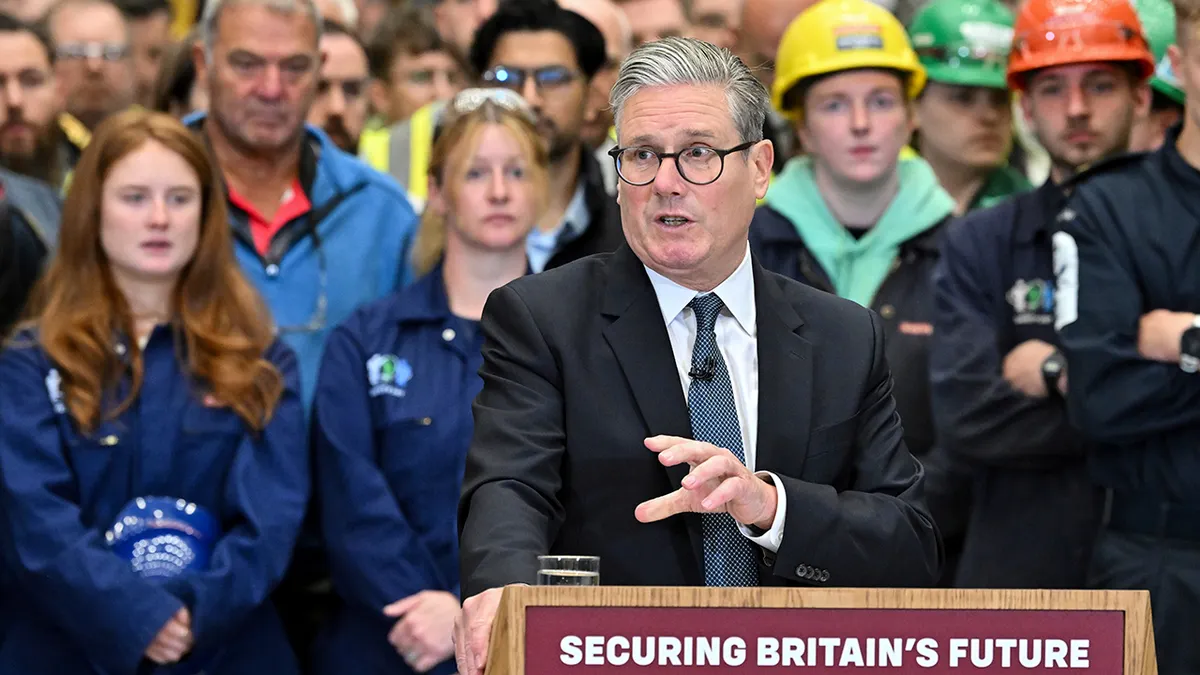
British Prime Minister Keir Starmer confirmed on Monday that his country will not send any ground troops to Iran, indicating that London will not participate in the military operations being conducted by the United States and Israel against Tehran. These statements come at a time when tensions in the region are escalating, raising questions about the UK's stance on the Iranian crisis.
Starmer, who has been in office since 2020, reiterated that the British government is committed to not engaging in any military conflict in the Middle East, highlighting the importance of diplomacy and dialogue to resolve disputes. These remarks come as Starmer faces increasing pressure from some political circles in the UK to support US military actions against Iran.
Details of the Event
In a related context, reports have indicated that the United States and Israel may be planning military operations against Iran amid growing concerns over its nuclear program. However, Starmer clarified that the UK will not be part of these operations, reflecting the current British government's policy of preferring to stay away from direct military conflicts.
Starmer also pointed out that the UK will continue to support diplomatic efforts to resolve the Iranian crisis, emphasizing the importance of dialogue among all parties involved. These positions reflect a shift in British policy towards the Middle East, especially in light of the increasing tensions between Iran and the West.
Background & Context
Historically, relations between Iran and Western countries have been strained, particularly following the 1979 Islamic Revolution. Since then, the United States and its allies have imposed economic sanctions on Iran, exacerbating the country's economic and political conditions. In recent years, concerns over Iran's nuclear program have prompted some countries to consider military options.
Despite the pressures, the British government under Starmer seeks to maintain its independent stance, avoiding involvement in military conflicts that could worsen the situation in the region. This position also reflects the government's desire to strengthen relations with other countries in the region, including the Gulf states.
Impact & Consequences
The implications of the UK's stance on not engaging in military operations against Iran could affect British-American relations. This may lead to tensions between London and Washington, especially if pressures continue on the British government to support military actions.
Additionally, this position may impact Britain's relations with Middle Eastern countries, where some nations are seeking to enhance military cooperation with the United States. At the same time, the UK's stance could be seen as a step towards promoting peace and stability in the region, potentially opening the door for further diplomatic dialogue.
Regional Significance
In the Arab context, the UK's position may be viewed as a message to countries in the region about the importance of peaceful solutions to disputes. Amid current tensions between Iran and Arab nations, this stance could contribute to enhancing peace efforts and regional cooperation.
Moreover, not engaging in military conflicts may bolster the UK's position as a potential mediator in any future negotiations between Iran and Arab countries, contributing to greater stability in the region.
In conclusion, Keir Starmer's position demonstrates the UK's commitment to peace and dialogue, steering clear of military options, which reflects a shift in British policy towards the Middle East under the current circumstances.