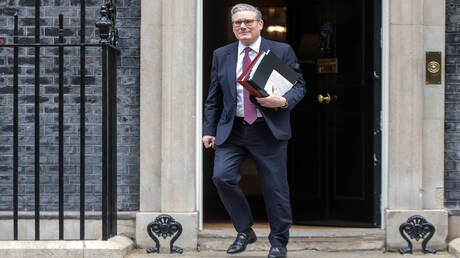
The UK Prime Minister's Office announced a decision allowing the British Navy to intercept ships under sanctions in the territorial waters of the United Kingdom. This step is part of the government's efforts to enhance maritime security and ensure compliance with sanctions imposed on certain countries.
This decision comes at a time when international tensions are increasing, as Britain seeks to bolster its position as a naval power capable of protecting its national interests. It also reflects the British government's commitment to addressing emerging challenges to maritime security, particularly in light of current geopolitical crises.
Details of the Decision
According to the statement from the Prime Minister's Office, the British Navy will be able to take immediate action to intercept any ships suspected of violating imposed sanctions. This includes ships that may be linked to countries or entities subject to international sanctions, demonstrating the UK government's commitment to strictly enforce these sanctions.
The statement also noted that these measures will help enhance maritime security and provide a safe environment for maritime trade, which is vital for the British economy that heavily relies on international trade.
Background & Context
Historically, Britain has played a significant role in enforcing international sanctions, especially during political crises such as the conflict in Ukraine or tensions with Iran. In recent years, there has been an increase in the number of ships intercepted in British territorial waters due to sanctions violations.
This move is also part of a broader strategy by the British government to enhance its defensive and naval capabilities, especially amid increasing security challenges from countries like Russia and China. These measures are seen as part of the government's efforts to maintain national security and promote stability in the region.
Impact & Consequences
This step could escalate tensions between Britain and the countries targeted by the sanctions, potentially negatively impacting diplomatic relations. Additionally, intercepting ships may provoke reactions from the targeted nations, complicating the geopolitical landscape further.
Moreover, these measures may affect maritime trade flows, as some companies might hesitate to send their ships to British waters for fear of interception. This could have a broader impact on the UK economy, particularly given its significant reliance on international trade.
Regional Significance
In the Arab context, this decision may have indirect effects on countries under international sanctions, such as Iran and Syria. The escalation of British measures could increase pressure on these nations, potentially affecting their political and economic situations.
Furthermore, this step may reflect new trends in British policy towards the Middle East, as the UK government seeks to enhance its role as an active power in the region, which could open avenues for further cooperation or tension with Arab nations.
The decision by Prime Minister Keir Starmer to allow the Navy to intercept sanctioned ships underscores the UK government's commitment to addressing security challenges. However, this move may carry complex implications on both international and domestic levels, necessitating close monitoring of upcoming events.