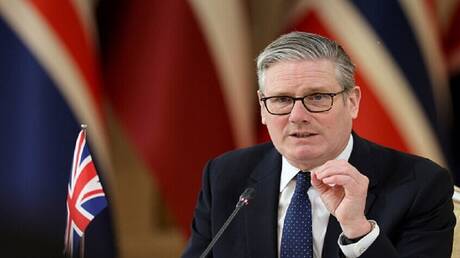
UK Labour leader Keir Starmer announced that the United Kingdom will host an international meeting this week aimed at reopening the Strait of Hormuz. The meeting, the first of its kind, will be chaired by British Foreign Secretary James Cleverly, bringing together countries willing to cooperate to secure navigation in this vital region.
This meeting comes at a time when the region is experiencing increasing tensions, particularly with the rise of military activities in the Gulf waters. The Strait of Hormuz is a crucial transit point for about 20% of the world's total oil, making it a strategic hub for global security.
Details of the Event
The meeting will be held in the British capital, London, where representatives from several countries, including Gulf Arab states and the United States, are expected to participate. The aim of the meeting is to discuss ways to enhance security and economic cooperation in the region, as well as to develop practical plans for reopening the strait to navigation.
British Foreign Secretary James Cleverly will lead the discussions, presenting the UK government's vision on the importance of securing the Strait of Hormuz. The discussions will also address the challenges facing navigation in this area, including potential threats from armed groups.
Background & Context
The Strait of Hormuz is a narrow waterway connecting the Arabian Gulf with the Gulf of Oman and is considered one of the most important maritime passages in the world. In recent years, the strait has witnessed numerous incidents, including attacks on oil tankers, which have heightened tensions between Iran and Western countries.
Historically, there have been multiple attempts to secure navigation in the strait; however, political and military tensions often hinder these efforts. The upcoming meeting represents a new opportunity for the concerned countries to unify their efforts in addressing security challenges in the region.
Impact & Consequences
If the meeting succeeds in achieving its objectives, it could lead to improved security conditions in the Strait of Hormuz, positively impacting oil prices and global markets. It may also contribute to strengthening cooperation among the involved countries, potentially opening new avenues for economic and political collaboration.
On the other hand, if no tangible agreements are reached, tensions in the region may escalate, adversely affecting navigation and global markets. Therefore, the outcomes of this meeting will be closely watched by the world.
Regional Significance
The Gulf Arab states are among the most affected by developments in the Strait of Hormuz, as their economies heavily rely on oil exports. Any escalation in tensions could impact oil prices, reflecting on local economies.
Moreover, stability in the Strait of Hormuz is vital for regional security, as any threat to navigation could have widespread repercussions affecting all countries in the region. Thus, cooperation between Arab states and Western countries in this context is essential.
In conclusion, the upcoming international meeting in the UK represents an important step towards enhancing security in the Strait of Hormuz, reflecting the international community's commitment to securing navigation in this strategic area.