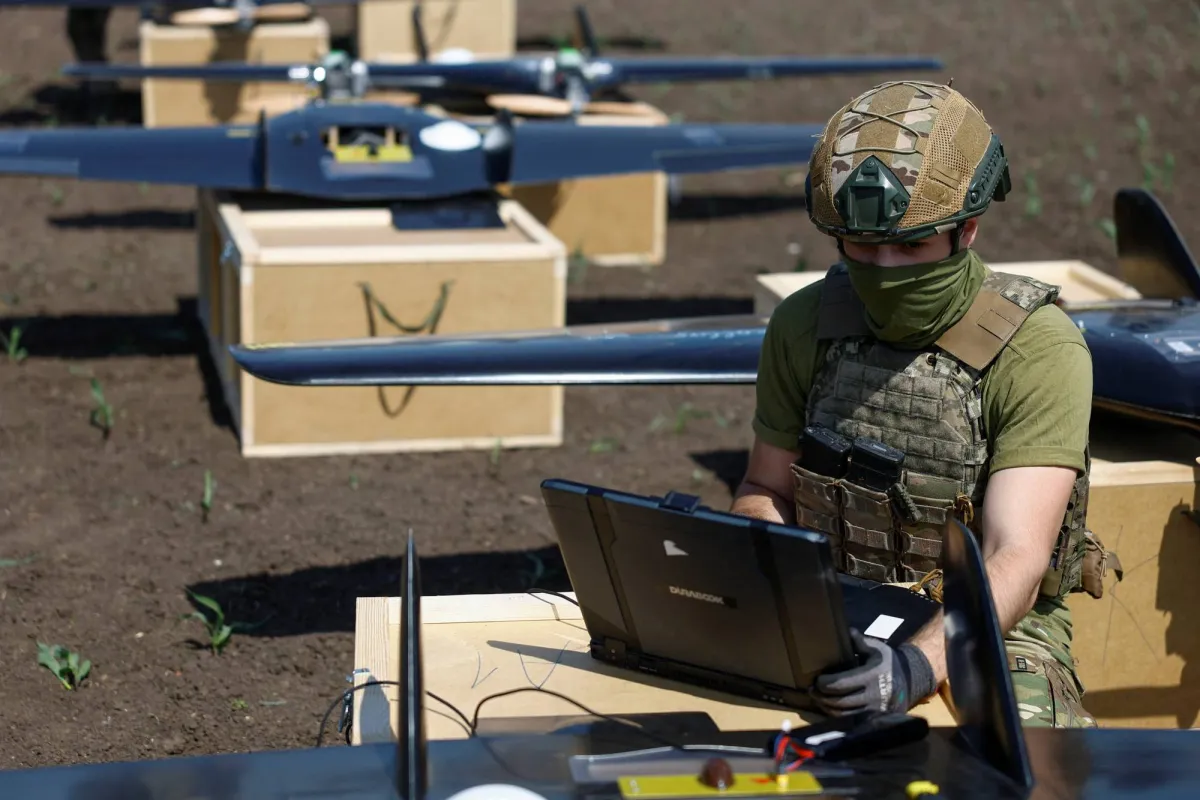
Ukrainian drones targeted energy infrastructure in the Russian city of Volgograd, resulting in the deaths of three public utility workers. The attack, which occurred in a Moscow-controlled area of Donetsk, reflects the escalating tensions between Kyiv and Moscow amid the ongoing conflict.
The Russian news agency Interfax reported that Governor Andrei Boucharov confirmed that Russian defense systems were attempting to shoot down Ukrainian drones targeting civilian infrastructure. He noted that the attack resulted in damage to a residential building, but no civilian injuries were reported.
Details of the Incident
In this context, Denis Pushilin, a Russian-appointed official in Donetsk, stated that the attack resulted in the deaths of three workers who were in a vehicle belonging to a water supply company in Vuhledar, north of Donetsk city. A fourth man was seriously injured, highlighting the increasing risks faced by workers in conflict-affected areas.
Russia continues to demand that Ukraine relinquish the territories it controls in Donetsk, asserting its readiness to continue fighting until full control of the region is achieved. In contrast, Ukraine rejects this demand, complicating the security situation in the area.
Background & Context
The roots of the conflict between Russia and Ukraine date back to 2014, when Russia annexed Crimea. Since then, the region has witnessed an escalation in armed conflicts, with increasing mutual attacks between both sides. Drone attacks have become a common weapon in this conflict, as Ukraine seeks to target Russian military and economic infrastructure.
Volgograd is considered one of Russia's significant cities, housing a large refinery operated by Lukoil. Attacks on energy infrastructure indicate a strategic targeting by Ukraine, reflecting a shift in wartime tactics.
Impact & Consequences
The repercussions of this attack extend beyond local borders, potentially affecting international relations between Russia and Western countries. An escalation in attacks may provoke strong reactions from Russia, including increased military pressure on Ukraine.
This attack could also impact global markets, particularly in the energy sector, where any disruption in supplies could lead to rising oil and gas prices. European countries, which rely on Russian energy, may find themselves in a difficult position if these attacks continue.
Regional Significance
For the Arab region, the escalation of the conflict between Russia and Ukraine may impact food security, as both countries are major grain exporters. Any disruption in supplies could lead to rising food prices, affecting Arab countries that rely on imports.
Moreover, geopolitical tensions may influence Arab investments in the region, as countries may reassess their investments amid increasing instability.
In conclusion, the ongoing conflict continues to evolve, with drone attacks marking a significant shift in military strategies. The implications of these developments are likely to resonate across various sectors, including energy and food security, both regionally and globally.