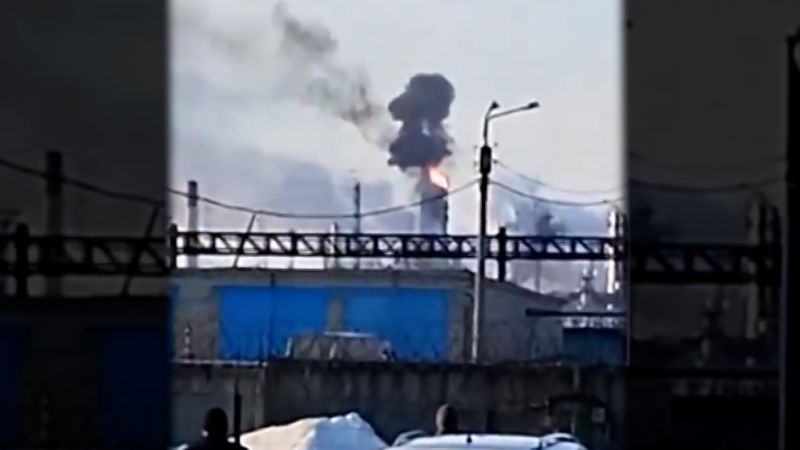
Ukrainian forces have once again targeted strategic Russian oil ports located on the Baltic Sea, causing fires at the Primorsk and Ust-Luga ports due to drone strikes in recent hours. Satellite images from NASA reveal the extent of the damage inflicted on these vital facilities.
These attacks are part of the ongoing conflict between Ukraine and Russia, where Kyiv aims to undermine Russia's economic capabilities by targeting critical infrastructure. The attacks have raised international concerns about escalating tensions in the region, especially as the war enters its third year.
Details of the Incident
The Primorsk and Ust-Luga ports are vital facilities for transporting Russian oil, playing a key role in exporting oil to global markets. Aerial images show smoke and flames rising from the ports, indicating significant damage. These attacks come after a series of previous strikes that also targeted Russian facilities in the Black Sea, reflecting a new Ukrainian strategy to expand the scope of attacks to the Baltic Sea.
At the same time, Russia has not issued any official comment regarding these attacks yet, but these developments are expected to increase tensions between the two sides. Some analysts have suggested that these attacks could be part of a broader Ukrainian plan to target and weaken the Russian economy.
Background & Context
Since the beginning of the conflict in 2022, relations between Ukraine and Russia have escalated significantly, with both countries exchanging accusations of hostile actions. The war has led to profound economic and political repercussions in the region, with Western countries imposing strict sanctions on Russia, significantly impacting its economy.
Historically, the Baltic Sea ports have been a strategic point for exporting Russian oil and gas, with many European countries relying on these supplies. As the conflict escalates, it has become clear that Ukraine seeks to undermine these supplies as part of its efforts to confront Russia.
Impact & Consequences
Analyses suggest that these attacks may lead to increased military tensions in the region, as Russia might respond to these strikes with counter-military operations. Additionally, targeting oil ports could affect global oil prices, potentially leading to price increases in international markets.
Moreover, these developments could lead to increased international support for Ukraine, as Western countries seek to bolster their stance against Russia. We have already seen a rise in military and economic aid provided to Ukraine in recent months, reflecting the international community's commitment to supporting Kyiv against Russian aggression.
Regional Significance
These events are particularly significant for the Arab region, where many Arab countries rely on oil and gas supplies from Russia. As tensions rise in the Baltic Sea, global oil prices may be affected, impacting the economies of Arab nations that depend on oil exports.
Furthermore, the ongoing conflict in Ukraine may lead to a reshaping of political alliances in the region, with some Arab countries seeking to strengthen their ties with Western nations amid rising tensions with Russia. Ultimately, the situation in Ukraine remains a focal point for the world, as concerns grow over the implications of this war on global security and stability.